When should a colonoscopy be performed? What are the reasons for resorting to it? The answers to these questions, and more information about this topic, can be found in the following article.
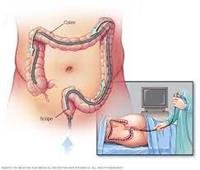
Colonoscopy is a test that allows the health care provider to examine the large intestine, using a flexible camera called a colonoscope. This test is used for several reasons, the most important of which is to detect or prevent colon cancer. But when should a colonoscopy be performed?
When should a colonoscopy be performed: reasons for the test
Colonoscopy is usually used to detect colon cancer, or colon polyps, which are growths found on the lining of the colon. They can sometimes be cancerous, or they may be benign, to later develop and become cancerous. The health care provider may consider that the answer to Question: “When should a colonoscopy be done?” Immediately, when the following symptoms or reasons appear:
Bleeding from the rectum.
The presence of blood in the stool.
The presence of pus or mucus in the stool.
Feeling unexplained pain in the abdomen.
Changes in bowel function and habits, such as unexplained long-term diarrhea.
Screening and monitoring of colorectal cancer.
Search for more benign tumors, and remove them, if any, if the person has already suffered from them before.
To treat a problem, colonoscopy may be used for therapeutic purposes, such as placing a stent in it, or removing something from it.
When should a colonoscopy be performed: Age
Determining the answer to the question "When should a colonoscopy be performed?" There are risk factors for colon cancer, but in general, most experts agree that people who do not suffer from any problems and do not have risk factors should begin a primary colonoscopy at the age of 50, and if the results are normal, the examination is performed every 10 years. Years later.
The American Cancer Society recommends a colonoscopy at the age of 45 or earlier, even if there are no risk factors for colon cancer. They then perform the examination every 10 years until the age of 75, and then appointments are scheduled after that based on the patients’ wishes, and then stop at Age 85.
Here are some exceptions
Colon and intestine problems
If a person suffers from colon or intestinal diseases, such as Crohn''s disease, ulcerative colitis, or irritable bowel syndrome, the doctor may suggest starting a colonoscopy earlier than usual. It may be repeated more than once a year.
Family history of colon cancer
In fact, there is no term “too early” when it comes to a patient having a family history of colon cancer. The earlier a person begins an endoscopy if they have a higher risk, or if they have already been diagnosed with bowel cancer, the better. Some doctors recommend colonoscopy starting at age 35 if a parent has previously been diagnosed with colorectal cancer.
After removing benign tumors
Most doctors recommend a colonoscopy at least 5 years after polyps have been removed, and a person may need to have it every other year if they have a high risk of developing adenomas.
Diverticulosis
People with diverticula often need a colonoscopy every 5 to 8 years, depending on the severity of their symptoms.
Ulcerative colitis
The doctor may recommend a colonoscopy every 2-5 years in the case of ulcerative colitis, as it increases the risk of colon cancer about 8-10 years after diagnosis.
Are there risks associated with having a colonoscopy?
Yes, and potential risks during, before, or after colonoscopy may include the following
bleeding.
Colon perforation during the procedure.
Allergic reaction to the sedative or hypnotic used before the endoscopy.
Severe abdominal pain.
If some symptoms are observed after the endoscopy procedure, such as: dizziness, fever, or non-stop bleeding from the anus, please seek immediate health care.