
important information about it
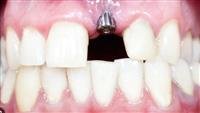
Missing teeth affect the aesthetic appearance, the ability to eat, and speak, but fortunately there are procedures to restore missing teeth, including the installation of removable teeth.
Removable implant dentures - over dentures are removable artificial teeth that are installed inside the mouth in some cases, such as tooth loss, where dental implants replace missing teeth.
Fixed dentures require more implants because they are permanently installed, as they require greater stability. Fixed dentures also appear natural in appearance compared to removable dentures, while removable dentures require fewer implants and contribute to improving stability and restoring chewing efficiency.
Types of removable dental implants
The most important types of removable dental implants are the following
1. Removable partial dentures
They are used to replace gaps resulting from the loss of one or more teeth. Partial dentures consist of a plate with one or more associated replacement teeth, which are attached to the natural teeth.
2. Complete moving sets
It is used to replace a complete dental jaw or both jaws, as it consists of two complete arches for the upper and lower teeth.
How to install this type of teeth
The process of installing removable teeth takes place in several steps, as follows
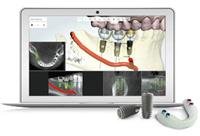
Dental implants are placed in the jaw and left to attach to the jawbone for about two months. This allows the bone to grow into the implant at a cellular level.
Specialized dentures are manufactured in a size that fits in the mouth without causing any discomfort to the person who uses them while talking or eating, and in a color identical to natural teeth.
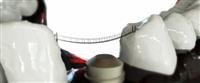
Bridges are attached to implants for stable, non-slip teeth.
Advantages of installing this type of teeth
Installing these teeth provides a number of advantages, which are as follows
1. Psychosocial benefits
Its installation contributes to improving appearance, patient satisfaction, and improving quality of life.
The teeth can be placed in aesthetic positions without causing the denture to become unstable when the mouth muscles contract, and patients also feel better comfort compared to traditional full dentures.
2. Functional benefits
It contributes to improving patients'' ability to chew food, enabling them to eat a wider range of food options, which reflects positively on nutrition and health.
3. Biological benefits
Removable dentures cause less bone loss over time compared to traditional full dentures, in addition to there being less atrophy of the muscles around the mouth.
Negative effects of installing this type of teeth
Installing these teeth may cause some negatives, including
It can take a person some time to get used to it.
Eating and speaking with dentures can take practice to get used to.
Dentures need constant care, they must be cleaned and stored properly when they are removed.
They may need to be replaced as they wear out, as the shape of your jaw may change over time.
Dentures that do not fit or are used incorrectly can lead to gum infections.
Tips after installing this type of teeth
The most important tips to follow when installing removable teeth are the following
Choose the appropriate composition for the case, which guarantees the person comfort and the absence of any complications in the future.
Pay attention to cleaning removable dentures after eating meals.
Have removable dentures cleaned by a dentist at least every six months.
Photographing the denture implants annually to ensure their integrity.