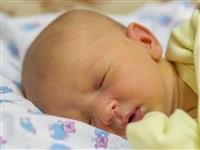
A child''s temperature is often treated as an emergency. Here are a set of important facts about fever in children in the article.
Let us learn in the following the most important information and details about fever in children:
Fever in children
Fever is the scientific name for a child''s temperature exceeding the normal level of 37.5 degrees Celsius. Fever is one of the most common health problems among children under two years of age.
Fever alone is not a disease, and in most cases fever is a positive sign that the child’s body is resisting infection. Fever stimulates certain defenses, such as: white blood cells that attack and destroy viruses and bacteria to which the child’s body is exposed. Therefore, a high temperature is evidence of their bodies confronting these harmful organisms and health. Their immune system.
Types of fever in children
There is a list of types of fever that children can suffer from, the most prominent of which are the following:
1. Scarlet fever
Scarlet fever results from a child’s body being exposed to certain bacteria. The symptoms of this fever are characterized by all of the following:
The child suffers from a skin rash characterized by red dots with white inside them.
Another rash that resembles grains of sand appears in the armpit and neck areas.
The color of the tongue changes to red.
2. Pink fever
Pink fever results from a child’s body being exposed to a virus, and one of the most important symptoms of this fever is the appearance of a rash on the child’s skin, especially in the back and chest area.
3. Brucellosis
Brucellosis is a severe type of fever in children, as it affects all organs of the body and its symptoms increase at night.
Brucellosis affects the child''s weight, as the child loses weight while suffering from this fever, and it also affects the child''s nervous system.
Symptoms of fever in children
There are many symptoms associated with a child having a fever, the most important of which are:
Lack of activity and the child being drowsy or lethargic for long periods.
Dry lips.
Urine turns dark yellow and you urinate less than usual.
His face is flushed and he shows signs of goosebumps and trembling.
Fluid draining from the nose.
Cough.
diarrhea.
Vomiting.
A rash appears suddenly on your child''s skin.
Refusing to breastfeed and refusing to eat for more than 8 hours.
Congestion.
Constant crying caused by the pain that the child feels.
Causes of fever in children
Sometimes there may be no reason for a child to have a fever, but common causes include
Colds and flu.
Sore throat or ear.
Urinary tract infections.
Respiratory diseases, such as: pneumonia and bronchitis.
Infection with a virus that causes a skin rash, such as roseola and chickenpox.
After receiving vaccinations, i.e. vaccinations.
Methods of detecting fever in children
It is often determined that a child has a fever by touching his forehead, as the forehead is hot, but to confirm that the child is suffering from a fever, it is recommended to use a thermometer to measure his body temperature. The most prominent types of these thermometers are the following:
1. Digital thermometers
Digital thermometers are probably the best type to use at home, because they are accurate and beep when they are finished taking the temperature.
Place the end of the scale under the child''s armpit with his arm down at his side.
2. Ear thermometers
Ear thermometers can be very accurate and only take a second, but they are difficult to use correctly and can also be expensive.
3. Thermal tape scales
Thermal tape scales are less accurate than others Because it only shows the temperature of the child''s skin and not his body, therefore it is preferable not to use it.
Ways to deal with fever in children
Here are some tips that can be used when a child has a fever
Applying cold compresses: Place cold compresses on the child’s forehead, or compresses sold at the pharmacy can be used on the forehead, thigh, and abdomen, as these are the places that most help reduce the temperature.
Bathing with lukewarm water: It is recommended to give the child a bath with lukewarm water, but if he starts shaking, he should be taken out.
Lighten clothing: It is recommended to dress the child in one layer of light clothing, and cover him with a light blanket, because most of the body’s heat is lost through the skin.
Drink fluids: You must make sure that the child drinks plenty of fluids, as fever may cause dehydration due to the loss of fluids through sweating resulting from high temperature.
When is fever in children a concern?
Fever in children is considered worrisome in the following cases, and a doctor must be consulted immediately:
The infant is under 3 months old and has a temperature above 38.2°C.
The infant is younger than 6 weeks and has a temperature of 38.0°C or higher.
Persistent fever after 3, 4 or more days.
Fever exceeding 40 degrees Celsius occurs frequently in any child, regardless of age.
Difficulty breathing while body temperature rises.