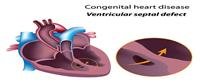

Heart hole is a congenital defect characterized by the presence of a hole in the septal wall that connects the upper or lower chambers of the heart. But does heart hole lead to death?
This article will specifically address the answer to the question: Does heart puncture lead to death?
Does heart puncture lead to death?
To answer the question of whether a heart hole leads to death or not, we have to research its definition. A heart hole or septal defect is a hole in the septum that separates the upper (atria) or lower (ventricles) chambers of the heart muscle. This condition occurs with the fetus before birth. .
To clarify whether a heart hole is a life-threatening condition, read the following points
A relatively small atrial septal defect is a transient problem that is not life-threatening and may not cause any problems if it closes during infancy or early childhood.
If it is relatively large and untreated, an atrial septal defect or perforation can cause heart and lung damage or failure, and surgical intervention in this case may be necessary to prevent any complications.
Ventricular septal defect is not life-threatening and usually closes spontaneously. However, it may sometimes cause symptoms of congestive heart failure in 16-31% of those affected, which can be treated surgically in a timely manner to save the patient’s life. If left untreated, arrhythmia may be dangerous and result in enlargement of the heart muscle, leading to sudden death.
In a study conducted to examine the relationship between ventricular septal defects and sudden death, it is believed that ventricular septal defect in infants between the ages of 1 week and 6 months caused sudden death in 4.2% of them, so heart rupture is potentially a life-threatening condition and requires clinical follow-up. Especially accurate when it comes to children.
But can death resulting from heart perforation be prevented by early diagnosis?
Video you may like
Can death caused by heart perforation be avoided?
Death resulting from a hole in the heart can be avoided through early diagnosis and immediate treatment of this condition, which will be explained by the following:
1. Diagnosis of heart hole
If the pediatrician suspects the possibility of an atrial septal defect or a ventricular septal defect, it is usually possible to confirm or deny the condition through an echocardiogram or bubble study, which we will mention in detail:
Echocardiogram
An echocardiogram is an examination that uses ultrasound waves to show how blood flows through the heart.
This can help a cardiologist diagnose the location and size of a hole in the septum, and an echocardiogram can diagnose a hole in fetuses before birth.
Bubble study
If the specialist wants to rule out a perforation in the septum, he can perform a test called an echocardiographic bubble study.
The cardiologist injects sterile water containing many tiny bubbles into a vein in the arm. The water containing the tiny bubbles finds its way to the heart. During ultrasound imaging, the bubbles in the water appear white. The specialist doctor can observe the flow of bubbles between the chambers of the heart. To look for possible barrier defects.
An echocardiographic bubble study is usually performed in older children or adults, and may require sedation.
2. Treatment
A heart hole, as mentioned, may not require any treatment procedures as it can close on its own, but if this does not happen, it may cause serious complications such as death, for example.
Therefore, specialist doctors may resort to transcatheter repair or open-heart surgery to avoid any complications.
What are the complications resulting from heart puncture?
Complications are divided into two types according to the type of heart perforation, and include the following:
1. Complications resulting from a ventricular septal defect
Complications resulting from a hole in the heart or a ventricular septal defect include
Lung-related problems.
Possibility of heart attack.
Arrhythmias.
Heart valve problems.
Poor growth.
2. Complications resulting from an atrial septal defect
Complications resulting from a hole in the heart or an atrial septal defect include
Heart failure and myocardial stress.
Arrhythmia. Symptoms of arrhythmia may include palpitations or a rapid heartbeat.
Stroke.
Pulmonary hypertension is increased pressure in the pulmonary arteries