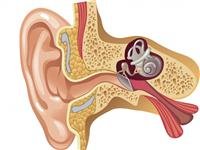

The auditory nerve is the nerve responsible for transmitting sounds to the brain for translation. Can the auditory nerve be activated? Follow this article with us to find out.
The auditory nerve is a nerve that transmits auditory signals from the cochlea to the brain. For several reasons, these nerves may be damaged, causing weakness or loss of hearing. You may be wondering, is it possible to stimulate the auditory nerve? Is it possible to regain the sense of hearing? We will answer these questions in our following article:
Medical stimulation of the auditory nerve
The principle of auditory nerve stimulation is to send a series of electrical signals at specific frequencies to help people who suffer from hearing loss.
Studies are also being conducted to test the usefulness of stimulating the auditory nerve in treating tinnitus and some cases of autism. We will show you some details of methods of stimulating the auditory nerve in the following:
1. Stimulating the auditory nerve with electrical signals
The auditory nerve is stimulated by stimulating a series of electrical signals in both the ear and the nervous system. The benefit of the stimulation process is not limited to stimulating the hearing process only, but it is also used in diagnosing some auditory, neurological and other diseases. The process of stimulating the auditory nerve is carried out in several ways, including the following: :
Cochlear implants
Cochlear implants are performed in people with hearing loss or hearing impairment
Stimulating the auditory nerve in cochlear implantation is no longer limited to electrical stimulation of the nerve. In recent studies, it has been found that combining electrical stimulation with acoustic stimulation, such as using repetitive musical tones, has a role not only in improving the hearing process, but in other benefits, including the following:
Improve speech perception.
Giving a person the ability to hear sounds in the presence of background noise.
Treating tinnitus and improving communication skills in autistic patients.
Selective electrical stimulation
Despite the benefit of cochlear implants, some people with severe hearing loss find it difficult to distinguish sounds accurately, and this is due to the inability of cochlear implant devices to activate a specific nerve at specific frequencies.
For this reason, some studies are being conducted to use special auditory nerve electrodes, which perform ive electrical stimulation on the nerve itself at ed and wide frequencies.
2. Laser stimulation of the auditory nerve
Stimulating the auditory nerve is no longer limited to stimulation with electrical signals only. Studies are being conducted to determine the usefulness of using lasers to stimulate the auditory nerve through the use of optical radiation, which has shown a promising future for its use.
Stimulating the auditory nerve in natural ways
If you suffer from hearing loss or want to exercise your auditory system, you can practice some natural activities that can help stimulate the auditory nerve. We will mention some of these methods to you as follows:
Exercising brain cells by playing puzzles, crosswords, etc.
Improve blood circulation in the ear and brain by exercising periodically.
Exercise the sense of hearing to focus, by trying to hear and understand a single sound in the presence of background noise.
Train your sense of hearing to determine the direction of sound, by using a device that has a specific, repetitive sound and ask anyone to hide it in a noisy place, and try to find the source of the sound.
Risks of auditory nerve stimulation and ways to prevent them
One of the most important risks related to stimulating the auditory nerve using a cochlear implant is the loss of the remaining natural ability to hear. Stimulating the auditory nerve through a cochlear implant may cause damage to these parts. We will show you the reason and how it can be prevented in the following:
Causes of hearing loss when performing a cochlear implant
The reason behind the loss of the remaining sense of hearing after a cochlear implant procedure may be the following:
Damage to some parts of the inner ear due to the surgical procedure to implant a cochlear implant and attach it to parts of the inner ear.
Changes occur in some ear tissues, such as the appearance of fibrosis around the implanted device as a result of the ear’s response to the presence of this body inside it.
Preventing hearing loss after cochlear implantation
Loss of remaining hearing after cochlear implantation can be prevented by protecting these parts, as follows:
Improving the cochlear implant process and procedures and using all possible means to perform the implant with caution without causing damage to other parts.
Using medications to protect the auditory nerves, including anti-inflammatory drugs, antioxidants, and others.