
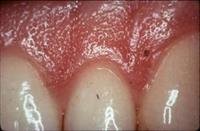
Growths can originate in any type of tissue in and around the mouth, including connective tissues, bone, muscle, and nerve. Growths most commonly form on the
Lips
Sides of the tongue
Floor of the mouth
Back portion of the roof of the mouth (soft palate)
Some growths cause pain or irritation.
Causes of Mouth Growths
Mouth growths can be
Noncancerous (benign)
Precancerous (dysplastic)
Cancerous (malignant)
Most mouth growths are noncancerous.
Noncancerous mouth growths
A variety of noncancerous growths may occur in and around the mouth. A persistent lump or raised area on the gums (gingiva) should be evaluated by a dentist. Such a lump may be caused by a gum or tooth abscess or by irritation. But, because any unusual growths in or around the mouth can be cancer, the growths should be checked by a doctor or dentist without delay.
Noncancerous growths due to irritation are relatively common and, if necessary, can be removed by surgery. In 10 to 40% of people, noncancerous growths on the gums reappear because the irritant remains. Occasionally such irritation, particularly if it persists over a long period of time, can lead to precancerous changes.
Ordinary warts (verrucae vulgaris) can infect the mouth if a person sucks or chews one that is growing on a finger. A different type of wart also caused by the human papillomavirus—a genital wart—may be transmitted to the mouth through oral sex. Among the several methods used to remove warts (see Warts: Treatment), surgical removal is the preferred method for mouth warts.
Thrush is a yeast infection of moist areas of the skin and other moist areas (such as the mouth and vagina). In the mouth it often appears as whitish, cheeselike patches. Thrush sticks tightly to the mucous membranes and when wiped away, leaves a red patch. Thrush is most common among people with diabetes or a suppressed immune system and in those who are taking antibiotics.
A torus is a slow-growing, rounded projection of bone that forms in the middle of the roof of the mouth (torus palatinus) or on the lower jaw by the side of the tongue (torus mandibularis). This hard growth is both common and harmless. Even a large growth can be left alone unless it gets scraped during eating or the person needs a denture that covers the area. Multiple bony growths, particularly along the angle of the lower jaw, may indicate Gardner syndrome, a hereditary disorder of the digestive tract where the person has numerous polyps in the colon that often become cancerous.
Keratoacanthomas are growths that form on the lips and other sun-exposed areas, such as the face, forearms, and hands. A keratoacanthoma usually reaches its full size of ½ to 1 inch (about 1 to 3 centimeters) or more in diameter within 1 or 2 months, then begins to shrink after another few months and may eventually disappear without treatment. Once, all keratoacanthomas were considered to be noncancerous, but some experts now consider those that do not diminish in size to be slow-growing cancerous tumors and recommend that they be removed.
Cysts (hollow, fluid-filled swellings) of many types cause jaw pain and swelling. Often they are next to an impacted wisdom tooth and can destroy considerable areas of the jawbone as they expand. Certain types of cysts are more likely to recur after surgical removal. Various types of cysts may develop in the floor of the mouth. Often, cysts are surgically removed because they make swallowing uncomfortable or because they are unattractive. By far the most common cyst occurs in the lip and is called a mucocele or mucus retention cyst. It is usually the result of accidentally biting the (lower) lip and occurs when saliva draining into the mouth from a minor salivary gland is blocked. Most mucoceles disappear in a week or two but can be surgically removed if annoying.
Odontomas are overgrowths of tooth-forming cells that look like either small, misshapen extra teeth or a large mass of tooth material. In children, they may get in the way of normal teeth coming in. In adults, they may push teeth out of alignment. If odontomas grow large, they may cause the upper or lower jaw to become enlarged as well. They are usually removed surgically.
Most (75 to 80%) salivary gland tumors are noncancerous, slow-growing, and painless. They usually occur as a single, soft, movable lump beneath normal-looking skin or under the lining (mucosa) of the inside of the mouth. Occasionally, when hollow and fluid-filled, they are firm. The most common type (called a mixed tumor or pleomorphic adenoma) occurs mainly in women older than 40. This type can become cancerous and is removed surgically. Unless completely removed, this type of tumor is likely to grow back. Other types of noncancerous tumors are also removed surgically but are much less likely to become cancerous or to grow back once removed.