
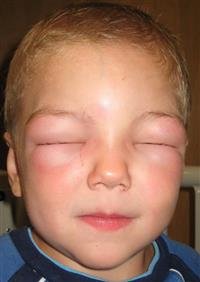
Angioedema is swelling of areas of tissue under the skin, sometimes affecting the face and throat.
Angioedema can be a reaction to a medication or other substance (trigger), a hereditary disorder, a rare complication of cancer, or an immune disorder, but sometimes the cause is not known.
Angioedema may involve swelling in the face, throat, digestive tract, and airways.
Antihistamines can relieve mild symptoms, but if angioedema makes swallowing or breathing difficult, prompt emergency treatment is needed.
Angioedema often occurs with hives, which are small, itchy, slightly elevated areas of swelling that may be red or similar to the tone of the person''s skin, often with a pale center. Both hives and angioedema involve swelling, but in angioedema, the swelling is deeper (under the skin) than it is with hives, and it may not itch.
There are rare hereditary or acquired forms of angioedema. These forms are caused by a deficiency or malfunction of a substance called C1 inhibitor, which is part of the immune system. Hereditary angioedema and acquired angioedema resemble angioedema caused by an allergic reaction. However, hives do not develop, and the cause is different.
Angioedema may be acute or chronic.
Acute angioedema
Acute angioedema develops suddenly after exposure to a trigger.
Common triggers are
Many medications, such as aspirin, other nonsteroidal anti-inflammatory drugs (NSAIDs), angiotensin-converting enzyme (ACE) inhibitors, and certain opioids (called opiates) such as morphine and codeine
Insect stings or bites
Allergy injections (allergen immunotherapy)
Certain foods—particularly eggs, fish, shellfish, nuts, and fruits
Angioedema without hives is sometimes caused by ACE inhibitors, which are used to treat high blood pressure and heart failure. When ACE inhibitors are the cause, the face and upper airways are most commonly affected, but the intestine may be affected.
Eating even a tiny amount of some foods can suddenly result in angioedema. But with other foods (such as strawberries), these reactions occur only after a large amount is eaten.
Also, angioedema sometimes occurs after a substance that can be seen on x-rays (radiopaque contrast agent) is used during an imaging test.
Chronic angioedema
Angioedema can be chronic, recurring over weeks or months. The cause is usually unknown, but it may be repeated, unintentional intake of a substance, such as penicillin in milk or a preservative or dye in foods. Use of certain medications, such as aspirin, other NSAIDs, or opioids, can also cause chronic angioedema.
Chronic angioedema that occurs without hives may be hereditary or acquired angioedema.
However, usually when angioedema without hives recurs, no specific cause is identified. Angioedema with no identified cause is called idiopathic angioedema.