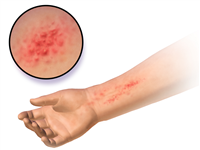
A food allergy is an allergic reaction to a particular food.
Food allergies are commonly triggered by certain nuts, peanuts, shellfish, fish, milk, eggs, wheat, and soybeans.
Symptoms vary by age and may include rashes, wheezing, a runny nose, and, occasionally in adults, more serious symptoms.
Skin prick tests, blood tests, and an elimination diet may help doctors identify the food triggering the allergy.
The only effective treatment is to eliminate the food from the diet.
(See also Overview of Allergic Reactions.)
Many different foods can cause allergic reactions. Allergic reactions to foods may be severe and sometimes include an anaphylactic reaction, which may be life-threatening.
Food allergies may start during infancy. Children may outgrow a food allergy. Thus, food allergies are less common among adults. But if adults have food allergies, the allergies tend to persist throughout life.
Food allergies are sometimes blamed for such disorders as hyperactivity in children, chronic fatigue, arthritis, and depression, as well as poor athletic performance. However, these associations have not been substantiated.
Other reactions to food
Some reactions to food are not an allergic reaction.
Food intolerance differs from a food allergy because it does not involve the immune system. Instead, it involves a reaction in the digestive tract that results in digestive upset. For example, some people lack an enzyme necessary for digesting the sugar in milk (called lactose intolerance).
Other reactions to a food may result from contamination or deterioration of the food.
In some people, food additives can cause a reaction that resembles but is not an allergic reaction. For example, some preservatives (such as metabisulfite) and dyes (such as tartrazine, which is a yellow dye used in candies, soft drinks, and other foods) can cause symptoms such as asthma and hives. Similarly, eating certain foods, such as cheese, wine, and chocolate, triggers migraine headaches in some people.