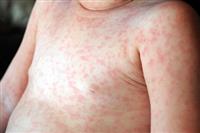

Rubella is a contagious viral infection that typically causes in children mild symptoms, such as joint pain and a rash. Rubella can cause death of a fetus or severe birth defects if the mother becomes infected during early pregnancy.
Rubella is caused by a virus.
Typical symptoms include swollen lymph nodes, rose-colored spots on the roof of the mouth, and a characteristic rash.
The diagnosis is based on symptoms.
Treatment of rubella is aimed at relieving the symptoms.
Routine vaccination can prevent rubella.
Rubella is a typically mild childhood infection. However, rubella may have devastating consequences for infants infected before birth. A woman infected during the first 16 weeks (particularly the first 8 to 10 weeks) of pregnancy often passes the infection to the fetus. This fetal infection causes miscarriage, stillbirth, or multiple, severe birth defects in the infant (referred to as congenital rubella syndrome).
Rubella used to be called "German measles" or "3-day measles" because it causes a rash similar to the rash caused by measles. However, it is caused by a different virus.
Rubella is spread mainly by breathing in small virus-containing lets of moisture that have been coughed into the air by an infected person. Close contact with an infected person can also spread the infection. People who have rubella are most contagious from 1 week before to 1 week after a rash appears, and the infection is usually spread while the rash is present. However, people who do not have a rash or any symptoms can still spread the virus to other people. An infant infected before birth can spread the infection for many months after birth.
A person who has had rubella develops immunity and usually cannot contract it again.
Rubella was once common during spring, with major epidemics infecting millions of people every 6 to 9 years. The infection is now rare in the United States because of widespread vaccination. Nonetheless, some young adult women have never had rubella or rubella vaccination and are thus at risk of having children with serious birth defects if they become infected during early pregnancy.
Since 2004 in the United States, all cases of rubella have been imported by people traveling from areas where rubella is more common and acquiring rubella while abroad before returning to the United States.