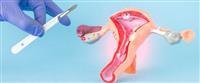

What Are Ovarian Cysts?
The ovaries are part of the female reproductive system. They are located in the lower abdomen on both sides of the uterus. Women have two ovaries that produce eggs, as well as the hormones estrogen and progesterone.
Sometimes, a fluid-filled sac called a cyst will develop on one of the ovaries. Many women will develop at least one cyst during their life. In most cases, cysts are painless and cause no symptoms.
Types of Ovarian Cysts
There are various types of ovarian cysts, such as dermoid cysts and endometrioma cysts. However, functional cysts are the most common type. The two types of functional cysts include follicle and corpus luteum cysts.
Follicle Cyst
During a woman’s menstrual cycle, an egg grows in a sac called a follicle. This sac is located inside the ovaries. In most cases, this follicle or sac breaks open and releases an egg. But if the follicle doesn’t break open, the fluid inside the follicle can form a cyst on the ovary.
Corpus Luteum Cysts
Follicle sacs typically dissolve after releasing an egg. But if the sac doesn’t
dissolve and the opening of the follicle seals, additional fluid can develop inside the sac and this accumulation of fluid causes a cyst.
Other types of ovarian cysts include
dermoid cysts: sac-like growths on the ovaries that can contain hair, fat, and other tissue
cystadenomas: non-cancerous growths that can develop on the outer surface of ovaries
endometriomas: tissues that normally grow inside the uterus can develop outside the uterus and attach to the ovaries, resulting in a cyst
Some women develop a condition called polycystic ovary syndrome. This is when the ovaries contain a large number of small cysts. This condition can cause the ovaries to enlarge, and if left untreated, polycystic ovaries can cause infertility problems.
Symptoms of an Ovarian Cyst
Often times, ovarian cysts do not cause any symptoms. However, symptoms can appear as the cyst grows. Symptoms may include:
abdominal bloating or swelling
painful bowel movements
pelvic pain before or during the menstrual cycle
painful intercourse
pain in the lower back or thighs
breast tenderness
nausea and vomiting
Severe symptoms of an ovarian cyst that require immediate medical attention include
severe or sharp pelvic pain
fever
faintness or dizziness
rapid breathing
These symptoms can indicate a ruptured cyst or an ovarian torsion. Both complications can have serious consequences if not treated early.
Ovarian Cyst Complications
Most ovarian cysts are benign and naturally go away on their own without treatment. These cysts cause little, if any, symptoms. But in a rare case, your doctor may detect a cancerous cystic ovarian mass during a routine examination.
Ovarian torsion is another rare complication of ovarian cysts. This is when a large cyst causes an ovary to twist or move from its original position. Blood supply to the ovary is cut off, and if not treated, it can cause damage or death to the ovarian tissue. Although uncommon, ovarian torsion accounts for nearly 3 percent of emergency gynecological surgeries.
Ruptured cysts, which are also rare, can cause intense pain and internal bleeding. This complication increases your risk of an infection and can be life-threatening if left untreated.
Diagnosing an Ovarian Cyst
Your doctor can detect an ovarian cyst during a routine pelvic examination. He or she may notice swelling on one of your ovaries and order an ultrasound to confirm the presence of a cyst. An ultrasound is an imaging test that uses high-frequency sound waves to produce an image of your internal organs. Ultrasounds help determine the size, location, shape, and composition (solid or fluid-filled) of a cyst.
Other imaging tools used to diagnose ovarian cysts include
CT scan: a body imaging device used to cross-sectional images of internal organs
MRI: a test that uses magnetic fields to produce in-depth images of internal organs
Ultrasound: an imaging device used to visualize the ovary
Because the majority of cysts disappear after a few weeks or months, your doctor may not immediately recommend a treatment plan. Instead, he or she may repeat the ultrasound in a few weeks or months to check your condition.
If there aren’t any changes in your condition or if the cyst increases in size, your doctor will request additional tests to determine other causes of your symptoms.
They include
pregnancy test: to determine whether or not you’re pregnant
hormone level test: to check for hormone-related issues, such as too much estrogen or progesterone
CA 125 Blood test: to screen for ovarian cancer
Treatment for an Ovarian Cyst
If a cyst does not go away on its own or if it grows larger, your doctor may recommend treatment to shrink or remove the cyst.
Birth Control Pills
If you suffer from recurrent ovarian cysts, your doctor can prescribe oral contraceptives to stop ovulation and prevent the development of new cysts. Oral contraceptives can also reduce your risk of ovarian cancer. The risk of ovarian cancer is higher in postmenopausal women.
Laparoscopy
If your cyst is small and an imaging test rules out cancer, your doctor can perform a laparoscopy to surgically remove the cyst. The procedure involves your doctor making a tiny incision near your navel and then ing a small
instrument into your abdomen to remove the cyst.
Laparotomy
If you have a large cyst, he or she can surgically remove the cyst through a large incision in your abdomen. Your doctor will conduct an immediate biopsy, and if he or she determines that the cyst is cancerous, he or she may perform a hysterectomy to remove your ovaries and uterus.
Ovarian Cyst Prevention
Ovarian cysts cannot be prevented. However, routine gynecological examinations can detect ovarian cysts early. Benign ovarian cysts do not become cancerous. However, symptoms of ovarian cancer can mimic symptoms of an ovarian cyst. Thus, it is important to visit your doctor and receive a correct diagnosis. Alert your doctor to symptoms that may indicate a problem, such as:
changes in your menstrual cycle
ongoing pelvic pain
loss of appetite
unexplained weight loss
abdominal fullness
Outlook for Ovarian Cyst
The prognosis for ovarian cysts in premenopausal women is good and most cysts disappear within a few months. However, recurrent ovarian cysts can occur in premenopausal women and women with hormonal imbalances.
If left untreated, some cysts can decrease fertility. This is common with endometrioma cysts and polycystic ovarian syndrome. To increase fertility, your doctor can remove or shrink the cyst. Functional cysts, cystadenomas, and dermoid cysts do not affect fertility.
Although some doctors take a “wait and see” approach with ovarian cysts, your doctor may recommend surgery to remove and examine any cyst or growth that develops on the ovaries after menopause. This is because the risk of developing a cancerous cyst and ovarian cancer increases after menopause. Some doctors
will remove a cyst in premenopausal and postmenopausal women if it is larger than 4 inches in diameter.
Ovarian cysts do not increase the risk of ovarian cancer.