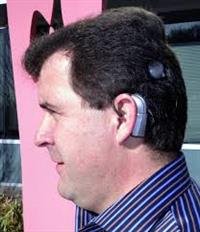
The new technique does away with need for an 'ear flap'
The facts and conclusions presented may have since changed and may no longer be accurate. And "More information" links may no longer work. Questions about personal health should always be referred to a physician or other health care professional.
MONDAY, Sept. 26, 2005 (HealthDay News) -- Cochlear implants have restored or improved hearing for thousands. And now researchers say they've developed a minimally invasive cochlear implantation (MICI) procedure that reduces risks of complications compared with the traditional technique.
The new procedure avoids the need for the creation of a large scalp ear flap, replacing it with the creation of a small 'pocket' for the cochlear implant device. The advantages of avoiding a scalp flap include reduced risk of infection, tissue death and flap failure, say researchers at the University of Texas Health Science Center at San Antonio.
The new minimally invasive surgery also leaves a smaller and less noticeable scar, they said.
Using data collected from 176 patients, the Texas team calculated the total complication rate at 12.5 percent (including 4 percent major complications and 8.5 percent minor complications). Major complications included meningitis and facial nerve injury.
Decreased tissue trauma associated with MICI allowed for programming of patients' cochlear implant sooner after surgery, compared to traditional cochlear implantation, the study said.
The findings were presented at the annual meeting of the American Academy of Otolaryngology - Head and Neck Surgery, which began Sunday in Los Angeles.