Vision correction surgery, also called refractive and laser eye surgery, is any surgical procedure used to correct vision problems. In recent years, tremendous advancements have been made in this field. After refractive and laser eye surgery, many patients report seeing better than they had at any other time in their lives.
Most types of vision correction surgery work by reshaping the cornea, or clear front part of the eye, so that light traveling through it is properly focused onto the retina located in the back of the eye. Other types involve replacing the eye’s natural lens. There are a number of different types of surgery to improve vision, including:
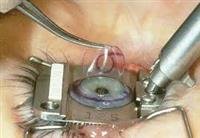
LASIK: Short for laser in-situ keratomileusis, this laser eye surgery is used to correct vision in people who are nearsighted, farsighted, and/or have astigmatism. During LASIK surgery, vision is corrected by reshaping underlying corneal tissue so that it can properly focus light into the eye and onto the retina. LASIK eye surgery differs from others in that a flap is made in the outer layer of the cornea so that the underlying tissue can be accessed. LASIK may also be done with the addition of computer imaging called wavefront technology to a detailed image of the cornea and guide for treatment.
PRK: Short for photorefractive keratectomy, this laser eye surgery is used to correct mild to moderate nearsightedness, farsightedness, and/or astigmatism. During PRK surgery, an eye surgeon uses a laser to reshape the cornea. This laser, which delivers a cool pulsing beam of ultraviolet light, is used on the surface of the cornea, not underneath a flap of the cornea, like in LASIK eye surgery. PRK may also be done with computer imaging of the cornea.
LASEK: Short for laser epithelial keratomileusis, this is a variant of PRK. An epithelial flap is d and then epithelial cells are loosened using an alcohol solution. A laser is used to reshape the cornea, then the flap is replaced and secured with a soft contact lens while it heals. LASEK surgery is used to treat nearsightedness, farsightedness, and astigmatism.
RLE: Short for refractive lens exchange and also known as clear lens extraction, RLE is similar to surgery done for cataracts and involves making a small incision at the edge of the cornea to remove the natural lens of the eye and replace it with a silicone or plastic lens. Also called PRELEX, clear lens exchange (CLE), clear lens extraction (CLE), and refractive lens replacement (RLR), RLE is used to correct extreme farsightedness or nearsightedness. It may be appropriate for people with thin corneas, dry eyes, or other minor problems of the cornea. To correct astigmatism, however, another procedure such as PRK, LASEK, CK, or Epi-LASIK may be needed in addition to RLE.
EpiLasik: In EpiLasik, which is similar to PRK, a very thin layer is separated from the cornea and then the cornea is reshaped. The thin layer may be left off or replaced. The area is protected with a soft contact lens while it heals.
PRELEX: Short for presbyopic lens exchange, PRELEX, is a procedure in which a multifocal lens is implanted to correct presbyopia, a condition in which the eye’s lens loses its flexibility, making it difficult to focus on close objects.
Intacs: Also known as intracorneal ring segments, or ICR, this procedure involves making a small incision in the cornea and placing two crescent-shaped plastic rings at the outer edge or the cornea. The rings flatten the cornea, changing the way light rays focus on the retina. ICR was used to treat mild nearsightedness as well as nearsightedness but has been replaced by laser-based procedures. Irregular cornea shape from keratoconus, a condition that results in vision loss due to thinning and irregularity in the cornea, is the most common condition treated with intacs.
Phakic intraocular lens implants: Designed for patients who are too nearsighted for LASIK and PRK, the phakic implant is ed through a small incision at the edge of the cornea and attached to the iris ed behind the pupil. This procedure differs from RLE in that the eye's natural lens is left in place.
AK or RLI : Short for astigmatic keratotomy, this is not laser eye surgery, but a surgical procedure used to correct astigmatism. The cornea of people who have astigmatism is shaped like a football. AK or RLI eye surgery corrects astigmatism by making one or two incisions at the steepest part of the cornea. These incisions cause the cornea to relax and take a more rounded shape. This eye surgery may be used alone, or in combination with other laser eye surgeries such as PRK, LASIK, or RK.
RK: Short for radial keratotomy, this eye surgery was once one of the most frequently used procedures to correct nearsightedness. However, since the development of more effective laser eye surgeries, such as LASIK and PRK, RK is rarely used today and is considered an obsolete procedure.
Are Refractive and Laser Eye Surgeries Safe and Effective?
While the results of laser eye surgeries have been promising, there are possible side effects. It is important to keep these side effects in mind when considering refractive or laser eye surgery.
Infection and delayed healing. Infection resulting from PRK occurs in one-tenth of 1% of patients. For LASIK eye surgery, this number is even smaller. If an infection does result from refractive or laser eye surgery, it generally means added discomfort and a longer healing process.
Undercorrection or overcorrection. It is difficult to predict with absolute accuracy the success of refractive or laser eye surgery until the eye has healed properly. Patients may still need to wear corrective lenses even after laser eye surgery. Often surgeries resulting in undercorrections can be adjusted with a second laser eye surgery, called laser enhancement.
Worse vision. Very rarely, the best achievable vision with or without glasses is worse after refractive or laser eye surgery than it was before. This could be a result of irregular tissue removal or excess corneal haze.
Excess corneal haze. Corneal haze occurs as a part of the natural healing process after some refractive or laser eye surgeries. It usually has no effect on the final outcome of vision after laser eye surgery and can only be seen through an eye exam. Occasionally, however, this haze may affect a patient's vision. A second refractive or laser eye surgery may be needed to correct it. The risk of corneal haze is much less with LASIK surgery than it is with PRK. Also, the use of a medication called mitomycin during PRK surgery is very effective at preventing haze after surgery.
Regression. Sometimes the effects of refractive or laser eye surgery decrease over a period of months or years. When this happens, a second surgery is often recommended to achieve optimal results.
Halo effect. The halo effect is an optical effect that occurs in dim light. As the pupil enlarges, the untreated area on the outside of the cornea produces a second image. Occurring sometimes in patients having LASIK laser eye surgery or PRK, this can affect and interfere with night driving, especially in patients who have big pupils in dark conditions. The use of wavefront technology and larger laser optical zones has dramatically decreased the incidence and severity of glare and halo after laser refractive procedures
Flap damage or loss. This is a rare risk factor with LASIK laser eye surgery only. Because in LASIK there is a hinged flap on the central cornea, the flap may require repositioning during the first few days after surgery or, very rarely, after a severe direct injury to the eye.
Are Refractive and Laser Eye Surgeries Safe and Effective? continued...
Refractive and laser eye surgeries require healthy eyes that are free from retinal problems, corneal scars, and any eye disease.
Beyond side effects, there are other questions to ask before deciding on refractive or laser eye surgery, such as:
Will your insurance cover the cost of laser eye surgery?
How long will recovery take?
Will there be any activity restrictions after laser eye surgery?
As technology progresses more and more, it is very important that you explore all options and possibilities before deciding which vision repair treatment is right for you.