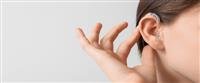
If you're very hard of hearing or deaf, a cochlear implant may help you get back a sense of sound. A cochlear implant isn't a hearing aid, which makes sounds louder. A cochlear implant is a small device that is placed in your ear through surgery. It works by sending impulses directly to your auditory nerve, which carries signals to your brain.
Although a cochlear implant doesn't make you hear normally again, it can help you with sounds. Most people with severe to profound hearing loss are able to understand speech in person or over the phone better than they did with a hearing aid. It can usually help you understand sounds around you, including telephones, doorbells, and alarms. Many people are also able to understand speech in noisy environments better than they did with hearing aids, and in some cases are even able to enjoy music again.
How does a cochlear implant work?
Cochlear implants are designed for children and adults with sensorineural hearing loss. This type of hearing loss typically involves damage to tiny hair cells in the cochlea. As a result, sound can't reach the auditory nerve, which usually receives information from hair cells. A cochlear implant skips the damaged hair cells to stimulate the auditory nerve directly.
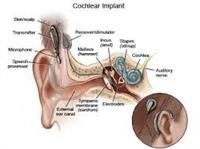
What happens, exactly? If you get a cochlear implant, it will consist of parts that are placed through surgery under your skin, as well as parts that you wear on your body, like a hearing aid. The external part with attached head coil (audio or speech processor) is slightly larger than a normal behind-the-ear hearing aid. They work together to a sensation of sound.
First, a surgeon places a receiver under your skin behind your ear, through a small cut. The receiver is connected to electrodes, which are surgically ed into the cochlea. The surgery takes one to two hours to perform and is usually done as an outpatient so you don't have to spend the night.
One to two weeks after surgery, your doctor will fit you with three parts: a speech processor, a battery pack, and a transmitter. You wear the microphone, which looks like a hearing aid, behind your ear. The processor may be connected to the microphone and worn at your ear, or it may be worn somewhere else on your body, depending on your activity level, age, or lifestyle. These processors offer different program and telephone options, and the ability to connect to assistive listening devices and other listening devices, like an iPod. Some have rechargeable batteries to lower costs.
When there are sounds around you, the microphone and processor pick them up and change them into electrical impulses. Then the transmitter sends these coded signals to the receiver under your skin. Next, the receiver delivers the signals to the electrodes ed into the cochlea. These electrodes stimulate the auditory nerve, which carries the signals to the brain, where they are recognized as sound.
What are the advantages of a cochlear implant?
For people with serious hearing issues, cochlear implants can really be life changing. But the results aren't the same for everyone. Some people benefit more than others. Here are some of the advantages:
ability to understand speech at a nearly normal level
ability to understand speech without lip reading
telephone conversations become possible
watching TV becomes easier
improved listening to music
perception of a variety of sounds, including soft, medium, and loud ones
better modulation of your own voice so that others have an easier time understanding you
What are the disadvantages and risks?
Cochlear implant surgery is very safe, but as with any surgery, possible problems include bleeding, infection, and issues related to general anesthesia. Specific complications include:
taste changes due to nerve injury
nerve damage, causing facial weakness or paralysis
dizziness or balance problems
loss of the hearing you have left
tinnitus
leak of cerebrospinal fluid (CSF), the fluid around the brain
failure of the device to work or infection, which may require removing and replacing the implant
meningitis
Meningitis, an infection of the membranes that surround the brain, is a rare but serious complication. People with abnormally formed inner ear structures seem to be at higher risk, as are children. The FDA and CDC recommend vaccines for all current and future cochlear implant patients to lower the chance of meningitis.
After cochlear implant surgery, some issues to consider include
For people who have some hearing left, sound may seem "mechanical" or "synthetic," although most people no longer notice this after a few weeks.
If you need an MRI, you may first need a simple procedure to temporarily take out the magnet in the cochlear implant. However, more medical facilities are now doing MRIs without removing the magnet. A cochlear implant is available that does not require taking out the magnet in order to have an MRI.
Certain parts of your implant may be damaged if they get wet. You must take out the outside parts before you bathe, shower, or swim. Fortunately, a waterproof cochlear implant processor is now available.
Very rarely, the implant may fail, which requires surgery to fix the problem.
Who is a good candidate for a cochlear implant?
According to the American Speech-Language-Hearing Association, the best adult candidates have the following characteristics:
severe to profound hearing loss in both ears
loss of hearing after having already developed speech and language
limited help from using from hearing aids
no medical problems that would make surgery risky
strong motivation to be part of the hearing world
realistic expectations
Also, cochlear implants are more effective in people who have lost their hearing recently, as well as those who used a hearing aid successfully before getting a cochlear implant.
Are children good candidates?
The FDA has lowered the age limit to 12 months, and most children who are identified with significant hearing loss as a baby are implanted as soon as possible. Getting a cochlear implant in early childhood exposes children to sound during the critical period in which they learn speech and language skills.
The devices work best for children who have the following characteristics
profound hearing loss in both ears
limited help from using hearing aids
in good health, with no medical conditions that would make surgery risky
willingness to learn how to communicate with the use of the cochlear implant
support from their caretakers, teachers, and school programs to help them develop hearing skills
younger than age 5. In a recent study, children who received a cochlear implant before the age of 18 months had vast improvement in their ability to hear, speak, and learn. (Older children who lose their hearing after they have developed the ability to speak can also be helped by a cochlear implant.)
involved in intensive speech therapy and oral communication programs
How do I know if I’m a good candidate for a cochlear implant?
If you have severe or profound hearing loss, a team of experts at a cochlear implant center can help you decide whether you're a good candidate for this surgery. Typically, these experts include an ear doctor (otologist), audiologist, psychologist, counselor, and speech-language pathologist. The team works together to evaluate you, perform the surgery, and offer follow-up care.
You may have tests, such as
an exam of the external, middle, and inner ear to check for infection or other issues
various hearing tests, such as an audiogram. This is a graph that charts how you respond to specific sounds.
a hearing aid evaluation
CT or MRI scans to check the inner ear and hearing nerve, in part to see whether the cochlea has a normal shape
a physical exam to prepare for general anesthesia
a psychological exam to assess whether you can cope with the implant (more common with children)
When you're being evaluated for a cochlear implant, counseling will help you to have realistic expectations, as well as make sure that you understand the commitment required for learning how to use the implant. After receiving an implant, many people benefit from a rehabilitation program. The goal is to develop listening skills through the implant. It is always recommended that children who receive implants participate in a rehabilitation program.