Hearing loss can have a big impact on your life -- from your work to your relationships and emotional well-being. For many people, hearing aids can greatly help, especially if you choose the right ones and get help adjusting to them. Here's what you need to know about hearing aids.
How Hearing Aids Help
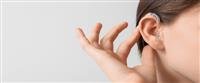
A hearing aid is an electronic device designed to improve your hearing. Small enough to wear in or behind your ear, hearing aids make some sounds louder, improving hearing and speech understanding. They may help you to hear better when it's quiet and when it's noisy.
Not everyone with hearing loss can benefit from hearing aids. But only 1 in 5 people who could benefit actually wear them. Hearing aids are most commonly used for people with hearing loss caused by damage to the inner ear or auditory nerve (called sensorineural hearing loss) from:
Disease
Aging
Injury caused by noise or medications
When hearing loss is due to problems with the ear canal, eardrum, or middle ear, that's conductive hearing loss. Most conductive hearing loss can be improved or corrected with surgery or other medical help.
People may choose not to manage their conductive hearing loss with medicine or surgery. If the person has an open ear canal and a relatively normal external ear, a hearing aid may help with conductive hearing loss.
Some people are born without an external ear or ear canal, which prevents use of a conventional hearing aid. These patients may be able to use a bone conduction hearing aid instead of a conventional device.
If you do not already know an ear, nose, and throat doctor, ask your primary care doctor to send you to one so your hearing loss can be evaluated and treated.
In the office, the ear specialist will do an exam to find the cause of your hearing loss. You will see an audiologist who will do tests to determine the type and degree of your hearing loss.
These specialists can give you a hearing aid if needed. Avoid mail-order hearing aids, which often don't fit well and don't improve hearing enough.
If you have hearing loss in both ears, it is probably best to wear two hearing aids.
Batteries power the hearing aid's electronics. Here's how the other parts of a hearing aid work:
A microphone picks up sound around you.
An amplifier makes the sound louder.
A receiver sends these amplified sounds into your ear, where they're converted to neural signals and sent to your brain
Types and Styles of Hearing Aids
Work with an audiologist to figure out which type and style will work best, as well as any special features you need. This depends on things such as:
The type and severity of your hearing loss
Your age
Your dexterity
Your lifestyle
Your financial resources. Hearing aids vary greatly in price, from hundreds to thousands of dollars.
There are two main types of hearing aids: analog and digital.
Analog hearing aids convert sound waves into electrical signals that are then amplified. These are typically less expensive and basically have simple volume controls.
Digital hearing aids convert sound waves into numerical codes similar to computer codes, then amplify them. The code includes information about pitch or loudness, providing flexibility in adjusting to your needs or environments, as well as the direction of the sound. Although this type is more expensive than an analog hearing aid, the results are much better. They are also smaller and more powerful. Digital hearing aids can have programs depending upon whether you are in a restaurant, quiet room, or outside stadium. But they are designed to automatically adjust in various environments.
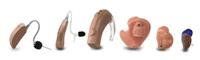
There are three main styles of hearing aids, which differ in size, placement in or on the ear, and ability to amplify sound:
Canal hearing aids fit into your ear canal and are less visible. An in-the-canal (ITC) hearing aid fits your specific ear canal. A completely-in-canal (CIC) aid is smaller and nearly hidden in your ear canal. You can use either type for hearing loss that is mild to moderately severe. But because of their size, they can be harder to adjust and remove. This style of hearing aid is not ideal for children or adults who might have problems with the small size. An invisible-in-canal (IIC) aid is nearly invisible. You may put it in every day, or it may be a device you wear for several months at a time. This is a great option for people who might have trouble putting it in every day.
In-the-ear (ITE) hearing aids fit completely inside your outer ear with a hard plastic case holding the electronics. Best for people with mild to severe hearing loss, ITE hearing aids work less well for children whose ears are still growing.
Behind-the-ear (BTE) hearing aids house their parts in a hard plastic case behind your ear. A plastic ear mold fits inside the outer ear and directs sound to the ear, improving sound quality. A newer type (Mini BTE) fits entirely behind your ear, with a narrow tube reaching into your ear canal. This helps minimize earwax buildup and any muffling of your own voice. You can use the BTE type no matter your age or amount of hearing loss.
Types and Styles of Hearing Aids continued...
Be sure to ask about any special features you want. Not all hearing aids have the same ones.
Directional microphones help you better respond to sound coming from a specific direction and help tune out background noise.
A telephone switch minimizes background noise and better picks up sounds from the phone. If you can find this system, it can help with hearing in theaters, auditoriums, and churches.
Direct audio input allows you to plug in a remote microphone or FM assistive listening system or to connect directly to a TV or other device.
Other types of special hearing aids are also available for specific types of hearing loss. For example, one type uses a bone vibrator for people without an ear canal or outer ear. Others may be attached to glasses. Also, ask about other devices that may help your hearing aids in certain settings.
Adjusting to and Caring for Hearing Aids
It's important to understand that your hearing aid cannot restore hearing as it once was. But with regular use, you will become more aware of sounds and where they are coming from.
When you first get your hearing aids, be patient. It may take some time to get used to them. In most states, you are allowed a trial period after buying your hearing aids. Then, if yours don't work out for you, you may receive a partial refund and try a type that works better for you. Also ask about warranty coverage.
Take time to learn how your hearing aids work and insist on a good fit. Work closely with your audiologist to minimize any problems such as:
Slight discomfort
Echo-like sounds from your own voice
Feedback or a whistling sound
Background noise
Buzzing with cell phone use
It may help to start wearing your hearing aids in quiet areas and to keep a diary about your experiences.
Your hearing aids will last much longer if you take good care of them. Here are some tips to keep in mind:
Keep your hearing aids away from heat, moisture, hair care products, children, and pets.
Clean the hearing aid as directed.
Turn off your hearing aids when you are not using them and replace dead batteries right away. Hearing aid batteries may last from several days to a couple of weeks. Battery life depends on the battery type, hearing aid power requirements, and how often the hearing aid is used with assistive listening devices.
In general, hearing aids have a life expectancy of 3 to 6 years. You may need a new hearing aid sooner if your hearing loss is progressive. Behind-the-ear hearing aids have more flexibility since they can be programmed for a wider range of hearing loss.
Because digital hearing aids are built with computer technology, they get stronger and better every few years as technology improves. This often prompts people to upgrade their hearing aids.