
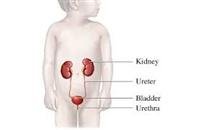
Risk factors (things that increase a child's risk) of urinary tract infection (UTI) include:
Abnormalities of the urinary tract, including kidney stones camera.gif and other urinary obstructions. Structural or functional problems that limit the kidneys' or the bladder's ability to eliminate urine properly can increase the risk of UTIs. These problems may be present at birth or may develop soon after.
Infrequent urination, incomplete emptying of the bladder, or constipation. These patterns are common during toilet training and make it easier for bacteria to build up in the urine.
An uncircumcised penis. The foreskin can trap bacteria, which can then enter the urinary tract camera.gif and cause infection.
Catheterization, which is used in a hospital when a child is unable to urinate on his or her own. Bacteria can enter the catheter and start an infection.
Previous UTIs. The risk for future infections increases with each additional infection.
History of UTI or the backward flow of urine from the bladder into the kidneys (vesicoureteral reflux) in a parent or sibling.
Infants and young children who have UTIs often have vesicoureteral reflux (VUR).
Urinary tract infections (UTI) in infants and young children need early evaluation and treatment. Call your doctor to make an appointment within 24 hours if your child has:
Unexplained fever.
Vomiting.
Urine that looks pink, red, brown, or cloudy or is foul-smelling.
Burning pain with urination.
Frequent need to urinate without being able to pass much urine.
Pain in the flank, which is felt just below the rib cage and above the waist on one or both sides of the back.
Vaginal discharge with urinary symptoms.
Symptoms similar to those of a previous UTI.
Call the doctor if your child isn't feeling better within 48 hours after starting an antibiotic.
Watchful waiting
Watchful waiting is not appropriate if you suspect your child has a urinary tract infection. Untreated UTIs in children can lead to permanent kidney damage, high blood pressure, and other serious complications.
Who to see
The following health professionals can treat UTIs in children
Nurse practitioner
Physician assistant
General practitioner
Family medicine physician
Pediatrician
Urologist
To prepare for your appointment, see the topic Making the Most of Your Appointment.
Initial tests
If your child has symptoms of a urinary tract infection (UTI), the doctor's first evaluation will probably include:
A medical history and physical exam.
Urinalysis, which measures different parts of urine to help detect a UTI.
Urine culture, which identifies the bacteria that are causing a UTI.
If the doctor suspects that your child has a UTI, a urinalysis will help point to a diagnosis. A urine culture can confirm the diagnosis and identify what is causing the infection. But the results usually are not available for a couple of days. Rather than delay treatment to wait for the results of the urine culture, the doctor probably will start your child on antibiotics if your child's symptoms, history, and urinalysis show that a UTI is likely.
A urine sample will be collected.
Older children may urinate into a container.
In babies and young children, the doctor may
Insert a catheter through the urethra and into the bladder to collect urine.
Collect urine by attaching a bag around the child's genitals until the child urinates. The risk of having other substances get into (contaminate) the urine sample is extremely high with this method.
Insert a needle through the abdomen directly into the bladder (suprapubic aspiration) to get the sample.
The doctor may do other tests if your child has a UTI and
Does not improve after 4 days of medicine.
Has a known abnormality of the urinary tract or a history of certain kidney or bladder problems that could make the infection harder to treat.
May be infected with unusual bacteria that won't respond to the usual treatment.
Shows signs of kidney injury.
Other tests
Other common tests include
Kidney (renal) ultrasound. The doctor may order a renal ultrasound or may review a fetal ultrasound that was done during the mother's third trimester of pregnancy, if available.
Cystourethrogram, also called a voiding cystourethrogram (VCUG). This is an X-ray test that takes pictures of your child's bladder and urethra during urination.
If an ultrasound shows problems, then a VCUG may be done. VCUG can identify vesicoureteral reflux, abnormalities of the urinary tract, and other conditions that may make your child more prone to kidney infections. If the test finds any of these conditions, the doctor can watch and give preventive treatment, if needed, to your child.
The doctor may do a kidney scan (renal scintigram) to evaluate persistent kidney infection or to evaluate kidney scarring or damage caused by previous infection.
Antibiotic medicine and home care are effective in treating most urinary tract infections (UTIs) in infants and children. The main goal of treatment is to prevent kidney damage and its short-term and long-term complications by eliminating the infection quickly and completely. Early evaluation and treatment are very important. Do not delay calling a doctor if you think your baby or young child may have a UTI.
Initial treatment
Infants and young children with urinary tract infections (UTIs) need early treatment to prevent kidney damage. Your doctor is likely to base the first treatment decision on your child's symptoms and urinalysis results rather than waiting for the results of a urine culture.
Treatment for most children with UTIs is oral antibiotics and home care.
If your child is younger than 3 months, is too nauseated or sick to take oral medicines, or has an impaired immune system, the doctor may give your child a shot of antibiotics. Or your child may need a brief hospital stay and a short course of intravenous (IV) antibiotics. After your child's fever and other symptoms improve and your child is feeling better, the doctor may prescribe oral antibiotics.
The number of days a child will need to take these medicines depends on the illness, the child's age, and the type of antibiotic.
Treatment if the condition gets worse or recurs
If your child's urinary tract infection (UTI) does not improve after treatment with antibiotics, your child needs further evaluation and may need more antibiotics. Your child may have a structural problem that is making the infection hard to treat. Or the cause of the infection may be different from the types of bacteria that usually cause UTIs.
If the infection spreads and affects kidney function or causes widespread infection (sepsis), your child may be hospitalized. These complications are rare, but they can be very serious. Children with impaired immune systems, untreated urinary tract obstructions, and other conditions that affect the kidneys or bladder are at higher risk for complications.
Recurrent UTIs increase the risk of long-term kidney damage and high blood pressure. The doctor may prescribe preventive antibiotic therapy after treatment for a first UTI if your child has a structural problem, such as vesicoureteral reflux, that increases the risk of repeat infections, or if your child has a few UTIs in a 6- to 12-month period.
Urinary tract infections (UTIs) are hard to prevent in children who seem to get them easily. The doctor may prescribe antibiotics to prevent repeat infection while waiting for test results after your child's first UTI. If test results show abnormalities of the urinary tract that raise the risk for repeat infections, the doctor may recommend long-term antibiotic treatment.
Some evidence suggests that breast-feeding may help prevent UTIs during the first 6 months of life.1, 2
After learning to use the toilet, some children may not empty their bladders often enough. Without regular bladder emptying, which flushes out the germs in urine, children may be more likely to get a UTI. Encourage a schedule of bladder emptying to help lower this risk. Offer your child drinks (such as water) throughout the day. Drinking enough fluids fills the bladder and can help your child empty the bladder more often.
Constipation can also put a child at risk of a UTI. Regular toileting habits and a nonconstipating diet are the best ways to prevent constipation. For more information, see the topics Constipation, Age 11 and Younger and Constipation, Age 12 and Older.
Early diagnosis and early treatment are the most important steps in preventing UTI-caused kidney damage. Periodic urine cultures during the first year after a child's first UTI and for children at risk for recurrent UTIs can help detect infections before they do serious damage.