Broken Nose Overview
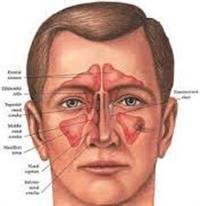
A broken nose is any crack or fracture in the bony portion of the nose.
Broken Nose Causes
Causes of a broken nose are related to trauma to the nose or face. Common sources of trauma include the following:
Sports injury
Personal fights
Motor vehicle accidents
Falls
Broken Nose Symptoms
Signs that suggest a person has a broken nose may include the following
Tenderness when touching the nose
Swelling of the nose or face
Bruising of the nose or under the eyes (black eye)
Deformity of the nose (crooked nose)
Nosebleed
When touching the nose, a crunching or crackling sound or sensation like that of rubbing hair between 2 fingers
Pain and difficulty breathing out of the nostrils
When to Seek Medical Care
Call the doctor for any of the following
You think you might have a broken nose.
The pain or swelling does not go away in 3 days.
The nose looks crooked.
You feel dizzy or light-headed.
Breathing through the nose is not possible after the swelling has gone down.
Fever develops.
Recurring nosebleeds develop.
Significant injury that requires medical attention possibly exists.
Go to a hospital’s emergency department immediately if any of the following signs or symptoms are present:
Bleeding for more than a few minutes from one or both of the nostrils
Clear fluid draining from the nose
Other injuries to the face or the body
Loss of consciousness (fainting)
Severe or unrelenting headaches
Repeat vomiting
Decrease or change in vision
Neck pain
Numbness, tingling, or weakness in the arms
Significant injury that may require immediate medical attention
Exams and Tests
In the emergency department, a doctor will examine the head and neck.
The doctor will inspect the outside and the inside of the nose, often using special instruments.
Depending on the injuries, the doctor may perform a thorough exam.
Doctors usually do not recommend X-ray films of the face or nose unless they suspect the results might the course of treatment.
Broken Nose Treatment Self-Care at Home
Taking the following actions at home may help reduce the symptoms of a broken nose, once it has been diagnosed by a doctor.
Place some ice wrapped in a cloth over the nose for about 15 minutes at a time and then remove the ice. This process can be repeated multiple times throughout the day. Use ice at the time of injury and for 1-2 days afterward to reduce pain and swelling. Be sure to take breaks between applications, and do not apply the ice directly to the skin.
Take acetaminophen (Tylenol) or ibuprofen (Advil, Motrin) to reduce pain. Only use these medications as directed.
Take an over-the-counter nasal decongestant if recommended by your doctor to aid in breathing through the nostrils. Be sure to read warning labels associated with these medications.
Elevate the head, especially when sleeping, to avoid increased swelling of the nose. Prop the head up with pillows or lift the head of the bed by placing large blocks or phone books under the mattress.
Medical Treatment
For simple breaks in which the nose has not been displaced (the bone is not crooked), the doctor may prescribe only pain medication, ice, and nasal decongestants.
For markedly displaced fractures, the doctor may attempt to realign the bone pieces. The doctor may use pain medication, local anesthesia, and nasal instruments.
Not all displaced fractures can be relocated immediately.
Not all displaced fractures can be relocated in the emergency department.
The doctor will advise of the best care.
If the nose continues to bleed, the doctor may packing into the nostrils.
A soft gauze pad will be placed in the bleeding nostril and should stop the nosebleed completely. The doctor usually removes the packing in 2-3 days.
Do not attempt to remove this packing.
The doctor may prescribe antibiotics and pain medication while the packing is in place.
If other injuries exist, additional diagnostic tests and treatment may be given.
Medications
Try acetaminophen (Tylenol) or ibuprofen (Advil, Motrin) for pain, taking care to follow the instructions on the bottle. Do not exceed the dose stated on the package instructions.
For more serious injuries, stronger pain medication may be prescribed.
Call a doctor or pharmacist if any questions or concerns arise regarding any medication.
Surgery
Surgery may be needed for severe or multiple breaks in the nose, persistent deformity, or damage to the inner portions of the nose.
Some simple surgeries can be performed in the doctor's office.
The doctor pushes the broken bones back into place.
Special instruments and pain medicine (anesthesia) may be used.
Anesthesia may be injected into the nose or placed in the nostrils.
Other surgeries are performed in the operating room.
These surgeries tend to be more complex and involve realigning the nasal bones and surrounding tissue.
Intravenous (IV) anesthesia is often used.
Simple breaks that are not out of place do not usually require surgery.
A doctor will advise the best treatment plan.
Other Therapy
If a nose might be broken, avoid resting anything on the nose, including glasses and sunglasses.
Do not attempt to straighten the nose.
Next Steps Follow-up
About 3-5 days after the swelling in the nose has gone away, a person may be referred to an ear, nose, and throat (ENT) doctor, an oral and maxillofacial surgeon (OMFS), or a plastic surgeon.
Follow-up care should not be delayed. A delay, especially longer than 7-10 days, may cause a broken bone to be set in a deformed state.
Prevention
Avoid drug and alcohol use. Many nose breaks occur during or after abuse of these drugs.
Follow safety rules when participating in sports and physical recreation.
Wear a seatbelt at all times while riding in a motor vehicle.
Outlook
If a nasal injury is minor, further care may not be needed. Many will need a follow-up visit in about 3 days after the swelling has resolved. If a severe break has occurred, corrective surgery may be required.