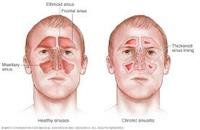
Sinusitis is an inflammation, or swelling, of the tissue lining the sinuses. Normally, sinuses are filled with air. But when they become blocked and filled with fluid, germs (bacteria, viruses, and fungi) can grow and cause an infection.
Conditions that can cause sinus blockage include the common cold, allergic rhinitis (swelling of the lining of the nose), nasal polyps (small growths in that lining), or a deviated septum (a shift in the nasal cavity).
Pain in the forehead or between the eyes? Upper teeth ache? Face feeling full, nose stuffy and congested? You may have a common complaint that sends many people to a doctor's office: sinus trouble.
Acute. Cold-like symptoms such as a runny, stuffy nose and facial pain that start suddenly and don’t go away after 10 to 14 days. It usually lasts 4 weeks or less.
Subacute. Sinus inflammation lasting 4 to 8 weeks.
Chronic. Inflammation symptoms that last 8 weeks or longer.
Recurrent. Several attacks within a year.
Who Gets Sinusitis?
About 37 million Americans have it at least once each year. It’s more likely if you have
Swelling inside the nose like from a common cold
Blocked drainage ducts
Structural differences that narrow those ducts
Nasal polyps
Conditions that make an infection more likely, such as immune system deficiencies or medications that suppress the immune system.
For children, things contribute to sinusitis include allergies, illnesses from other kids at day care or school, pacifiers, bottle drinking while lying on the back, and smoke in the environment