Urinary Tract Infections ranks second among the most common infections in infants and young children, and statistics indicate their prevalence in females in childhood compared to the number of cases of males infection in them.
This is due to the shortness and integrity of the urethra in the female, in addition to the fact that the urine pH level provides a suitable medium for bacterial growth and reproduction within the urinary tract.
Urinary System Components at a Glance
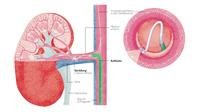
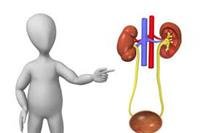
The human urinary system consists of two Kidneys located on the sides of the spine. One kidney consists of a Cortex in which the basic units responsible for filtering blood plasma and purifying it to form urine are known medically as Nephrons.
With a Medulla pulp in which a small portion of the tubules that go into the synthesis of the single nephron pass through, the tubes pour their content into a single cavity called Renal Pelvis, from which one ureter comes out (Ureter), which connects it with the urinary bladder, and the urinary tract ends By a tube through which urine flows out of the body called the urethra (Urethra).
Sinusitis in children Allergic rhinitis in children and its treatments Causes of tonsillitis and methods of treatment Acute middle ear infection in children Meningitis in children and adults Symptoms and treatment of poliomyelitis
How does the urinary tract keep pathogen free?
The urinary system is normally considered sterile and free of germs (pathogens) with the exception of the far part of the urethra. Urine is not contaminated during its path from pyelon to the bladder at all until it reaches the urethra in which some germs settle without causing any infections or infections.
Urine impulsion has been contaminated with almost negligible quantities, and its presence is completely neglected by the laboratory and they are not considered as an indication or conclusive evidence of urinary sepsis, especially since the normal function of the ureteral and urethral plaques impedes its rise to the upper sections of the urinary system.
In addition, the urine pH with strong defensive immune factors within the urinary tract impedes its reproduction and spread. Obviously, we can say that any of these mechanisms is severely predisposed to cause urinary tract infections in children and even adults.
Pathogenic mechanism in the context of urinary tract infections
Intestinal germs can sometimes reach the urethra after leaving the anus, to settle in it and begin to multiply, and then rise to the urinary bladder, and despite the proper presence of these germs within the human intestine, their access to the urinary tract helps in their growth and induce an infection that needs rapid management and treatment Immediately.
Especially if these germs secure favorable conditions for them to predate the occurrence of urinary sepsis, such as congenital malformations that we can see within any part of the urinary tract, in addition to the blockage of the urethra or the entrance to the bladder or the ureter with foreign bodies causing a urinary stagnation suitable for the rapid proliferation of germs.
The health aspect also strongly affects the possibility of developing infections in children, poor care and poor hygiene in the genital and anal region predispose to the occurrence of infections and infections, and do not forget the role of venous lesions (urinary stones within the ureter, tumors, strictures, etc. ..) in securing the appropriate medium for the multiplication of pathogens In the area that we find above the focus of blockage.
Pathogens responsible for urinary tract infections in children
E. coli is the important and primary factor in causing urinary infections in children, according to a percentage that may reach 75-90% of the total pathogens responsible for the occurrence of infection, followed by the following germs:
Klebsiella. Enteroboccus. Volatility (Proteus). Staphylococcus saprophyticus (Staphylococcus Saprophyticus). Streptococcus group B (streptococcus). Glaucoma. (Psudomonas).
The fungus can cause in a few cases the occurrence of urinary infections in children, especially Candida, while viruses rarely cause inflammatory activities in the urinary tract.
Risk factors for a child''s urinary tract infections (Risk Factors)
Constipation, as the bowel filled with fecal masses presses on the bladder, which impedes the process of drainage of urine from it, which makes retention within it a catalyst for the growth and reproduction of germs. Ureteral bladder root, is a pathological condition in which a disorder occurs in the level of the ureteral obstruction, which prevents the passage of urine from the bladder into the ureter in the normal state. Congenital anomalies that occur at the level of urinary methods. Foreign bodies suspended within the urethra. Urinary lesions of urinary methods, such as stones, tumors or strictures. The germs from the anus reach the urethra due to poor health care, such as if the child accidentally wipes the toilet paper with his genitals while cleaning after using the toilet, or the infant''s urethra is contaminated with the excretion in the diapers if the mother delays her replacement.
Clinical symptoms that occur in children in the context of urinary infections (Symptoms)
Clinical symptoms that appear in the context of urinary tract infections differ from one age to the next in children, to the point where it may be difficult to distinguish the disease accurately, so we classified it according to the child''s age to the following:
Urinary tract infections appear in children of this age group by refusing to breastfeed, with a high temperature of the infant and the appearance of vomiting and jaundice (jaundice reveals a shift in the whites of the eye and skin to yellow), in addition to the frenzy of the child with the occurrence of diarrhea and abdominal pain that the child expresses with his severe cry.
Children between two months to two years
Urinary tract infection in children of this age group appears with digestive symptoms such as malnutrition, diarrhea and abdominal pain, in addition to the unexplained high temperature in the child and his crying and extreme discomfort with nausea and vomiting, as the smell of urine excreted outside the body and may become unpleasant as well.
Preschool children (2-6 years)
The child complains of a rise in his body temperature with nausea, vomiting, and diarrhea, in addition to abdominal pain or back pain, as some urinary symptoms begin to appear in children of these age groups, such as if they have frequent urinary incontinence, or difficulty urinating and coming out (dysuria) or Increased urgency to urinate with pain during urination, as well as the urine smell exacerbated outward.
Children over six years old
The child is noted with severe discomfort from frequent abdominal or dorsal pain, with noticeable nausea and vomiting, in addition to the urinary symptoms that we mentioned in the previous paragraph with the occurrence of an increase in the temperature of the sick child''s body, it should be noted that the presence of unexplained heat with abdominal pain helps the doctor in Going hard to take the necessary tests that prove the presence of urinary infection or not.
When should I quickly rush to consult a specialist?
Never hesitate to consult the nearest health center or visit a specialist doctor''s office if your child has one or more of the following:
Change in color or odor of urine, or bloody urine (light or dark blood that gives urine a color close to tea), severe abdominal or back pain. Increase in the temperature of the child exceeds 38 degrees Celsius. If your baby is severely agitated with a high temperature and constant vomiting.
How to diagnose a child''s urinary tract infections (Diagnosis)
The specialist examines his young patient and inquires carefully from his mother about the set of clinical symptoms that the child suffered before his clinic, after which the examining doctor requests a urine sample that the old child collects in a sterile package.
While the doctor gets it from the infant in a special sterile bag, where it is examined in a laboratory to observe the turbidity of the color of urine, with the number of leukocytes in it rising to more than 8 pellets per cubic millimeter (purulent albuminuria).
It is also noted that some red cells are present in the microscopic square (microscopic hematuria), with the proliferation of bacterial colonies increasing to more than 100 thousand colonies, which proves the presence of bacterial sepsis (bacteriuria).
On the urine sample, a laboratory transplant is also performed on the various bacterial media to determine the pathogen that is particularly responsible for causing sepsis. It is mentioned that the presence of a single bacterium immediately after withdrawing the urinary sample from the bladder (via the cystic catheter or puncture above the pubis) strongly confirms the presence of urinary bacterial infection. .