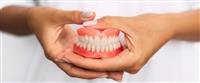
Dr. Amani bint Muhammad Zaitoun, a dental replacement specialist at Al Hammadi Hospital in Riyadh, explained the science of dental replacement: “It is a science of dentistry that is concerned with replacing missing teeth and restoring dilapidated and dilapidated teeth, in order to restore the aesthetic and functional form of these teeth.” When the teeth develop advanced necrosis
They become weak and more prone to fracture, and the damage is greater if the fracture line extends below the gingival edge, making restoration more difficult, if not impossible.
Sunni compensation is generally divided into two main parts: fixed and mobile compensation. What we will address here are fixed compensation from crowns and bridges:
The Crown
It is a pure ceramic piece, or ceramic on a metal core, covering all or part of the dental surfaces, to restore the anatomical shape of a weakly sagging tooth.
The Bridge
It is one of the dental works aimed at compensating for the loss of one or more teeth in the dental arch, and requires preparing the teeth adjacent to this loss to form supports that carry the bridge between these teeth, and thus replacing the missing teeth with what are called dolls and fixed dental structures in general that the patient cannot extract from his mouth Except by the dentist, and the success of these fixtures requires a superior skill from the doctor who specializes in diagnosing the condition, correct preparation of the teeth to be worked on, and choosing the appropriate type of compensation, as well as requires the skill of a dental technician who makes these fixtures in the laboratory.
Types of crowns
Crowns have many types and are considered the most important of them
The metallic ceramic crown
It is a crown consisting of a surface ceramic layer baked on an inner metal core with a thickness not exceeding half a millimeter.
However, the presence of the mineral core casts a shadow on the cosmetic side of these formulations and affects them negatively. The presence of the mineral is considered a barrier to light, which gives the crown a duller color more than natural teeth.
Also, the metal edge of this type of crowns makes the color of the gums over time tend to blacken or bluish, so this kind of crowns is not preferred over the front teeth at least.
The complete ceramic crown
It is the most beautiful and vital in fixed dental prostheses, because the absence of the metal under the porcelain there is no obstacle for the passage of light through the ceramic crown to the prepared tooth. Hence the full ceramic crown is more in line with the neighboring natural teeth in terms of color and translucency.
Crowns and Bridges Features
Restoration of a broken or broken tooth.
Restoration of a weak tooth with a large filling in the absence of large parts remaining from the original tooth
Covering a severely discolored tooth or suffering from a deformity (and now it is possible to treat this type of situation by using a modern technique that relies on the design of thin lenses from the luminaire, through which the colored dental surfaces are covered without the need to cool these surfaces, thus preserving the structure The tooth is healthy.
Supporting endodontically treated teeth that become brittle and easy to break.
Correcting the occlusal occlusal injury due to the loss of one or more teeth and the displacement of the posterior teeth to the void area, which causes an occlusal defect that may develop into a functional disorder of the temporomandibular joint. Also, compensation for a missing tooth preserves the corresponding tooth from the so-called emerging eruption.
Re-consideration of the cosmetic aspect, especially when the loss is at the level of the front teeth, from incisors to premolars.
In addition to improving the patient''s masticatory function.
Today, dental implants are the perfect healthy native to replace lost teeth and to protect healthy, neighboring teeth from the preparation process.
In conclusion, we stress the necessity of daily dental care, which is vital for the preservation of teeth in general and the gingival tissues supporting these teeth, in order to reduce oral infections and gums, which is a major reason for the failure of dental prosthetics and the presence of bad breath, including correct daily brushing of the teeth. And the use of oral medicinal rinse and dental floss to clean between teeth.