
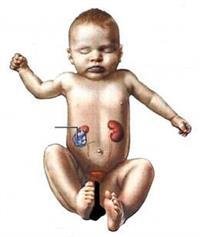
Kidney symptoms, children and causes Kidney symptoms and children causes Kidney disease symptoms in children and causes Kidney symptoms Children and causes are genetic diseases, congenital anomalies and frequent urinary infections among the causes of kidney disease in children. Children develop various kidney diseases as adults do, even if their causes in children are different from those of adults.
Among the most important causes that lead to kidney disease in children
1. Genetic diseases caused by a lack of some enzymes that result in deposits of salts in the kidneys, and the prevalence of these diseases in the Gulf states due to the mating of relatives, which results in the presence of more than one infected child in the same family.
2. Congenital malformations affecting the kidneys and urinary system, such as blockage or cyst, which results in pressure on the kidney tissue and the gradual loss of its work.
3. Recurrent urinary infections and not being treated and diagnosed by pediatricians correctly, studies have shown that 15-20% of the causes of kidney failure are due to negligence in treating urinary infections in children under 5 years.
4. Infection of the kidneys with various immune diseases, such as SLE and Nephrotic Syndrome.
5. Kidney stones.
Symptoms and causes of kidney disease in children
Thanks to the scientific development in various fields, it has become possible to diagnose some of these cases at the stage of the fetus in its mother''s womb, by imaging with sound waves and discovering any expansion or deformation in the size of the kidneys, and a sample of the amniotic fluid may be taken during pregnancy and Diagnosis of some genetic diseases that may have appeared in the previous children of the pregnant woman, and the pregnant woman and her husband are presented to a team of gynecology and obstetric consultants, children''s kidneys and genetic diseases to give them a clear picture of the condition of the fetus and what will be done at birth.
Thanks to the spread of awareness among pediatricians, it has become possible to detect urinary tract infections at an early stage, treat them in the right way, and conduct the necessary radiological examinations to determine the nature of abnormalities that may exist in the kidneys and treat them in a proper way to prevent their recurrence and cirrhosis in the long term.
As for the children who suffer from kidney failure in its early stages, the pediatric nephrologist can help them to complete their growth with proper nutrition, and give them growth hormone and ethopoietin injections to prevent anemia that may be caused by kidney disease.
And if the child has reached the final stages of kidney failure, two methods of dialysis can be used. As for blood washing, which is the most common in adults, it is not suitable for children because it leads to problems in placing the catheter due to the small size of their veins, and also leads to academic delay due to bringing the child to the hospital for a procedure. Washing 3 days a week for about 4 hours almost every time, the other preferred method of washing is home peritoneal washing, and is done by placing a small tube in the abdominal cavity, and the child is connected to a washing machine that does not exceed the size of the video device and washing is done For 10 hours at night during sleep, then the device is disconnected and the child can continue his normal life and go to school in the morning.
And the stage of dialysis is considered a temporary stage until the child prepares for transplantation, and this is the ideal solution for children as compensation for kidney work by planting at an early stage (when the child reaches a weight of 10 kg or more) leads to the child''s mental and physical growth in a natural way, which qualifies him to be An effective person in society, and with the recent discoveries today and the tremendous progress made in immunosuppressive drugs, the success rate of kidney transplant operations has reached 96% in some centers, which is very high compared to other organ transplants.