disadvantages
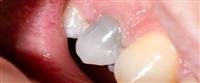
Dental dress-up, fixed tooth fixture, crown, crown, or even cowl, all have multiple names for one thing. This fixed formula covers the crowns of the teeth, which is the visible part of the teeth inside the mouth above the gum level.
Dental coatings are the same as most fixed fixtures. They need to prepare the tooth and cool it to a certain extent to allow space for the dental coating to be fixed.
There have been many rumors recently about the usefulness of dental coatings and their balance with their defects and the harm they cause to the teeth, so it has become necessary for me to write this article explaining to you what is dental dressing, its advantages, flaws, steps, types, and we will also answer a number of questions such as: Is dental dressing necessary? Does dental dressing need anesthesia (Bing)? What are the causes of dental pain after dressing? Should I wear teeth after pulling the nerve?
What is dental dressing?
It is a combination of a certain substance (metal - porcelain - zircon) that covers the crowns of the teeth to compensate for the shape and color, in which the tooth regains its strength to complete its function of chewing and speaking.
Dental dressing features
Of course, dental coatings are useful when they are in place in the time that requires it, and the dentist and the patient together determine the extent of the case''s need for dental dressing, as follows:
1- Front teeth dressing, when a fracture occurs that cannot be replaced by cosmetic fillings or dental lenses.
2- Dressing the molar in the event of a fracture that would weaken the molar and its inability to perform its chewing function.
3- Covering distorted teeth and teeth.
4- Covering the yellow and dark teeth, which did not work with whitening methods.
5- Dental coatings are useful when they compensate for the shape and size of the eroded short teeth.
Dental disadvantages
Of course, there are many defects of dental anesthesia, just like any treatment solution, but the severity of these defects increases when the decision to perform dental dressing is wrong. And these faults are as follows:
1- The first and biggest disadvantage of dental coverings is the necessity of returning part of the tooth surface: this leads to weakening of the tooth in general, so the decision to perform dental dressing must be well thought out and preferably one of the last available options.
2- Dental structures, as they are a foreign body in the mouth: the patient sometimes feels annoyed when he passes his tongue on it and feels that it feels different from the texture of the neighboring natural teeth.
3- Due to the weakness of some of the materials that are made of dental coatings such as porcelain, especially front teeth dressing: you may be exposed to fracture as a result of heavy pressure on it, so it is advised not to chop solid foods on them like carrots and others.
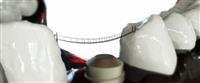
4- With the passage of time, especially in mineral dental coatings: frequent expansion and contraction occurs with a change in the temperature of the mouth when consuming hot and cold drinks, and with \ this contraction and repeated expansion of the metal cracks and bends in the limbs, which opens the way for the rest of the food And bacteria to enter between the veneer and the teeth, and thus cause cavities in this place.
5- In some dental coatings, especially those that do not have a high preparation accuracy and are not completely adherent to the tooth: the color difference between the tooth and the covering is colored to a dark color, which negatively affects the beauty of the teeth, especially in the front teeth dressing.
Dental dressing steps
One of the good things recently is the patient’s interest in knowing the steps of the remedial solutions that he will undergo, and this is a very important step as it gives the patient an idea of what will happen and thus raises the level of trust between him and the dentist.
Therefore, the doctor may be exposed to the patient''s question about the way to dress teeth, and we are here and in this article we will offer you our dear reader to answer this question in detail.
First we must know that dental dressing takes place on two or more sessions due to the presence of manufacturing steps within the dental laboratory, but in some clinics that use the "CAD - CAM" technique that allows the dentist to obtain the composition inside the clinic immediately without the need for a dental laboratory And that is by means of a dedicated cutting device.
Steps for the first session
The first session is usually devoted to examination and x-rays, so that after taking the decision to do dental dressing, the doctor will make x-rays on the tooth to be dressed to make sure that it is free of problems before installation.
The dentist then begins to cool the tooth surfaces with a certain thickness that varies according to the type of composition, whether mineral, porcelain, or even zircon.
After the cold is over, the doctor takes a print of the tooth using a paste made for this purpose. This print is sent to the lab to be cast with plaster and then the composition is designed on it.
The patient does not leave the dental clinic until after the doctor installs a temporary coating for him that protects exposed dental tissues from changing temperatures inside the mouth as well as preventing the teeth from moving, as they have lost their physical contact with the neighboring teeth.
Some tips for temporary coverings
Temporary dental paneling is of a very weak material, so the patient must avoid biting her too hard, or biting into hard objects.
Avoid chewing on sticky foods like sweets and gum.
If the temporary covering fell off, the patient must immediately go to the doctor to re-paste it, because leaving the tooth cool without it exposes him to allergies and could cause permanent injury to the nerve.
Steps for the second session
Initially, the dentist removes the temporary covering, and then prepares the surface of the teeth to receive the permanent cover.
The doctor tests the suitability and accuracy of the paneling through experimental composition.
In the end, when the doctor makes sure that the toothpaste is ready to be installed, he puts a "Cement" adhesive on the surface of the teeth to hold the fixture in place.
Finally, the doctor examines the patient''s bite after installation to ensure that the cover is in place.
Types of dental dressing
Types of dental coatings differ according to the different materials manufactured from them, and they are as follows:
1- Stainless steel dental coatings, which are usually used with children''s teeth.
2- Teels made from precious metals such as gold and platinum, and these formulations are characterized by a high degree of accuracy and compatibility with the oral tissues so that they do not cause any infections to the nearby gums.
3 - Acrylic coatings made from acryl, but these formulations are ready to pigmentation faster, and thus at the level of beauty is one of the least formulations.
4- Dental coatings made of pure porcelain, or porcelain under a layer of metal, and this combination is considered one of the strongest formulations as the metal gives it a high ability to withstand extreme pressure.
5 - Zircon dental coatings, which are characterized by high hardness, and therefore are frequently used in back molar coatings.