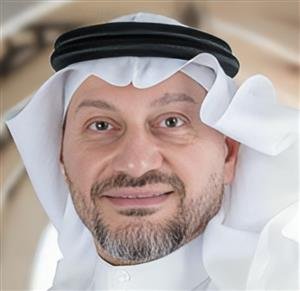
Dr. Muhammad Daghestani, Chairman of the Consultative Conference and Head of the Anesthesiology Department at King Abdulaziz Medical City in Jeddah, revealed that since the establishment of the first training program in the field of anesthesia more than 20 years ago, the number of Saudi doctors in this specialty has not exceeded 250 between a consultant and a trainee, stressing that this number is considered Very little in this long period of time compared to the huge numbers of doctors in surgical specialties that are in dire need of anesthesiologists.
He pointed out that the Department of Anesthesiology in King Abdulaziz Medical City in Jeddah was approved as a training center for the Saudi Fellowship Program.
The International Conference on Standards for the Practice of Anesthesia in the Kingdom, which is organized by the Health Affairs of the National Guard in cooperation with the Saudi Society of Anesthesiology, continued its work for the second day with the participation of more than 250 specialists and participants, with the aim of coming up with recommendations on the standards and foundations of the practice of anesthesia and setting some important rules for patient safety.
The third session was held yesterday chaired by Dr. Abdullah Kaaki, and Dr. Osama Al-Ahdal as assistant to the President, in which Professor B. Miles from (Australia) on translating the guide into practice, Mahmoud Abormash from King Abdulaziz Medical City in Jeddah on anesthesia in ambulatory care .. How and who? Could they go ?, Professor John Brooke-Otten from (USA) on the rapid succession of induction and tube ion .. the modern and ancient controversial points.
As for the fourth session, its chairman, Dr. Walid al-Yafi and his assistant, Dr. Abdulaziz Boker, talked about anesthesia, followed by Dr. Pierre Vest (Canada) about the field of anesthesia practice and the role of subspecialty, Dr. Jamal Tashkandi (King Khalid University / Asir) about the anesthesia nurse .. Is this A path to follow? - The opinions in favor of that.
Dr. Abdullah Kaaki (King Abdulaziz University - Jeddah) also spoke in this session about the anesthesiologist .. Is this a path that can be followed - opinions opposing that, while Dr. Qamar Al-Otaibi (King Abdulaziz Medical City in Jeddah) spoke about assessing the response of the solution to patients who They have no stability in hemodynamics, and finally Dr. Essam Manna (King Saud University - Riyadh) on the role of magnesium sulfate in neurosurgery.
workshops
After that, four workshops were held, the titles of which were as follows: (Adopting a difficult airway) by Dr. Abdulaziz Buker from King Abdulaziz University in Jeddah, (Regional anesthesia, lower and upper extremities) by Dr. Adel Kamal from King Faisal Specialist Hospital and Research Center, (Treatment by administering solutions Al-Veinidia) by Dr. Muhammad Daghistani from King Abdulaziz Medical City in Jeddah, (Chest and Single Lung Anesthesia) by Professor Abdul-Azim Al-Dawlatli from King Saud Hospital in Riyadh.
Today, 6 sessions
Dr. Muhammad Daghistani indicated that six sessions will be held today, Thursday, the first of which is about changes in the practice of anesthesia during forty years, litigation in medical responsibilities in the Kingdom of Saudi Arabia, the difference between instructions and instructions versus educational level, and how to establish a regional anesthesia service at a good level.
The second session discusses the improvement of minimization and simulation in developing patient safety, the elements of alpha 2 participation, pain control after surgeries, and the role of continuous catheterization, while the third session deals with translating the evidence into practice, anesthesia in emergency care, administering analgesics without anesthesiologists, and rapid succession in Induction, tube ion, and argument points Modern and old.
In the fourth session, the role of a subspecialty in the field of anesthesia practice, the anesthesiologist and the opinions for and against, presenting the response of the solution in patients who do not have stability in hemodynamics, and the role of magnesium sulfate in neurosurgery will be discussed in the fourth session.
The fifth session will discuss the problems of anesthesia in weight loss surgery, the simple strategic time criterion recommended by the World Health Organization, early targeted recovery in cases of bacterial shock, "support in the final stage of life", and multiple intensive attempts at anesthesia.
Finally, the sixth session deals with a discussion of histopathology, the problem of coagulation in cases of liver transplantation - a model for the challenge during the practice of anesthesia, the new in nitrous oxide, reports of critical events in a teaching hospital, the regular use of lidocaine, the modern practice of pain control.
And d revealed. Dagestani said that in light of this conference, the Saudi Society of Anesthesiology and the participating experts will meet to come up with recommendations for some standards and foundations for the practice of anesthesiology and to set some important rules for patient safety. He said that since the establishment of the first training program more than 20 years ago, the number of Saudi doctors in this specialty has not exceeded 250, between a consultant and a trainee, and this number is considered very little in this long period of time compared to the huge numbers of doctors in surgical specialties that are in dire need of doctors. Anesthesia. He added that the Department of Anesthesiology in King Abdulaziz Medical City in Jeddah has been accredited as a training center for the Saudi Fellowship Program, pointing out that the department offers a training program for residents in cooperation with the Saudi Fellowship Program for Anesthesiology and Intensive Care on the basis and rules of the program, and it has also been approved by the Saudi Specializations Authority. He indicated that the training program consists of five years, and the training and patient care is assigned to resident doctors under integrated medical supervision from consultants who have been ed to carry out this training, and a periodic evaluation is made for the doctors participating in the program and their follow-up through direct supervision and written tests at the end of each training year. To prepare the trained doctor to obtain the Saudi Fellowship in Anesthesiology and Intensive Care Medicine, where 6 doctors have been sent to study this specialization, four of them have completed their mission and are now practicing their work, as the main objective of the Anesthesia Department in King Abdulaziz Medical City in Jeddah is to provide care for all patients, which includes comprehensive care High level through the services provided by a highly experienced staff and also by using the latest technologies used in anesthesia with advanced medical devices, and there is a comprehensive pre-anesthesia evaluation and complete care during the conduct of operations and dealing with great care with cases of acute and chronic pain for all patients.