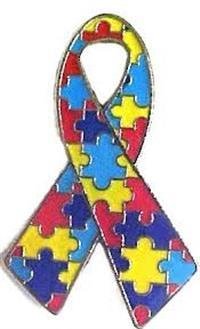
Autism Spectrum Disorder An overview of "Autism Spectrum Disorder" and the necessary care for it Brief About "Autism Spectrum Disorder" It is one of the systemic development disorders, which is characterized by deficiencies and stops in the development of sensory perception and language, and thus deficiency in the development of the ability to communicate, communicate, learn and develop Cognitive and social. This is accompanied by self-isolation with emotional and emotional rigidity.
The child lives in his own world except for his involvement in random and purposeless stereotypical actions or movements for long periods of time, or in outbursts of anger in response to any external pressure to remove him from his private world. And many of them have some degree of mental disability.
It is worth noting that this disorder causes many psychological disorders in family members of a child with autism spectrum.
• Diagnostic criteria for autism according to the 4DSM Diagnostic Statistical Manual of Mental Disorders (Fourth Edition - 1994 AD)
There must be a total of 6 or more of the elements mentioned in Clauses (1) (2) (3), provided that this includes at least two elements from Clause (1) and at least one element from each of Clauses (2) (3).
1- Weakness in social interaction.
A- A clear weakness in the use of nonverbal behavior such as staring into the eyes of others, facial expressions, physical postures, signs and gestures for directing social interaction.
B- Failure to develop relationships with peers that are compatible with the comparable level of development of peers.
C- Lack of automatic seeking to share joy and interests with others.
2- Poor communication.
A- Delay or complete lack of spoken language "not accompanied by any attempt to compensate for it through native means of communication such as sign or imitation."
B - An apparent weakness in the ability to initiate or support a speech in individuals who have a normal ability to speak.
C- Typical and repetitive use of a language or a primitive language.
D- Lack of automatic play, or initiative in social play appropriate to the child''s level of development.
3- Behavior patterns characterized by limitations, stereotypes and repetition.
A- Preoccupation with one or more of the typical and limited interests that are not normal, either in (intensity or focus).
B - Adherence to routine or repeated non-functional acts.
C- Typical repetitive movements (flapping or rotating hands, or complex body movements).
D- Strong preoccupation with parts of things.
• In May 2013, the fifth edition of the 5DSM American Diagnostic and Statistical Manual of Mental Disorders was published, and distinguished:
1- By making a general diagnosis of "autism spectrum disorder" instead of
Autism disorder.
Asperger Syndrome.
Retts Syndrome.
Childhood Disintegrative Disorders.
P.D.D-Nos Pervasive Developmental Disorder Not Otherwise Specified
2- Specification and accurate description of the situation in terms of severity and what accompanies it:
Associated with mental retardation or not
Is accompanied by a language delay or not
• Mention of organic diseases such as epilepsy / genetic conditions such as Down''s syndrome / mention of environmental factors
Mention of other developmental disorders / mental disorders / behavioral disorders.
• If it is accompanied by a wooden condition or not.
3- Mentioning the severity of the autism spectrum and its classification into
• The autism spectrum is simple
• The autism spectrum is medium
• The autism spectrum is severe
Statistics in the 5th American Diagnostic Statistical Manual of Mental Disorders (5DSM) indicate that 1% of children develop autism, that is, the numbers are greatly increasing and frighteningly compared to the old statistics.
One of the important indicators in the diagnosis of the autism spectrum is a setback in the child''s development after his developmental and mental development.
The percentage of boys with autism spectrum disorder is 4 times higher than that of girls, but girls with autism spectrum disorder have an increased rate of intellectual disability and mental retardation.
Autism spectrum disorder symptoms (autistic child characteristics)
1- He does not care about those around him and seems as if he cannot hear.
2- Resists embracing, that is, it tends to isolate.
3- He is not aware of the dangers and may harm himself, such as hitting his head against a wall.
4- Children who have the ability to speak repeat speech like parrot with what is called parrot echo (verbal echo).
5- Do not play with others.
6- Has excessive motor activity or excessive lethargy.
7- Laughing or random crying sometimes with intense tantrums.
8- Weak or no eye contact (does not look into the eyes of others).
9- Resists a change in routine.
10- He enjoys constantly twisting things.
11- He cannot express pain, but is sensitive to touch.
12- Unnatural attachment to things.
13- Lack of imagination and creativity when playing, as it plays in a continuous and strange way.
14 - The presence of abnormal repetitive movements that appear in body movements or while holding things, such as shaking the head, flapping with hands, or rubbing eyes.
• What do children need for "the autism spectrum"
A child with "autism spectrum" needs a detailed evaluation from a psychiatrist specializing in the evaluation and treatment of autism spectrum disorder, and then needs a comprehensive evaluation from an integrated team of doctors in various specialties that the child needs on the autism spectrum, and among these specialties:
1- Consultant neurologist to make sure that there is no epilepsy disease that some children of the autism spectrum may have
2- Consultant otorhinolaryngologist and conducting hearing tests
3- A genetic counselor to ensure that there are no other genetic diseases or disorders and to examine the child and his family genetically in order to limit the spread of the disease in the family carrying the genetic gene
4- Speech consultant to make a comprehensive evaluation of the child''s ability to verbal communication and to develop a treatment plan for him.
5- A consultant of functional and motor work to assess the child''s fine and general motor capabilities
6- A behavioral therapy consultant specializing in cases of the autism spectrum to assess the child''s skills and the rehabilitation he needs commensurate with his mental abilities after performing important tests and his social capabilities.
After that, an integrated plan is developed that aims to design a complete and integrated program for the child of the autism spectrum that is commensurate with his disability. Learning.
The rehabilitation program differs from one child to another according to the data and capabilities of the child. Early intervention for the child is recommended to show the best results. The period of time for the rehabilitation program varies from one child to another.
Autism spectrum disorder is one of the disorders that needs complete family treatment, so it is not a child of the autism spectrum who needs treatment and rehabilitation. Rather, parents and all siblings may need psychological support and at times they need psychological treatment. Opaque and relatively incomprehensible to some of the people.
Dealing with children on the autism spectrum requires extensive training and continuous practical courses, and this is what is needed not only for those working with children on the autism spectrum, but for everyone who deals with it.
Prepared by: Dr. Samira Ali Al-Ghamdi
February 27, 2014