
reaching the ranks of men
Successful women tend to focus on developing and overcoming obstacles, and most importantly, they do not see failure as failure but rather as an opportunity to learn.
Many women live as prisoners of their unfair vision for themselves, dominated by a sense of inferiority and fear of failure, which deprives them of seeing their true capabilities, and prevents them from making any progress in their professional lives.
Advocates for women''s rights attribute inequality in income and employment opportunities between the sexes to the patriarchal restrictions that are exercised on women in their societies, and make women underrepresented in social life, but new studies have highlighted another obstacle standing in the way of women''s professional aspirations, which is their evaluation Unfair self-esteem, and their lack of belief in what they possess, which discourages them from entering several professional fields, and makes them hesitate to take the initiative to take important decisions that may help them advance in career positions.
Experts noted that women in the modern era have become possessed of scientific and intellectual qualifications that would make them add differences to public life, and they also have the spirit of teamwork, all of which, if employed properly, will make societies healthier, prosperous and stable. Males still outpace females in many professional fields.
This problem is not the only problem that women suffer from, as some of them face negative social interactions, common inferior ideas, in addition to social rejection of them in some areas, which imposes serious challenges on their future and career prospects.
Press reports and scientific research abound with many examples of the negative impact on women, due to the prevailing stereotypes that link men or women to work in certain jobs.
Several studies have highlighted the high impact of these stereotypes, which shape women''s expectations of whether certain jobs are suitable for them.
This effect is due to the fact that these stereotypes can eliminate the enthusiasm of some of them to apply for some jobs, and tighten the screws on them in many areas.
The United Nations Educational, Scientific and Cultural Organization (UNESCO) indicated in a previous report that the number of girls studying science has increased in recent years, while only a small percentage of them are enrolled in scientific jobs, and this would lead to society losing talented workforce.
Women are still at the end of the ladder in the fields of foreign affairs, defense, and decision-making positions, and the gender wage gap is not new. There are many studies that have shown that professional life is less generous for women, both financially and in terms of holding senior job positions. .
In many places of the world, women are still more likely to remain without work, and the unemployment rate of women in the world is 6.2 percent, compared to 5.5 percent among men, and women are often forced to accept lower quality jobs or give up the idea of work altogether. As a result of the many pressures she faces in her society and the fear of male competition.
In the Middle East and North Africa region, women are more likely than men to pursue higher education, but their participation in the labor market is around 26 percent, which is much lower than the average for low- and middle-income countries, which is 39 percent. This is a clear indication that many qualified women are not entering the workforce.
Women behaving like men
There are wholesale challenges in societies that raise masculine values, prevent women from ascending professionalism and restrict employment opportunities, while helping men achieve their professional ambitions and advancement easily. Taking care of children and the family represents a set of additional implicit barriers that dispel the career aspirations of women and make men enjoy many advantages in public life.
Michelin Habib: As long as there is a classification of occupations Since some are fit for women and some for men, there will always be women who harness their potential
Lebanese journalist and writer Michelin Habib expressed optimism about women who appeared as models, even in Arab societies that are dominated by male domination.
Habib told Al-Arab, indicating, “Today we are witnessing a remarkable progress on the world stage for women in many areas, but there are many areas that women have not yet entered or are very shy in, for example: politics, sports, film directing, and scientific fields.”
She explained, "There is no doubt that male domination plays a role in the lack of progress of women and stands as a barrier in front of them, preventing them from violating these areas, but sometimes the lack of confidence of women in themselves is the same obstacle."
She added, “Lack of self-confidence stems from the upbringing that the girl receives at home and in school. Since some of them are suitable for women and some for men, there will always be girls who limit their capabilities or direct them in another safer direction in a society that believes that the only guarantee of a girl is marriage.
She stressed that "norms and laws that are biased against women protect male rights, confiscate female rights, and tighten the noose on them in public life, and thus ensure the continuity of male dominance over domains that are monopolized by males."
Michelin Habib: As long as there is a classification of occupations Since some are fit for women and some for men, there will always be women who harness their potential
Lebanese journalist and writer Michelin Habib expressed optimism about women who appeared as models, even in Arab societies that are dominated by male domination.
Habib told Al-Arab, indicating, “Today we are witnessing a remarkable progress on the world stage for women in many areas, but there are many areas that women have not yet entered or are very shy in, for example: politics, sports, film directing, and scientific fields.”
She explained, "There is no doubt that male domination plays a role in the lack of progress of women and stands as a barrier in front of them, preventing them from violating these areas, but sometimes the lack of confidence of women in themselves is the same obstacle."
She added, “Lack of self-confidence stems from the upbringing that the girl receives at home and in school. Since some of them are suitable for women and some for men, there will always be girls who limit their capabilities or direct them in another safer direction in a society that believes that the only guarantee of a girl is marriage.
She stressed that "norms and laws that are biased against women protect male rights, confiscate female rights, and tighten the noose on them in public life, and thus ensure the continuity of male dominance over domains that are monopolized by males."
Habib concluded by saying, “A sense of lack of self-confidence can manifest when some women reach important and sensitive positions They fall into the trap of masculinity and become behave like men, and this in itself stems from insecurity and fear of fate. Women arrive at these centers loaded with a background charged with psychological and social pressure, personal conflict, and the urgent need to prove oneself.
An opportunity for self-development
Real success in any field is related to the way of thinking, so most successful women tend to focus on development, overcoming obstacles through self-development, and most importantly, they do not see failure as a failure, but instead see it as an opportunity to learn and adapt to reality. Whereas, women who are unable to overcome the social stigma attached to their psychological and physical build believe that their capabilities are fixed, and thus they avoid facing challenges.
Samira Ali Al-Ghamdi: Lack of self-confidence is not an obstacle in the way of a woman only, but also in the path of every person, whether male or female
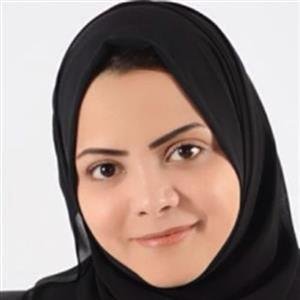
Dr. Samira Ali Al-Ghamdi, Consultant Psychiatrist at the General Administration of Mental Health and Social Service at the Saudi Ministry of Health, said: “Self-confidence is a deep and detailed awareness of a person''s strengths and weaknesses and their capabilities, and then an absolute faith in his abilities arises, and he works to harness them and use them as tools that enable him to Reaching his goals and helping him achieve his dreams, regardless of challenges and difficulties he faces.
Al-Ghamdi also called for awareness of the shortcomings that need refinement and development, by self-reliance or by seeking help from people who have qualifications and skills that can help deficiencies overcome their weaknesses, make them able to move forward, and motivate them to make decisions that enable them to Change the course of their lives, and then embark on the path of creativity and fulfillment of hopes.
Al-Ghamdi added to “Al-Arab”, “Lack of self-confidence is not an obstacle to a woman’s path only, but to every person, whether female or male.”
Al-Ghamdi cited her experience as an example, stressing that her work environment forced her to deal with the male and female sexes, but she did not face any male restriction as a woman, which might prevent her from achieving her dreams or her success in her field of specialization as a consultant psychiatry for children, adolescents and adults.
Al-Ghamdi continued her statement, “I have held several positions in several departments in the field of protection from abuse and neglect, and in centers dealing with autism spectrum disorders, and during that period, I still deal with the male sex as president or subordinate, and I never felt that dealing with it is different from dealing with the female sex. It''s all about people, not sex per se. ”
She indicated, "During my simple experience in this field, I found support from many distinguished men, who did not skimp on advice, guidance and assistance in many cases, and they were really a wonderful addition to my professional life."
She explained, "The whole thing depends on our belief in our abilities that may be greater or less than men. This is the year of life in the absence of perfection in one individual, but rather an integrative relationship between a group of individuals (women or men)."
Al-Ghamdi concluded by saying, “Racism between men and women is nothing but a cultural legacy that carries many fallacies, and it can be overcome by correcting it with oneself, and also through social communication skills with others, until it is eradicated from its roots. We will not reach this sound concept except when we focus on ourselves and believe in our capabilities and the sources of creativity in us, and when we have confidence and belief in ourselves and bear our failures, and evaluate them properly, to benefit from them as life experiences that help us move forward in achieving the goals.
Despite the strong role played by women who have come to occupy the highest and most influential positions around the world, in being role models and inspirations for the girls of their gender, these characters have fallen from the memory of many women who are unable to break the barrier of fear within them that accompanies their lack of self-confidence.
Saudi psychologist Nouf Shaflout attributed the reason for women''s lack of self-confidence to early childhood stages, when boys and girls assume different roles that are imposed on them in a semi-subconscious manner.
Shaflout told Al-Arab, “Family education is mostly subject to the culture of society, and therefore it is the family environment in which a woman grows up that affects her self-confidence.”
She added, "Women face from a young age intense pressure and stereotypical ideas that diminish their status and achievements, including the issue that women are not fit for leadership p