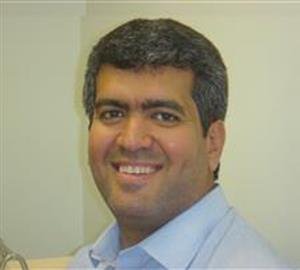
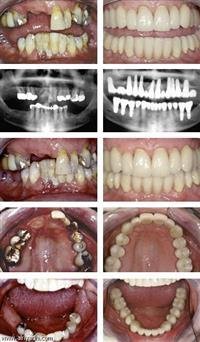
Dr. Adel Al-Mardi - Jeddah Tuesday 04/05/2010 Al-Khayari: Dental implants using three dimensions do not require surgery Dr. Yasser Muhammad Al-Khayari, Associate Professor at the College of Dentistry in Jeddah and Head of the Dental Department at the International Medical Center, confirmed that movable dentures, fixed bridges and dental implants are a summary of prosthetic methods Which people sought and is still used to replace lost teeth to this day. Dr. Yasser explained that some people might think that dental implants are similar to kidney, liver, or cornea transplants, and the principle of them is to "transfer organs" from a patient and then implant them to another patient, and this principle does not apply to dental implants, as teeth are not transferred from one person to another person. Although there are some indications that this procedure was in place in a distant era in time, as teeth were bought from the poor and implanted for the rich.
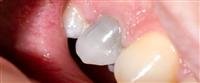
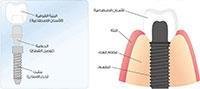
And dental implants are a metal cylinder that resembles a tooth root, ranging in width from 3-6 mm and length from 8-15 mm. It is implanted into the jaw bones in the place of the lost tooth. This cylinder leaves a period of time ranging between two months and four months after which the ceramic crown «similar in shape to a tooth crown» is attached to this cylinder. .
The secret of the success of a dental implant procedure lies in the fusion of the jaw bone with the surface of the implant and the formation of osseointegration between the bone and the implant.
And about the most important benefits that distinguish dental implants from fixed bridges, Dr. Yasser said: One of the best advantages of dental implants is that it avoids the coldness of healthy teeth adjacent to the lost tooth and relies on it in making these bridges, as sometimes food residues and bacteria collect under these fixed bridges and it is difficult to The patient cleans these places, which may lead to a bad smell in the mouth. As for dental implants, they mimic the appearance of a natural tooth in form and function, enabling the patient to clean between his teeth naturally.
Dental implants in general are suitable for all people over the age of 18, unless there is a health or technical contraindication. The technical impediment is the atrophy of the jaw bones, and the solution in this case is the process of restoration and grafting of the bone and trying to restore it to a state that enables us to place dental implants in it.
As for health barriers, there are many, but one of the most important is diabetes, and here I want to note that the diabetic patient, whose treatments are maintained and his sugar level is regular and stable, is treated as a healthy person. But if the blood sugar level is not stable and irregular, then the success rate of the transplant is very weak.
In general, the success rate of dental implantation depends primarily on the appropriate preparation of the patient, studying his condition and developing a treatment plan, then the success rate - God willing - is high and reaches 98% in most cases.
The position of the implant in its ideal location depends on several factors, the most important of which is the skill of the doctor and the careful study of X-rays or CTs that the doctor may request before the transplant. There are also several studies and experiments to develop a navigation system for dental implants that guides the doctor during the implantation process to direct him to the ideal place and avoid the risk of injury to the main mandibular nerve or penetration of the sinuses adjacent to the upper jaw. There are also 3D programs available that help the doctor an integrated treatment plan for the number of implants, determine their ideal lengths and locations, and even visualize them on a computer screen, and then send this treatment plan by e-mail to specialized dental laboratories to manufacture Surgical Stents that are used by them. The doctor later during the dental implantation, this technique enables the doctor in certain cases to implant the teeth without a surgical incision in the mouth gums, which in turn reduces the appearance of swelling and pain that may appear as a result of the incision in the mouth gums....