doctor who studied in the Kingdom
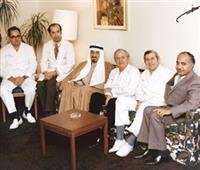
The first batch of female graduates from the Faculty of Medicine at the University of "Riyadh", they had precedence in science, just as they were "favored" when they met the late King Khalid bin Abdul Aziz, to complain to him of some of the educational difficulties they face, to start a new story, which we recounted to "Al-Watan" The one who interviewed a number of them ... told us the details of the meeting with the king, and how he provided them with "support and apology", which helped them complete their academic career.
King''s visit
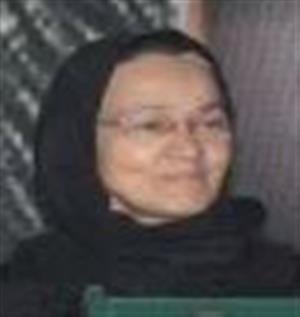
The head of the pediatric surgery department at the Armed Forces Hospital, and the first Saudi pediatric surgeon, Dr. Asya Al-Rawaf, narrates the details of the first visit she, along with a group of her colleagues, to King Khalid bin Abdulaziz, in his palace, and how he received them as a "father not as a king" As she described it, 34 years ago, in an interview that was called "simplicity", far from "complexity", where they talked to him with everything that was in their minds. Al-Rawaf said, "We were in the second year of our university studies, and we were suffering from a basic problem in buildings and equipment. We had basic demands, as we had no place to study, and there was no building for the College of Medicine for female studies, not even laboratories." To the College of Science for students, let us study after the end of their school day. However, the suffering was not limited to that, but there was also no place for food .. We used to bring sandwiches from home, as in school, and the difficult conditions for transportation, and our special needs as a specialty were not We met with the Dean of the College of Medicine, Dr. Fatani, to inform him of our demands and what we need, so he told us there is no solution. What I do, the possibilities are limited. " Then, “Princess Mashael bint Majed arranged for us a meeting with King Khalid, with the help of Princess Moudi bint Khalid, who said:“ May God grant them peace, let the girls come and see what they want. ”And Dr. Al-Rawaf added,“ Within 48 hours, we were in the yellow college bus, driven by the driver. Abu Anas, accompanied by his wife Umm Anas .. We were about thirty students. After the sunset prayer, we went to meet King Khalid, according to the agreed date. We entered the palace, and we were received by the mother of Prince Faisal bin Khalid and Princess Moudi, and the king was five minutes late for us, and when he entered us, he apologized to us for being late, because he used to pray Maghrib, and you can imagine the apology occurred!
The king''s apology
An adult heart consultant at King Faisal Specialist Hospital in Riyadh, Dr. Mai Al-Shahed, describes how they reacted after King Khalid apologized to them, saying, “We were shocked. The king apologized to us, because he was late to us! We did not believe, and his words were like snow on me. He spoke with each one separately. When he entered, we stood up and began to greet us, and asked Princess Mashael, may God have mercy on him, and said: “Are they all of your colleagues?” He also said: “Our prophet we hear from you, may we be able to help you.” Dr. Assia Al-Rawaf told the story, saying, "With these words, and in his simple and affectionate manner, we felt that we were in front of our father, not before an official or king, and the dread disappeared, and all the words we had arranged evaporated, and we spoke simply and comfortably, and we felt an unspeakable happiness. We were going to meet a king, and we found a responsible person with great stature, except that he was close to us, and the father was ours, he gave us his time, and he listened to every one of us, as each one had something to say. I still remember his word, when he told us: "You are the future, and this is a responsibility, may God help you with it."
Quick response
Dr. Mai al-Shahed, the British woman, Julia, who was teaching them chemistry, remembers who was surprised that "we were able to meet the king in less than 48 hours," and she listened to us talking about the visit with happiness and joy, as if we were flying in the air. Months, we got an independent building, and we had a building called the College of Medicine for Women, in Alisha, and we finished our study years in it, and this gave us a sense of our importance, and the responsibility entrusted to us, ”revealing that“ our colleague Mashael bint Majed, she used to tell us, that when the king saw her Khaled, at a family meeting, asks her about us and says, "What are the girls'' news?"
Thirty students
The number of female students in the first batch of "medicine" was 30 female students, who had graduated doctors in all specialties, from most of the cities of the Kingdom: Riyadh, the Eastern Province, the South, Makkah, Madinah, and Jeddah, and this, according to Dr. Al-Shahid, "reflects King Faisal''s desire in the beginning," And after him, King Khalid, in the continuation and development of the education process. We had strong and great support after meeting King Khalid, and most medical colleges for girls were opened during his reign. We recall that the first Saudi nurse graduated in that period. This reflects his future outlook on the importance of the role of women. And its role in continuing women''s education. "
Experience support
Dr. Al-Shahed believes that "the interest in us was clear" as the first Saudi women to study medicine inside the Kingdom, adding, "We felt that there was a desire and striving for everyone for this first experiment to succeed well, in different societal conditions that differentiated between women and men. A field that brings them together, "considering that" things were done well, without problems, and our education did not stop if there was no female teacher, as we were studying through closed circles. Dr. Muhammad Noah was the first Saudi to study female students, and the situation was different, as the need for women was To work in several sectors, jobs are available. " Regarding the graduation ceremony, the witness says, "Our graduation ceremony was attended by Prince Faisal''s mother, Princess Seetah, in the university tent, and the number of attendees was 10 thousand, including students, mothers and faculty. Although the ceremony was for graduates of all specializations, we felt our distinction, as the first batch. Because of our meeting with King Khalid. "
Interest in scholarships
Dr. Amal Fakih, consultant ophthalmologist and eye plastic surgery at King Faisal Specialist Hospital, did not meet King Khalid bin Abdul Aziz with her colleagues in Riyadh, as she was part of the scholarship of female students in Pakistan, bringing her memory back to that period, saying, “Before I went back and completed my studies After the College of Medicine for Women was opened at the University of Riyadh, where Saudi women began to be sent abroad since the sixties, King Khalid was on a visit to Pakistan, and he asked to visit the Saudi students on scholarship, so the students went to him, he asked about the female students, and he insisted that he meet us, and indeed we met him. He greeted us, and he gave everyone in the residence a month''s salary. She added, "We used to live in a private residence for Saudi female students, of which there are 80 students, and we were receiving care, attention and attention. He provided us with private housing, cooks, drivers, private buses, and our own supervisors." Fakih continued, explaining that, "at one of the international conferences held at King Khalid Eye Specialist Hospital, I attended a lecture for the first British doctor who participated in the establishment of the hospital, in which he talked about King Khalid, and how he was asked to establish a hospital with the highest degree in the levels of specialized hospitals. And in particular Al-Ayoun. Indeed, the hospital was one of the most important international specialized hospitals.
Stage difficulties
Regarding the difficulties they suffered from at that stage, Dr. Assia Al-Rawaf said, "We faced difficulties and suffering, including time, as most of the students got married during their studies, and we were between family and study, time and transportation. And by virtue of the fact that we were studying in Aisha, and training in King Abdul Hospital." Dear, the distance between them is half an hour, and between the two lectures is one minute, and some of us did not finish their lectures, and the bus did not take us all. We would go by taxi, and some taxi drivers, if they knew that we were medical students, did not take money from us. We used to ride on public transport buses. "Among the suffering was the frequent power cuts during that period, especially during studying time. We were also very hungry because it was difficult to obtain food, as there was no canteen or buffet, or even groceries in the college," she added. Dr. Amal Fakih, adding to her colleague Al-Rawaf’s hadith, saying, “When the students were“ applying ”in Dr. Abdulaziz Hospital, at that time, when there was no canteen or a place for food, it was that Dr. Muhammad Noah assigned a person to bring us food from A box "in front of the hospital. He used to bring us food so that we would not go down, not raise gossip, and we ate according to his choice, and what he brought to us." However, despite these difficulties, they were able to bypass them and graduate ... continue their educational journey .. prove to everyone the ability of women Saudi Arabia, to achieve distinction and giving.