sterility and fertilization
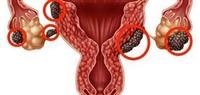
What are the fibers of the uterus: It is a benign mass that arises from the tissues of the wall of the uterine muscle, which may enlarge and affect the normal shape of the uterus (Figure / 1), and one or more is found in 20 to 30% of women between the age of 30-40 years of age. What are the reasons for the occurrence of fibers in the uterus: The real causes are unknown, and it is widespread and distributed to women on all continents, even if it is more in Africa and has a direct relationship with the hormone (estrogen), which is the feminine hormone in women, which is secreted by the ovaries.
In the stage of pregnancy, when the rate of this hormone rises in the blood, the size of uterine fibrosis increases
In the post-menopausal stage, when the level of this hormone in the blood decreases, uterine fibrosis appears.
Types of fibers in the uterus
Its location around the uterus and cervix, and it is divided into three main types (Figure 2)
1- Under the outer layer of the uterine wall, it may hang in the abdominal cavity.
2- Inside the uterine wall muscle
3- Under the wall of the endometrium and may hang in the uterine cavity.
Symptoms
In many cases a woman may not feel the presence of fibrosis and show no symptoms, while for others, 30-40% of women show one of the following symptoms:
1- Excessive period, irregularity and length - as the presence of fibrosis affects the endometrium.
2- No m - is associated with the presence of fibrosis due to its rapid increase in size and often this occurs during pregnancy, and in the event of a torsion of a fiber inside the abdominal cavity, as well as pain during sexual intercourse as a result of its large size and location of fibrosis.
3- Stressful symptoms - on the bladder or rectum, such as frequent urination or difficulty passing urine due to the pressure of fibrosis on these organs.
4- And other symptoms such as an enlarged abdomen.
Fibrosis and pregnancy
Given, "As we mentioned, the fibrosis is associated with the hormone a-estrogen, which rises greatly" during pregnancy, which leads to a rapid increase in the size of the fibrosis and that leads to the occurrence of pain that may be severe
In fact, the only treatment during pregnancy is analgesics and tranquilizers until the end of pregnancy or the disappearance of pain.
Uterine fibrosis in girls before marriage
In girls before marriage, fibrosis may present with symptoms of heavy menstruation or enlargement of the size
Sudden abdomen and in both cases, careful examination must be made by an experienced physician
The holistic view of treatment is important at this stage before marriage, so that complications of treatment, especially surgical intervention, do not lead to greater problems in the future. "
Fibrosis, fertilization and sterility
Fibrosis may contribute to delayed occurrence or prevention of pregnancy and fertilization, or affect the continuation of pregnancy, causing miscarriage or premature birth, either by affecting the efficiency of the endometrium to receive the fertilized egg, or by pressing the opening of a tube and closing it, or reducing the normal size of the uterine cavity.
But it must be noted that the relationship between fibrosis and fertilization is not completely clear, and that few cases of infertility are actually caused by the presence of fibrosis.
So a careful examination and search for other causes of sterility in the woman or husband are very necessary "before blaming fibrosis as a reason for not getting pregnant,
Especially when considering treatment and surgical intervention, as this intervention, if not justified, may lead to complications and complications more than it leads to treatment for infertility,
Therefore, it is required to take the opinion of an expert and experienced doctor in the field of medical and surgical infertility treatment to reach the desired result, God willing.
Diagnosis
In addition to the medical history, symptoms, and then a clinical examination, which usually leads the doctor to the correct diagnosis, but to confirm this, and to obtain the size, number and location of the fibrosis, we resort to one or more of the following diagnostic methods:
1_ Ultrasound (with sound waves): through the abdomen or internally through the vagina, where we can obtain an accurate image of the fibers and determine their location in the uterus.
2_ X-rays - chromosomes, and it works by a specialized doctor, where a reflective image of the uterine cavity and what it contains, as well as the nature of the two tubes can be found (Figure / 3)
3_ Computed tomography (CT) scan: It gives three dimensions to locate and locate fibrosis. It is expensive and rarely "used for diagnosis, as other means are rich.
4_ Magnetic rays (MRI) determine very precisely the location of fibrosis in relation to the uterus, as well as costly, and it is rarely necessary for the situation to be performed.
5- Diagnostic abdominal cavity endoscopy: for accurate identification, direct viewing through the scope, and identification of the location and size of fibrosis in the uterus and abdominal cavity, as well as the relationship of fibrosis to the fertilization system and the pelvis. It requires light general anesthesia and can be performed in one-day operations.
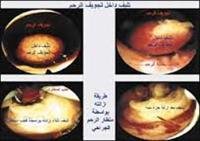
6_ Diagnostic hysteroscopy: where the uterine cavity is explored directly through the cervix by means of the endoscope, and this is done under local or general anesthesia, and you can return home after several hours.
treatment
Most cases of fibrosis do not require treatment, especially if there are no symptoms, the doctor is satisfied with periodic examination, but if there are influential symptoms such as: -
Internal pressure in the abdomen or pelvis,
Enlarged fibrosis,
Bleeding and profuse menstruation,
Pain or problems with fertilization and sterility,
So we resort to treatment, and here it is worth noting what we mentioned previously, "The relationship between fibrosis and infertility is not clear. Rather, surgical intervention may lead to the occurrence of adhesions that may complicate the process of treating infertility in the future, and the types of treatment are:
Removal of fibrosis surgically through the abdomen
Upon reaching the decision for surgery to remove the fibrosis by a surgical incision in the abdomen between the surgeon and the patient, due to the case data and symptoms, as we mentioned previously (often "if there is one or more fibrosis inside the uterine wall of a large size - Figure / 4)
It is necessary for the patient to notice that this operation may have some complications sometimes, such as the need for a blood transfusion as well, even if it is rarely, "we may need to remove the uterus in the event of severe bleeding from the site of fibrosis,"
Also, in the event of a desire to become pregnant in the future, "the possibility of adhesions after the operation is possible and this is evaluated later" by making a laparoscope and x-rays.
As for determining the method of birth after the operation in the event of pregnancy, it depends on the surgeon who performed the operation in terms of the surgical incision in the uterus and the number of fibers removed, since the possibility of future birth "by cesarean section is very likely",
To recover completely from the operation, the patient needs approximately two months to return to normal life.
Removal of fibrosis by laparoscopy
In the event that fibrosis is located under the outer layer of the uterine wall or hangs in the abdominal cavity (see Figure -2), it can be removed by making small incisions in the abdomen, accessing it and extracting it, and therefore an experienced surgeon in laparoscopic surgery is required, as well as having no equipment for that.
And to recover from the operation, the patient needs approximately one week only, and these are the advantages of laparoscopic surgery.
Removal of fibrosis by means of a surgical endoscope of the uterine cavity
In the event that fibrosis is found inside the uterine cavity (Figure / 5), it can be removed by a surgical endoscope through the vagina and cervix without the need to make an incision in the abdomen or openings in the abdomen, and the patient can return to normal life after two days of the operation.
Here it is necessary to note the nature, size and location of fibrosis, is it partial or complete inside the uterine cavity, where in some cases we need more than one surgical procedure separated by one to two months to reach the complete excision of the fibrosis.
Removal of fibrosis by hysterectomy
In the event that the patient does not want to become pregnant in the future, and the presence of fibrosis or more of a large size and causes symptoms affecting you, the best solution may be to remove the entire uterus, and often it is by opening the abdomen and recovery will take place within two months of the operation. Without a doubt, he will explain to you. Your doctor detailed about the operation, its types, and everything related to it.
Treating fibrosis by blocking the uterine arteries
It is a relatively recent method that appeared in France for the first time in 1991 AD, where it works to block the arteries of the uterus feeding the fibrosis (Figure / 6) through a catheter from the peritoneum, and after that fibrosis becomes about 70% of the volume, I do not pray within 6 months to a year and accordingly. Therefore, the symptoms decrease or disappear permanently. The results of this method are good. They have some complications, such as pain in the first day after catheterization, and can be overcome with strong painkillers.
It is carried out by a radiologist and can return home within two days, and there are still some reservations about those who want to have children in the future, "regarding this method of treatment.
Treating fibrosis through coagulation tissue dissolution with cryogenic or electric waves
Likewise, it is a new method that appeared in Belgium in 1993 AD, whereby fibrosis is accessed through the laparoscope in the uterine wall and several holes are made in it to work on analyzing and pricking the fibrosis tissues completely by means of cooling, electric waves or lasers, and thus the fibrosis becomes atrophied and its symptoms disappear.
This method is not widespread and its results are not clear, knowing that it is very safe in the hands of an experienced surgeon.
Supportive medical treatment
In fact, there is no medical treatment (pills or abrasives) that permanently removes the fibrosis, but there is supportive medical treatment to relieve the symptoms and it may be used for a temporary period such as:
L-progesterone - to treat other causes of menstruation and endometriosis problems, or
The -GnRH-analogs - which leads to a decrease in the hormone level - not to estrogen - and thus reduce the size of the fibrosis, but we cannot use this treatment for a period of more than 3-6 months as it has side effects, the most important of which is osteoporosis when used for a long time, as well as when stopping its use Fibrosis returns to its previous size, so it is only used for a period before the operation to improve the level of iron in the blood before the operation and reduce bleeding during the operation.