A healthy white smile is one of the features of beauty, in addition to being an expression of good health, and that is why we find researchers in the field of dentistry in constant search and continuous development in order to innovate the best methods and therapeutic and cosmetic methods that are designed according to the needs and capabilities of each individual.
Orthodontics (or as some call it braces) is one of the oldest techniques used to treat and modify dental problems, such as clenching teeth, protruding teeth, mismatch or mismatch of jaws, to look more beautiful and healthy.
At this advanced time, many new types of orthodontics and advanced treatment technologies have emerged.
Types of orthodontics
Hard orthodontics
There are three types of it: metal orthodontics, and internal orthodontics. And ceramic orthodontics, and the following is a simplified view of each:
Metal Orthodontics
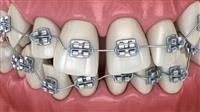
It is the traditional orthodontic that everyone knows and consists of a group of metal pieces that are linked together by a metal wire, and are fixed to the teeth with an adhesive substance, and some rubber pieces may be added to it according to the patient''s need, and the metal braces are the most common and the least expensive, and the metal braces are the most common and the least expensive But his unpleasant and embarrassing appearance, not to mention the suffering of the patient with food sticking to his teeth and the difficulty of cleaning teeth with his presence make dentists hesitate to choose him. The metal braces need a long period inside the mouth, from a year and a half up to four years, and the metal braces are suitable for young and old, and treat difficult cases efficiently.
Internal fixed orthodontics
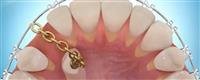
This type of orthodontic is installed as a fixed internal orthodontic, and it is called a posterior braces or lingual orthodontics, as it cannot be seen from the front. Internal orthodontics are installed on the teeth, but from the inside, and faces the tongue, and the period of use of this orthodontic is the longest compared to other types, and this type is taken as the difficulty of cleaning the mouth and cleaning the orthodontic itself from the inside, and the disadvantage also that it can lead to injury to the tongue Wounds, and it needs a high skill from a doctor to install it.
Internal fixed orthodontics is usually chosen for people who suffer from voids, congruence, or severe twisting of the teeth, and patients prefer it because it is hidden and does not cause embarrassment in its shape, but its disadvantages that we mentioned earlier make it the least acceptable option for doctors.
Ceramic calendar (ceramic)
Ceramic braces are fixed and invisible orthodontics, consisting of ceramic pieces that resemble teeth, in which the fixed brackets are in a transparent color, joined together by a plastic wire. This type of orthodontic needs special care from the patient with regard to cleaning it and following the doctor to verify the safety of its fixation, but it is quick to break, so it is advised to be very careful when eating food or ice cream, and it is one of the high-cost types.
Movable braces
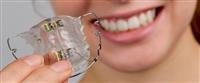
It is also called transparent orthodontic, made of a plastic material called acrylic, which combines in its properties between fixed and movable, as it straightens and adjusts teeth, with its unique characteristics that are characterized by it, and the transparent orthodontic is an integrated template that can be easily installed and disassembled, when eating or cleaning . Transparent orthodontic molds are manufactured after the doctor''s examination and radiography, to determine the appropriate size of the jaw and teeth, and its shape is cosmetic because it is transparent and invisible, but it needs to be committed to wearing hours that are not less than 20 hours a day To get the desired results, it needs care while cleaning and eating and drinking.
Tips for using the different types of orthodontics
Here are some tips and notes in case you need orthodontic treatment of any kind
Before starting the calendar, visit the doctor, as he is best able to determine the appropriate type according to your condition.
While applying the braces, you must maintain cleanliness, hygiene, and hygiene, so as not to cause infections, wounds and odors.
After removing the braces, use the dental fixator, as it is an important and necessary stage to maintain the shape it has reached.