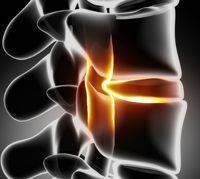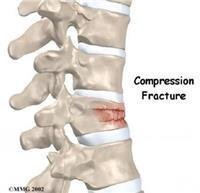
to compression fractures
The spine consists of twenty-four vertebrae stacked on top of each other to form a column that gives the body its natural shape when standing and walking and supports muscles .. And the largest part of each of these vertebrae is the front part, which is known as the vertebrae. This part is exposed to the most common type of vertebral fracture, which is a compression fracture, and in the United States alone, more than seven hundred thousand compression fractures occur every year. These fractures usually affect the weak and diseased vertebrae or healthy vertebrae as a result of severe injuries to them.
Its causes
There are many reasons why the vertebrae are weak and unable to perform their function in supporting and supporting the body during the stresses that the spine is subjected to in daily activities. Among the most common of these causes is osteoporosis, which affects millions of people, especially women. Also, there are some diseases of the glands, such as the parathyroid gland and the thyroid gland, whose dysfunction leads to brittleness, softness and necrosis of the bones that make up the body of the vertebra. In addition, cancer of all kinds may spread to the body of the vertebra through the blood, leading to necrosis and thus weakening it and causing fractures in it. As for the healthy vertebrae not affected by osteoporosis, compression fractures are usually the result of injuries such as traffic accidents and falls from a height, and they usually affect young patients.
Symptoms and diagnosis
In the beginning, there may be no symptoms when the fracture is simple and chronic, but with the passage of time the patient may complain of chronic pain in the affected part of the back and the appearance of a hump due to the accumulation of several compressed vertebrae and pain and cramps in the back muscles.
As for the diagnosis, it is usually made after an x-ray, a CT scan, and a bone density ray. In some cases, it may be necessary to do magnetic resonance imaging or medical analyzes to find out the reasons behind these fractures. In cases where the possibility of cancer is possible, the doctor may resort to requesting more tests and x-rays, such as nuclear radiation (Bone Scan).
treatment
The vast majority of these fractures can be treated without surgical intervention, through painkillers, medical support belts for the spine, rest for a short period not exceeding several days, and taking necessary treatments to strengthen the bones of the vertebrae, such as calcium, vitamin D, and anti-osteoporosis drugs. As for the few and rare cases that require surgical intervention, there is usually pressure on the nerves that necessitates an expansion of the legal canal, or there is severe crushing and instability of the vertebrae, which requires stabilization and blood work for these affected vertebrae. During the past few years, a new technique has also been developed during which medical cement is injected into the body of the diseased vertebra through a simple wound in the back and under local anesthesia, which helps to support and strengthen the vertebra and remove the pain resulting from its compression.
Recommendations
In this particular disease, prevention is better than cure, by avoiding the causes leading to osteoporosis, maintaining proper nutrition, practicing sports activities, and doing examinations for osteoporosis in people exposed to it, such as the elderly, women and those who have an imbalance in the functions of the glands. Also, the treatment of fragility or the treatment of these fractures should not be neglected and not surrender to them when they occur. On the contrary, the patient or the patient must take the necessary treatments, wear the medical belt, and try to return to walking and daily activities as much as possible.
@ Consultant orthopedic and spine
National Guard Hospital