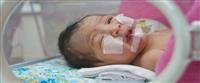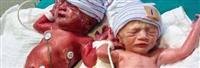
Neonatal vomiting is an upper digestive tract bleeding that occurs during the first 4 weeks of a newborn''s life. Bleeding from the upper digestive system in a newborn baby is rare. The majority of cases of vomiting blood during the first days of a newborn''s life are caused by swallowing the mother''s blood, during the birth process, or during breastfeeding as a result of bleeding cracks from the mother''s breast. This condition is common, not dangerous and spontaneously transient.
A newborn''s blood clotting can result from several reasons. Clotting factors may be healthy, but they are not effective following vitamin K deficiency (Hemorrhagic disease of the newborn). To overcome this problem, all newborns are treated with vitamin K injections into the muscle, shortly after birth. Deficiency of clotting factors causes various haemophilia syndromes that generate hemorrhagic susceptibility. Impaired platelet count or its function is an additional factor that may cause bleeding in the upper digestive system, as well as in other organs. Defects in the platelet count may result from not being produced on a genetic background, being destroyed by the mother''s antibiotics, or by bacterial or viral contamination. The defect in the functioning of platelets can be caused by a rare genetic defect, or as a result of the mother''s consumption of drugs, such as aspirin (Aspirin).
The most common cause of bleeding from a localized problem in the upper digestive tract are ulcers, mainly in the stomach, esophagus, and duodenum (ranked by prevalence). In some cases, ulcers are found in a number of places in the upper digestive system. Ulcers are generally secondary causes of asphyxia of the newborn, lack of continuous tissue oxygenation, artificial respiration, as well as steroid treatment, reflux (reflux) esophagus (retraction of food from the stomach into the esophagus) and sensitivity to cow''s milk protein. In rare cases, the ulceration can result from prenatal exposure to indomethacin. Achalasia of the stomach lump and rare tumors such as teratoma in the stomach may appear as hemorrhage from the upper digestive system. Rarely, ulcers appear without known risk factors.
questions and answers
Is there a cure for ADHD?
If there is any suspicion of ADHD, which side should you go to?
How does ADHD syndrome affect relationships with people of the same generation?
What are the consequences that accompany ADHD?
What are the types of developmental disorders other than autism?
Diagnosis of vomiting blood in newborns
A distinction can be made, by laboratory methods, between maternal erythrocyte hemoglobin and fetal hemoglobin, depending on its physical properties. Fetal hemoglobin, which makes up the bulk of the newborn hemoglobin in its early days, is considered solid in an alkaline solution. Bleeding in the upper digestive system in a newborn can result from a blood clotting disorder that is sometimes accompanied by bleeding from other organs, or a local problem in the digestive system.
Treatment of vomiting blood in newborns
Effective treatment for the sores is with medications, histamine H2 receptor blockers, and a motility drug such as cisapride. Breast milk feeding is considered a protective factor against ulcers in the digestive system.