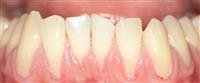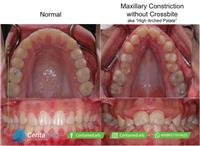
Palatal enlargement is an orthodontic treatment that stimulates the growth of the upper jaw when the upper jaw is very narrow. The palate is the fusion of two bones connected in the middle by a normal growth plate. If an upper jaw development disorder occurs, growth of the upper jaw stops while the lower jaw continues to grow. The result is that the upper jaw is very narrow, the teeth are weakly intertwined, and the teeth of the upper jaw have very little space.
Orthodontics now try to stimulate the expansion of the width of the upper jaw again by expanding the palate. In children, the advantage here is that the growth plate in the middle of the upper jaw is not yet fully ossified, thus allowing movement and growth in a relatively short period of time.
Why is palate enlargement necessary?
Narrowing of the upper jaw due to lack of growth is not only a problem with the teeth. The patient may experience severe discomfort when breathing through the nose, as the palate is below the nose and the lack of growth makes breathing difficult. The nasal airways are simply narrowed by the smaller upper jaw, so that no air can pass through them.
Crowding can arise in the upper jaw where there is not enough space for the permanent teeth due to the narrow shape. The teeth are often overlapping and may tilt in different directions.
Moreover, it can happen that the teeth of the lower jaw exceed the teeth of the upper jaw due to their additional growth. Then either a bite to the head occurs, in which the protrusions of the upper and lower teeth stand on top of each other and do not cross or cross. Crossbite describes the condition in which the teeth of the lower jaw are farther from the teeth of the upper jaw, which they are supposed to be
The upper front teeth that are strongly forwarded can also arise from the growth of the lower jaw and the lack of growth of the upper jaw when the lower front teeth push the upper front teeth forward and upward through the movement of growth.
All of the reasons mentioned are indications for an enlarged palate.
Sequence of surgical palate enlargement
Surgical expansion of the palate is only necessary if the growth plate in the middle of the upper jaw is already fossilized. This is the case with adults. Therefore, surgical expansion of the palate is not performed in children, since conventional treatment with a special device is sufficient to generate a growth of 5 mm.
Surgical treatment is performed by weakening the already fossilized growth plate. This operation is minimally invasive under local anesthesia.
Another surgical method may also be chosen, which is performed under intubating anesthesia. This becomes necessary when a slight weakness is not sufficient. The upper jaw is surgically separated from the mid-face using the so-called LeFort osteotomy 1.
An orthodontic device is used before the operation and the oral surgeon can tighten it a few millimeters after the operation by wrapping the screw. The device, the so-called lint - is also used in cases of expansion of the palate without surgical intervention.
If the teeth are not expected to be exposed to much force from the Hyrax screw, then dispersed osteogenesis can be the preferred treatment. An orthodontic device is chosen that is stretched directly on the palate with screws and does not strain the teeth.
The so-called obstetric distraction is ed through the palate suturing and can expand the width of the palate both evenly and centrally. The postpartum distractor and the Hyrax screw are worn for three to four months until sufficient widening is achieved and then removed.
Pain with enlargement of the palate
Regardless of the device, whether it is fixed or removable, the mechanism is always the same: the upper jaw is expanded little by little.
In the middle of the device there is a screw that is loosened by turning it with a wrench. This s a force that s movement. This force can cause strong pain and pressure, since the teeth are not subject to such a load.
That is why orthodontists recommend taking a pain reliever before each new period and making more effort in order to endure pain that is greater in the beginning. The pain decreases continuously once movement occurs, and the teeth "get used" to the effort, so to speak. Therefore, after a while, pain relief will not be superfluous, as the pain becomes tolerable and quickly subsides.
What are the risks?
When using a Hyrax screw there is always a risk of tipping the teeth. Due to the fixation on the first molars and the first premolars on both sides, tilt can always occur, as the entire force is transferred to the teeth.
Distraction is used through childbirth to counter this problem. This is not supported medically, and is gentle on the teeth, as it only affects the palate and thus directly on the bone. However, with both devices, there is always a risk of recurrence. A backward movement may occur once the enlargement is complete and the hardware is removed. However, this risk is higher in percentage with a Hyrax screw compared to a dispersed bone formation.
Moreover, it should not be ignored that the patient looks different after treatment. The upper jaw is widening, which changes the PR of the face and what the patient should be aware of in advance.
In the case of surgical enlargement of the palate, there is a general risk of continuing scarring or damage to the facial nerves during the procedure and loss of sensation in the facial areas. Moreover, anesthesia always carries risks with side effects. However, the complication rate in the operations is low.
What is a palate enlargement device?
The palate expander device is synonymous with the Hyrax screw as an orthodontic device, which helps widen the upper jaw. The Hyrax screw consists of a screw that is placed in the middle of the palate suture. Four "small arms" are transmitted from this screw to the teeth and are attached by clips cast to either the molars and all premolars or only one premolar on each side.
By turning the screw with a wrench, the screw expands and moves the four arms of the device away from the roof of the mouth. This causes the teeth to move outward, and the upper jaw is stimulated to form two new jaws.
Another form of the palatal expander device is the Quadilex, which is located in the palate region, similar to the Hyrax screw. There is no screw in the center of the growth plate, but four rings give the device its name. Moreover, with Quadhelix there is a wire arc on the palate side of each tooth that must be moved. The Quadlexes are fixed by attaching the first two molars.
Both palate expanders (with Hyrax or Quadhelix) belong to the group of removable braces.
The other native to the palate expansion device is the oral dispersant, which is only ed directly into the palate and does not touch the teeth. It is attached directly to the bone and thus cannot be removed.
Causes of palatine expansion
But what causes a missing upper jaw growth? The factors for this are different.
The largest percentage is due to the excessive use of straws and non-physiological feeding bottles. Too much elbow or too long use can cause growth disturbance.
One-third of stunted growth is genetic and arises without any abnormalities.
Another reason is thumb sucking. By constantly sucking and pulling the finger, the growth of the upper jaw is prevented and the teeth and palate are not parallel.
Moreover, restricted nasal breathing and thus continuous mouth breathing may also be a cause.
Incorrect swallowing pattern: Swallowing is a complex process involving many muscles.
When the milk teeth erupt, the baby''s swallowing pattern usually changes so that the tongue presses against the roof of the mouth.
If the palate is not connected due to incorrect swallowing, the growth stimulator in the upper jaw is missing and development is delayed.
Is this still possible with an adult?
In principle, palatine enlargement is also possible in adults, but it is more difficult and prolonged than in children whose development has not yet ended.
In adults, the growth plate in the middle of the upper jaw, called the sutura palatina mediana, is already ossified. Therefore, this must first be surgically weakened to enable mobility of the upper jaw and thus expand it.
If the weakness alone is insufficient, a LeFort osteotomy 1 is attached and the upper jaw is enlarged with a Hyrax screw. Moreover, the osteotomy can also be combined with a screw cap if the jaw teeth are not subjected to too much pressure
What is an native to expanding the palate there?
There are hardly any natives to expanding the palate, as the concept always leads to the target form by expanding the upper jaw. A removable device may be used to expand the palate, but this only works in babies who have not yet fully developed. As a result, the surgical expansion of the palate is not necessary in children.
Moreover, the fixed palate expansion device is the most used native, which achieves success in a very short time and also, together with the surgical weakening of the growth plate in adult teeth, also achieves a positive therapeutic result. In adults, treatment usually takes longer due to the surgical component.
The cost of expanding the palate
The costs of a palate enlargement depend on the individual case and the size of the deficit and the planned treatment.
While children can usually only be treated with removable equipment, where the cost of treatment is around 500 to 1000 euros, treating adults with surgery can exceed 5,000 euros. Since orthodontics is a private service for adults, it is usually half the cost for children and teenagers up to the age of 18 or is fully covered by health insurance.
To get an accurate cost explanation, you should consult the treating orthodontist and the health insurance company, which usually prepares a cost estimate.
What changes can be expected in the face?
Enlarging the palate changes the face and individual proportions, but the changes are often barely visible to others. A widening of the upper jaw makes the mouth and lips appear wider, and a smile appears wider. Moreover, the lower part of the nose is also enlarged, which enlarges the nose vertically