
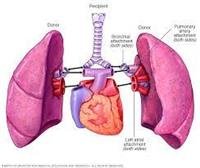
A lung transplant is performed in cases where the lung loses its ability to exchange gases, as a new lung is transplanted in its place, with the need to ensure that the ability to breathe properly can be restored.
It is important to know that lung transplantation is only used in cases where people suffer from serious respiratory disorders such as: pulmonary fibrosis, or people who depend on the oxygen supply device in the process of breathing.
Lung transplant surgery cannot be performed on a group of people, such as: patients with a lung infection, patients with liver, kidney, heart and central nervous system problems, smokers, alcoholics and drug abusers.
There is a wide range of procedures that can be used in order to determine whether the patient can perform the operation or not, such as the following:
Arterial Blood Gases - ABG: It measures the amount of oxygen that the blood can carry to the tissues of the body.
Pulmonary Function Test (PFT): It checks the lung volume and the rate of air flow through the lungs, and the results give a picture of the severity and progression of the lung disease.
X-ray examination: An X-ray examination gives an internal image of the chest including the lungs, ribs, heart, and an outline of the major blood vessels.
Computerized tomography (CT) scan: It gives a cross-sectional image of the chest and an accurate detail of the chest structure.
Ventelation pervusion scan - V/Q: a test that compares the functioning of both lungs.
Electrocardiogram (ECG - Electrocardiogram): To obtain information about the rate and rate of the heartbeat, to assess any damage.
Echocardiogram (ECHO - Ecocardiogram): to assess the extent to which lung disorders affect the function of the heart.
Before the surgery
Patients are advised to stop eating and drinking starting from midnight the night before the day of surgery, and they must inform the doctor of all medications they are taking.
During surgery
The surgery is performed under general anesthesia, where a large incision is made in the chest to remove the damaged lung and then transplant the new lung. During this process, the patient is connected to an external device to ensure the continuity of gas exchange during the operation.
Post surgery
The patient remains under observation after the surgery to ensure the stability of the condition, and he is given some medications to ensure that the immune system does not attack the transplanted lung.