

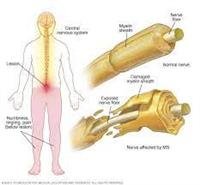
Multiple sclerosis (MS) is a disease that potentially disrupts the brain and spinal cord (central nervous system).
In multiple sclerosis, your immune system attacks the protective sheath (myelin) that covers nerve fibers, causing problems with communication between your brain and the rest of your body. Ultimately, the disease can cause permanent nerve damage or deterioration.
Signs and symptoms of multiple sclerosis vary widely, and depend on the amount of nerve damage and which nerves are affected. Some people with severe MS may lose the ability to walk on their own or permanently, while others may experience long periods of remission without any new symptoms.
There is no complete cure for multiple sclerosis to date. However, treatments can help speed recovery from attacks, modify the course of the disease and treat symptoms.
Symptoms
The signs and symptoms of multiple sclerosis can vary greatly from person to person and during the course of the disease, depending on where the nerve fibers are affected. Symptoms often affect movement, such as:
Numbness or weakness in one or more limbs, usually on one side of your body at a time, or the legs and trunk
Sensations similar to electric shock associated with certain neck movements, especially forward bending of the neck (Lermitt''s sign)
Tremors, lack of coordination, or unbalanced gait
Vision problems are also common, including
Partial or complete loss of vision, usually in one eye at a time, often with pain during eye movement
Long-term double vision
blurry vision
Symptoms of multiple sclerosis may also include
interfering with speech
fatigue
dizziness
Tingling or pain in parts of the body
Problems with sexual function, bowel and bladder function
When do you visit the doctor?
Please see a doctor if you experience the above symptoms for unknown reasons.
disease course
Most people with MS go through the relapsing-remitting disease course. They have periods of new symptoms or relapses that appear over a period of days or weeks, and those symptoms and relapses usually improve completely or partially. These relapses are followed by remissions that can last for months or even years.
Small increases in body temperature can temporarily make the signs and symptoms of MS worse, but these increases are not actual recurrences of the disease.
At least 50% of people with relapsing-remitting MS eventually develop persistent symptoms, with or without remissions, within 10 to 20 years of disease onset. This is known as secondary developmental multiple sclerosis.
Exacerbation of symptoms usually includes problems moving and walking. The rate of disease progression varies greatly between people with relapsing-remitting MS.
Some people with MS first have a gradual onset and then a steady progression of signs and symptoms without any recurrence, known as primary developmental MS.
the reasons
There is no known cause of multiple sclerosis. It is an autoimmune disease, in which the body''s immune system attacks its own tissues. In multiple sclerosis, this immune system failure destroys the fatty substance (myelin) that covers and protects nerve fibers in the brain and spinal cord.
Myelin is similar to the insulating material that covers electrical wires. When the protective myelin layer is damaged and nerve fibers are exposed, the transmission of nerve messages traveling through these nerve fibers may be slowed or completely blocked.
It''s not clear why some people develop MS and others don''t. There appears to be a combination of genetic and environmental factors responsible for this.
risk factors
These factors may increase your chances of developing multiple sclerosis
Age. Multiple sclerosis can occur at any age, but it most often occurs between the ages of 20 and 40. However, it may affect younger or older people.
sex. Women are two to three times more likely to have relapsing-remitting MS than men.
family history If either of your parents or siblings has had multiple sclerosis, you are more likely to develop the disease.
Some injuries. A variety of viruses are associated with MS, including Epstein-Barr virus, the virus that causes infectious mononucleosis.
Sweat. People who are white, particularly those of northern European descent, have an increased risk of MS. People of Asian, African, or Native American ancestry are less likely to develop the disease.
the climate. MS is more common in countries with temperate climates, including Canada, the northern United States, New Zealand, southeastern Australia and Europe.
Vitamin D. Low levels of vitamin D and not enough sun exposure are closely associated with a higher risk of MS.
Certain autoimmune diseases. Your chances of developing MS increase slightly if you have other autoimmune disorders, such as thyroid disease, pernicious anemia, type 1 diabetes or inflammatory bowel disease.
smoking. Smokers who have an initial symptom event likely to indicate MS are more likely than non-smokers to have a second event that confirms relapsing-remitting MS.
Complications
People with multiple sclerosis may also develop
Muscle stiffness or spasms
Paralysis, usually in the legs
Problems with the bladder, bowel, or sexual function
Mental changes, such as forgetfulness or mood swings
Depression
epilepsy


