
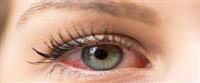
Dry eye is a common health condition that affects the eye when the eye cannot provide adequate lubrication to the eye, and as a result of this, the tears can be insufficient or unstable in many causes, which ultimately leads to inflammation of the eye or damage to the membrane covering the eye. Dry eye is a disease that causes discomfort, often to the esophagus
Eye burning or itching in various different situations, such as: at the airport, in a room with air conditioning, or while sitting at a computer.
Treating dry eyes helps relieve the eyes and can be through many home remedies in addition to drug treatments.
Symptoms of dry eyes
A patient who suffers from dry eyes shows a set of the following symptoms
Burning sensation with pain and dryness in the eye.
Feeling of sand in the eye.
Mucus formation around the eye.
Eye sensitivity from smoke or wind.
eye redness
Difficulty keeping the eye open.
Feeling tired in the eyes after reading, even if you read for a short period of time.
Darkness of the eye.
Sensitivity to light.
Continuous tears.
double vision
Eyelids stick together when waking up.
Eye pain from wearing contact lenses.
Causes and risk factors for dry eyes
There are many causes and factors that lead to dry eyes, as follows
1. The causes of dry eyes
The eye consists of three layers: fatty oils, aqueous fluid, and mucus. These compounds help keep the eye moist and pure, and the presence of any problem in any layer that causes dryness.
The following are the main causes of dry eyes
Decreased tear production
Dry eye occurs in this case when the eye cannot produce the aqueous fluid in sufficient quantity, and this problem is called Keratoconjunctivitis sicca, and the most important causes are:
age.
Some health conditions, such as: Sjogren''s syndrome, allergic eye diseases, rheumatoid arthritis, lupus, thyroid disorders, and vitamin A deficiency.
Using some types of medications, such as: allergy medications, decongestant medications, hormones, depression medications, and some types of high blood pressure medications.
Sensitivity of the corneal nerve resulting from the use of contact lenses and laser eye surgery.
Increased tear evaporation
This occurs when the oily duct at the edge of the eyelids is blocked due to the following reasons:
Posterior blepharitis.
Lack of eye blinking, and this occurs in the following circumstances: Parkinson''s disease, involvement in driving or reading, and sitting at a computer.
Eyelid problems, such as: having an eyelid that turns outward, or an eyelid that turns inward.
Eye allergy.
Preservatives in the s.
Wind, smoke, or dry air.
Vitamin A deficiency.
There can be more than one cause of dry eyes at the same time.
2. Risk factors
The following are the most important factors that increase the risk of developing dry eyes
Age: Being over the age of 50 increases the risk of developing dry eyes.
Gender: Women are more likely to develop dry eyes, especially during the period of hormonal changes resulting from pregnancy, the use of contraceptives, or menopause.
Eating an unhealthy diet: that is, it lacks in particular vitamin A and omega-3.
Wearing contact lenses: Contact lenses increase the problem of dry eyes.
Complications of dry eyes
Among the most prominent complications of dry eyes are the following
Eye infections: Tears protect the eye from exposure to germs, so if the eye is dry, the chance of eye infection increases.
Eye surface damage: If dry eye is not treated, it can lead to eye inflammation, corneal surface erosion, corneal ulcers, and vision loss.
Poor quality of life: Dry eye prevents a person from carrying out daily activities, including reading.
Diagnosis of dry eyes
Dry eyes are diagnosed by the following tests
1. A comprehensive eye exam
An eye exam that includes a complete eye history can help determine the cause of dry eyes.
2. Measure the amount of tears in the eye
This is done by conducting a Schirmer test, where strips are placed under the lower eyelid of the eye for five minutes, after which the doctor measures the tear-soaked strip to see the percentage of eye dryness.
Another option for measuring tear volume is the phenol red thread test. In this test, a thread filled with a pH-sensitive dye is placed over the lower eyelid, wetted with tears for 15 seconds, and then measured for tear volume.
3. Test to determine the quality of tears
In other tests, dyes are used in eye s to see the condition of the surface of the eye.
The doctor looks at the cornea''s coloration patterns and measures how long it takes for the tears to evaporate.
4. Tear osmolarity test
This examination measures the components of tears from particles and water, and in the case of dry eyes, the percentage of water is less.
5. Tear samples
Tear samples are taken to find out the cause of dry eyes.
Dry eye treatment
Dry eye is treated as follows
1. Using artificial tears
Eye s help lubricate the eyes, and are the main treatment for dry eyes.
Artificial tears work well for many people.
2. Lacrimal plugs
Your ophthalmologist may use plugs to block the tear drainage holes at the corners of your eyes. This is a relatively painless, reversible procedure that slows tear loss.
3. Use of medications
The most common medication for dry eye syndrome is an anti-inflammatory called cyclosporine, which helps increase the amount of tears and reduce the risk of damage to the cornea.
In severe dry eyes, corticosteroid eye s are used for a short period of time.
Alternative medications for dry eyes include colonic medications, such as: Pilocarpine. These medications help stimulate tear production.
In the event that the previous treatments did not work, the doctor may search for other treatments suitable for the cause of the disease.
4. Surgery
In some cases, dry eyes continue despite the use of all previous medications, so the doctor resorts to surgery.
In the surgery, the doctor permanently blocks the tear drainage ducts in the inner corners of the eye to allow the eye to maintain an adequate amount of tears.
5. Home remedies
If you suffer from dry eyes, you should do the following
Humidify the room and keep away from dry climate.
Refrain from wearing contact lenses until the dehydration has resolved.
Reducing the time sitting in front of the TV or computer.
Prevention of dry eyes
To prevent dry eyes, you should follow the following tips
Avoid direct exposure to air, such as hair dryer air or home air conditioning.
Make sure to increase the humidity of the room, especially in the winter, by using a humidifier.
Wear sunglasses when you go outside to avoid exposure to dry air.
Make sure to give the eyes a rest periodically when doing long tasks, such as: reading.
Place the computer screen at a level below eye level to reduce looking up and squinting for a longer period of time.
Try to quit smoking.
Make sure to use artificial tears periodically in the event of chronic dry eyes.
Try to close your eyes during short periods, especially when in dry environments, such as: desert environment, airport, or in high places.