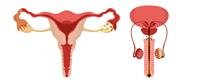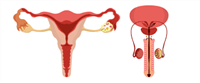
Hypogonadism is a pre- and post-pubertal sexual disorder that occurs when the gonads cannot secrete enough hormones, or hormones are not fully produced. The gonads are basically the testes in men, and the ovaries in women. Sex hormones help control a
For secondary sexual characteristics, such as: breast growth in women, development of the testicles in men, pubic hair growth, in addition to controlling the menstrual cycle in women, and sperm production in men.
Hypogonadism indicates a decrease in the concentration of testosterone in men, and a decrease in the concentration of estrogen in women.
Types of hypothyroidism
There are two main types of hypogonadism, which are as follows
1. Primary hypogonadism
Primary hypogonadism occurs as a result of a lack of production of sex hormones due to problems in the reproductive organs. The gonads receive orders from the brain that there is a need to produce more gonads, but the glands do not respond.
2. Secondary hypogonadism
Secondary or so-called central hypogonadism occurs due to problems in the brain, where the hypothalamus and pituitary gland do not work well.
Symptoms of hypogonadism
Symptoms of hypogonadism differ between women and men, and symptoms vary according to age, as in the following:
1. Symptoms of hypogonadism in adolescents
Adolescence is known as the physical and sexual changes that occur in individuals, but hypogonadism may hinder this. Here are the most prominent symptoms:
Symptoms of hypogonadism in girls
Among the most prominent symptoms of hypogonadism in girls
Delayed puberty and the onset of the first menstrual period.
Delayed breast development.
Symptoms of hypogonadism in males
The most prominent symptoms of hypogonadism in males are
The absence of hair on the face.
Testicles not growing properly.
In the event of the appearance of the previous symptoms, you should hurry to go to the doctor for treatment.
2. Symptoms of hypogonadism in adults
The following are the main symptoms of hypogonadism in adults
Symptoms of hypogonadism in women
Hypogonadism in women may cause the following symptoms
Menstrual disturbances.
Milky secretions from the breast.
Symptoms of hypogonadism in men
Among the most prominent symptoms and signs that indicate hypogonadism in men are the following:
breast enlargement
erectile dysfunction
Infertility due to low amount of semen.
Muscle asthenia.
Causes and risk factors of hypogonadism
In fact, it is not known yet what is the reason behind hypogonadism? As for unknown reasons, problems may occur in the reproductive glands, or a disorder in the effect of the brain on these hormones.
However, there are some factors that increase the risk of hypogonadism, as follows
1. Factors of primary hypogonadism
There are some factors that increase the risk of primary hypogonadism, namely
Endocrine problems, such as diabetes and Addison''s disease.
Treatments for some types of cancer, such as: radiotherapy and chemotherapy.
Some genetic diseases, such as: Turner syndrome in women, and Klinefelter syndrome in men.
Increase the percentage of iron in the body.
undescended testicle.
Kidney disease.
Liver diseases.
Genital surgery.
2. Factors of secondary hypogonadism
Among the most important factors that increase the risk of secondary hypogonadism are the following:
Use of stimulants and opioid analgesics (Opioid).
Brain surgery.
some cancer treatments.
Genetic disorders, such as Prader Willi syndrome.
Infectious diseases, such as: AIDS.
Inflammatory diseases, such as sarcoidosis.
Obesity.
Pituitary tumor.
It is worth noting that individuals at the age of 40-50 years begin to have a decrease in sex hormones, which means that sexual desire decreases, and this is expected, but it is not considered evidence of a deficiency in the thyroid glands, while young men who are not inclined to engage in sexual relations often suffer from hypothyroidism. hypothyroidism
Complications of hypogonadism
Among the most prominent complications of hypogonadism
anxiety.
Depression.
infertility.
Osteoporosis.
Problems in the marital relationship.
Loss of self-confidence.
Erectile dysfunction in men.
Diagnosis of hypogonadism
Hypogonadism is diagnosed in the following ways
1. Physical examination
The doctor conducts a physical examination to confirm sexual development with age, examining muscle mass, body hair, and genitals.
2. Check your hormones
First, a blood sample is taken to check for follicle stimulating hormone (FSH) and luteinizing hormone.
After that, an examination is performed for the hormone estrogen in women, and the hormone testosterone in men. This examination is often done by taking the sample in the morning, when the testosterone hormone is at the highest possible value.
In some cases, a prolactin hormone test is performed, as it is the hormone responsible for breast growth and milk production in women''s breasts.
A thyroid hormone test is also performed because the symptoms of thyroid disorders are similar to those of hypogonadism.
3. Check iron concentration
The concentration of iron affects the sex hormones, as the high level of iron in the blood is an indication of hypogonadism.
4. Imaging examinations
Imaging tests may help in diagnosing the disease, most notably
Ultrasound examination: through which the ovaries are photographed to ensure that there is no ovarian cyst problem.
CT and MRI: to check for a pituitary tumor.
Treatment of hypogonadism
Hypogonadism is treated as follows
1. Treatment of hypogonadism in women
Hypogonadism in women is treated by making up for the lack of estrogen.
In the event that a woman had a hysterectomy, then the doctor gives her a drug that contains estrogen only, while in the case of a normal uterus in women, progesterone is added to reduce the risk of endometrial cancer caused by estrogen. external.
The symptoms that women suffer from, such as: weak sex drive, are treated by giving them a low dose of the hormone testosterone, and menstrual disorders are treated by giving an intravenous dose of Choriogonadotropin, or follicle-stimulating hormone.
2. Treatment of hypogonadism in men
The patient is given a dose of synthetic testosterone.
Testosterone medication comes in several forms, including
injection.
stickers.
Jelly gel.
sweetened tablets.
3. Treatment of hypogonadism caused by a pituitary tumor
It is treated, whether in women or men, through one of the following procedures
surgery.
Radiation therapy.
Pharmacotherapy.
Prevention of hypogonadism
Due to the lack of knowledge of the cause of the disease, there is no specific way to prevent hypothyroidism, but the risk of developing hypothyroidism can be reduced by treating all the aforementioned diseases that constitute risk factors for the disease, and early diagnosis helps to treat the disease and mitigate its complications.