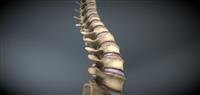

Sometimes we hear that this person''s spine is curved or what is known as scoliosis, so what does that mean? What are the causes and symptoms of bending? Is there a remedy to fix that? Let''s get acquainted with the most important information about scoliosis in detail: What is scoliosis? Scoliosis is the scientific term for a curvature of the spine in one direction
It can occur in any part of the spine, but the most common ones are the thoracic and lower back.
Scoliosis usually appears in pre-pubertal children or adolescents between the ages of 10-15 years, but scoliosis can appear at any age.
It may not need treatment in mild cases, but the spine repairs itself on its own.
It is not yet known what causes this curvature in the spine, but some cases are linked to cerebral palsy and other health problems, such as birth defects.
Causes of scoliosis
There are several possible causes behind scoliosis, which include the following
Neuromuscular disorders: These disorders affect the muscles and nerves, such as: cerebral palsy, and muscular atrophy.
Birth defect: It occurs as a result of abnormal growth of the spine during pregnancy.
Certain genes: At least one gene is thought to be associated with scoliosis.
Other reasons: which may also include the following
Spinal muscular atrophy.
Spina bifida.
dwarfism.
Osteoporosis.
Obesity.
Spinal infections and tumors.
arthritis.
Having a spinal injury.
Scoliosis risk factors
There are some risk factors that may increase the risk of developing scoliosis, and they are as follows:
Age: It usually appears in infants and children during development.
Gender: Females are more at risk of worsening scoliosis and needing treatment compared to males.
Genes: The risk of scoliosis increases when a family member has the disease.
Symptoms of scoliosis
Signs and symptoms of scoliosis may include
Clear curvature and curvature in the back.
The head is not centered in the middle of the body.
Chest asymmetry.
One hip protruding more than the other.
Clothing that does not fit properly on the body.
One shoulder higher than the other.
Deviation of the injured to one of the limbs usually.
Imbalance and symmetry in the length of the feet.
Swelling in one side of the chest.
Stretching on one side of the body.
Shortness of breath and chest pain in severe cases.
Back pain in some cases.
Types of scoliosis
There are several types of scoliosis as follows
Idiopathic scoliosis: As 80% of scoliosis cases do not know the reason behind it.
Congenital scoliosis: where deformities of the spine begin during a child''s development before birth.
Neuromuscular Scoliosis: It occurs when nerve abnormalities affect the muscles of the spine, causing it to curve.
Degenerative Scoliosis: It affects adults and usually develops in the lower back as the discs and joints of the spine begin to wear down with age.
Scoliosis treatment
Most children with scoliosis are mild, which go away on their own without the need for any treatment.
In these cases, the doctor examines the affected child every 4-6 months in order to assess the severity of the curvature in the spine.
In other cases that require treatment, the doctor takes into account a number of different factors, such as: gender, severity of the curve, location of the curve, and bone growth.
The treatment options include the following
1. Struts
If a person has mild scoliosis, and their bones are still growing, a doctor may prescribe a brace treatment.
This treatment will prevent any future curvature but will not cure it, and braces are worn all the time even during the night hours.
2. Sports
The doctor may advise the injured person to do certain types of sports aimed at restoring the spine to its place.
3. Surgical operations
In severe cases, it is possible to develop scoliosis and curvature of the spine, so the doctor may advise to undergo surgery that reduces this curvature.