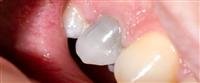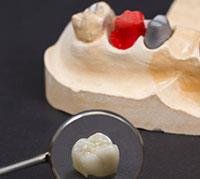
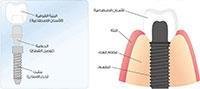
Dental implants aim to implant new metal implants in place of damaged teeth as a result of chronic bacterial infection in the tissues surrounding the tooth. Risks of surgery Dental implants are associated with some risks, such as: Infection in the surgical incision. Bleeding at the operation site. Hypersensitivity to medications
anesthesia.
Loss of sensation and numbness in the mouth.
Heat sensitivity.
Before the surgery
Here are the pre-operative procedures
Most dental implants are performed under local anesthesia only, and sometimes they can be performed under general anesthesia.
A dental imaging examination must be performed, and the doctor may request a panoramic dental image to diagnose problems that cannot be seen through a regular examination.
People who suffer from blood clotting disorders are required to have blood clotting function checks before the operation. Because they are more likely to bleed.
The doctor gives some antibiotics to people who are more susceptible to endocarditis, such as: people with artificial valves, and those with immunodeficiency.
A set of preliminary tests are performed to a tooth structure with color and texture as similar as possible to the original teeth, and in some cases pre-treatments are needed before dental implants to a suitable area of tissue for implantation of new teeth.
during the procedure
A dentist specializing in dental implants and oral and maxillofacial surgery performs the procedure under sterile conditions, as follows:
The patient is anesthetized by injecting a local anesthetic into the periodontal area.
Dental implants can be started if the bone is ready to receive implants, as metal screws are attached to the jawbone.
The reconstruction process begins with taking measurements and creating the appropriate set of implants, and usually waits at least 6 weeks for the tissue to heal before the final dentures are fitted.
Post-surgery
Important things after surgery in the following
The patient should avoid eating and drinking for two hours after the surgery, that is, until the effect of the anesthesia wears off.
He may feel pain in the area, especially on the first day after implanting the metal implants. So he can use painkillers as needed.
Teeth must be taken care of and the mouth cleaned regularly, using a soft brush to prevent periodontal injury, and other cleaning tools to obtain the best result of the process.
The patient should go to the doctor immediately if some symptoms appear, such as: high fever, severe pain, bleeding, and local secretions from the mouth.