
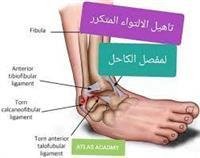
Diagnosis During the physical exam, the doctor will examine your ankle, foot, and leg. The doctor will feel the skin around the injury to check for tenderness and will move your foot to check range of motion and to understand which positions cause discomfort or pain. If the infection is severe, your doctor may recommend one or more tests
Imaging follows to rule out a broken bone or to assess the extent of ligament injury
X ray. During an X-ray, a small amount of radiation passes through your body to produce images of your ankle bones. This test is good for ruling out bone fractures.
MRI. MRI uses radio waves and a strong magnetic field to produce detailed, or 3-D, cross-sectional images of the soft internal structures of the ankle, including the ligaments.
Computed tomography examination. A CT scan can reveal more details about the bones of a joint. A CT scan takes pictures from many different angles using x-rays and combines them together to cross-sectional or 3-D images.
Ultrasound. Ultrasound uses ultrasound to produce real-time images. These images may help your doctor judge the condition of the ligaments or tendons when the foot is in different positions.
treatment
Treatment for a sprained ankle depends on the severity of the injury. The goal of treatment is to reduce pain and swelling, promote healing of the ligaments, and restore ankle function. In cases of acute injury, the injured person may be referred to a musculoskeletal injury specialist such as an orthopedic surgeon or a doctor who specializes in physical medicine and rehabilitation.
Self care
To take care of a sprained ankle on your own, use the R.I.C.E. approach for the first two to three days:
Comforts. Avoid activities that cause pain, swelling, or discomfort.
the snow. Use a cold compress or an ice and water bath for 15 to 20 minutes, and repeat every two to three hours while you''re awake. And if you have vascular disease, diabetes, or decreased sensation, talk to your doctor before using ice.
the pressure. To help stop the swelling, compress the ankle with an elastic bandage until the swelling goes away. do not over wrap the bandage So as not to hinder the flow of blood circulation. And start rolling from the end farthest from your heart.
lift. To reduce swelling, elevate your ankle above heart level, especially at night. Gravity helps reduce swelling and drain excess fluid.
pharmaceutical
In most cases, over-the-counter pain relievers — ibuprofen (Advil, Motrin IB, others), naproxen sodium (Aleve, others) or acetaminophen (Tylenol, others) — are enough to control the pain of a sprained ankle.
hardware
Because walking with a sprained ankle can be painful, you may need to use crutches until the pain subsides. Depending on the severity of the sprain, your doctor may recommend the use of an elastic bandage, athletic tape or a brace to immobilize the ankle. In severe cases of sprains, it may be necessary to use a splint or a walking boot to keep the ankle from moving while it heals.
treatment
Once the swelling has subsided and the pain has decreased enough to move, your doctor will ask you to begin a series of exercises to restore your ankle''s range of motion, strength, flexibility and stability. Your doctor or physical therapist will explain the appropriate technique and pace of exercise.
Balance and stability training is very important to restore strength to the ankle muscles to work together to support the elbow and help prevent recurring sprains. These exercises may include various degrees of balance challenge such as standing on one foot for example.
If you sprained your ankle while exercising or playing a sport, talk to your doctor about when you can get back into active activity again. Your doctor or physical therapist may want you to perform specific activity and movement tests to determine how well your ankle is performing for your activity.
surgery
In rare cases, surgery is required if the injury does not heal or if the ankle remains unstable after a long period of physical therapy and rehabilitation exercises. Surgery may be done for the following:
Repairing ligaments that will not heal on their own
Ligament repair/reconstruction using tissue from a nearby ligament or tendon