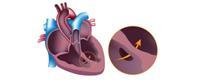
Have you ever heard of heart murmurs in children? And do you know what are its types? Here is the most important information about the types of heart defects in children. Heart holes in children are among the problems and defects that some children have from birth. The holes are in the wall separating the right and left parts of the heart. The problem lies in the perforations allowing blood to mix between the two sides and thus affecting the work of the heart. Here are the types of heart perforations in children and the most important information about them as follows:
Types of heart murmurs in children
The main types of heart murmurs in children are
1. Atrial septal defect
The first type of perforation of the heart in children is an atrial septal defect, in which the hole is present in the wall separating the right and left atriums of the heart.
The heart is formed in the fetus in the normal position during the first 8 weeks of pregnancy, and the four chambers of the heart begin to form, and the separations form between them.
Naturally, the openings and holes are present in the separation wall, but they soon close shortly before birth, but if they are not closed, the child is born with a hole in the heart.
2. Ventricular septal defect
The other type of perforation of the heart in children is a ventricular septal defect, which is the presence of a hole in the wall separating the right ventricle from the left ventricle of the heart.
The problem also lies in the mixing of blood and the inability of the heart to pump blood properly, so the blood returns back to the lungs instead of the parts of the body, which increases the pressure and effort on the heart muscle.
The cause of ventricular septal defect is unknown and is most often due to genetic problems that run in the family.
Symptoms of types of heart murmurs in children
The most important symptoms associated with heart murmurs in children can be explained as follows:
1. Symptoms of an atrial septal defect
Some children with atrial perforation may not show any symptoms, but depending on the size of the hole and the nature of the child''s body, the following symptoms may appear:
hard breathing.
slow growth
Recurrence of diseases and infections of the respiratory system.
general fatigue
Swelling of the extremities or abdomen.
heart palpitations
Apoplexy.
2. Symptoms of ventricular septal defect
Signs and symptoms do not appear in all children, due to the different severity of the disease and the size of the hole from one child to another. In advanced cases, the following symptoms may appear:
Malnutrition and slow growth and development.
Sometimes shortness of breath or shortness of breath.
Stress and fatigue quickly.
Pale skin and enlarged liver.
Treatment of types of heart murmurs in children
Treatment options for heart murmurs in children, depending on their type, include all of the following:
1. Treatment of atrial septal defect
Treatment depends on several factors, including the child''s age, the presence or absence of symptoms, and the child''s health in general.
Most perforations often close on their own without the need for treatment, but in severe cases that affect the life of the child, doctors resort to medical intervention through the following:
Medicines: Some medicines, such as: diuretics, help relieve symptoms of shortness of breath and fatigue resulting from fluid accumulation around the heart or in the body.
Surgery: The doctor may resort to closing the atrial hole by surgery under complete anesthesia.
Use of an instrument to close the hole: Sometimes a special instrument may be used to close the hole and prevent blood from mixing between the atria and is ed through a cardiac catheterization process.
2. Treatment of ventricular septal defect
In the case of small holes that do not present serious symptoms and which usually close on their own, treatment is not required.
But in cases of large perforations that pose a threat to the baby''s life, treatments may include the following:
Medications: Some medications that help relieve symptoms can be dispensed.
Good nutrition: by feeding the child milk rich in calories, and doctors may sometimes resort to feeding the child through a feeding tube extending from the nose to the stomach.
Surgery: Sometimes the best solution to close the ventricular hole.
Use of a special tool: Sometimes the hole is closed with a special tool by cardiac catheterization.