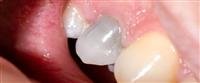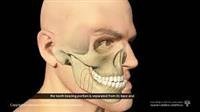
The narrowness of the upper jaw may cause many problems for individuals who suffer from it, so in this article we will try to give you sufficient information on this subject. Narrowing of the upper jaw Narrowing of the upper jaw causes narrowing of the space available for tooth growth, which may lead to crooked and crooked teeth, as approximately 95% of cases of crooked teeth are related to narrowing of the upper jaw.
Although some cases of stenosis of the jaw are due to genetic factors, mouth breathing can cause stenosis of the upper jaw.
Left untreated, maxillary tightness can lead to imbalance of the jaws and teeth, and subsequent correction may involve surgery.
Causes of narrow upper jaw
This condition involves a lack of alignment between the upper and lower jaw as a result of the upper jaw being small and narrow in relation to the lower jaw. Causes of maxillary stenosis include:
The genetic and hereditary factor, which is the main cause of maxillary stenosis, as mentioned previously.
Practicing bad habits during growth, one of these habits may be mouth breathing, which may affect the way the jaws grow, causing a narrow upper jaw and crowding of the teeth in it.
But regardless of the cause, it is necessary to consult a specialist doctor to see if treatment is necessary. If neglected to treat maxillary stenosis in the long term, it may cause:
Damage to the teeth.
Problems with chewing.
Difficulties in pronunciation
Treatment of maxillary stenosis
Treatment options for maxillary stenosis, depending on the age group, include the following:
1. Childhood
Treatment is usually done in childhood by using
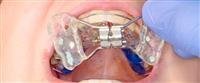
Fixed upper expander.
Removable upper expander.
Inferior expander, this is used in a few cases.
2. Early adolescence
The option of a fixed or removable upper expander will still be effective, although the narrower the upper jaw the better it can be treated early in childhood.
3. Late adolescence
The specialist will discuss the appropriate option for smile correction and alignment.
4. The stage of adulthood
Correction of a narrow upper jaw usually involves surgical widening of the jaw.
Correction of the narrowness of the upper jaw
Maxillary augmentation surgery is performed to increase the size of the upper jaw after patients have finished growing after puberty and their jaw is too narrow to use the proposed orthodontic treatment.
The maxillary expansion procedure includes the following
Making cuts in the bones in the upper jaw.
Separating the jaw into two parts, after which an expansion device is installed, and this will help to achieve symmetrical expansion of the upper jaw.
After placement of the expansion device and after a recovery period of approximately three days, you may begin the process of expanding the jaw using the expansion device to relieve the tightness of the upper jaw.
It may take a few months for the augmentation process to accommodate the new width of the upper jaw, and the surgeon and orthodontist will monitor progress closely, during which time a visible gap will be seen between the front teeth due to bone separation from the cut.
Once the appropriate amount of stretching determined by the specialist doctor is reached, the stretching stops and the device is left in the mouth for several months to allow the bone to heal. Once complete recovery, treatment can begin with braces to remove the spaces between the front teeth and the braces.