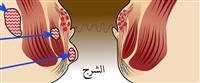
Anal abscess appears as a result of the accumulation of pus around the anus, and this phenomenon is more common in men, as the anus is surrounded by the internal sphincter muscles that control the secretion of stool.
Symptoms of an anal abscess
Symptoms of an anal abscess include
Pain in the area around the anus.
fever.
Local swelling and redness.
These symptoms are more severe in cases of certain diseases, such as diabetes, some immunodeficiency diseases, and leukemia.
Causes and risk factors for anal abscess
Causes of perianal abscess include
Obstruction of the outlet of the anal gland located at the level of the dentate line located between the lower third and the middle third of the anal canal.
Infection with some diseases, such as: Crohn''s disease, ulcerative colitis, injury to the hips, diverticulitis, and malignant tumors.
Making a surgical incision in the anus area during an operation.
Complications of anal abscess
The main problem with anal abscess lies in the disturbing symptoms that it may cause, and it can develop if the condition is not treated, and the infection spreads to another part of the body.
Diagnosis of anal abscess
In most cases, the diagnosis depends on a physical examination, but in more complex cases some other examinations are required as follows:
Transrectal ultrasound examination.
Magnetic resonance imaging (MRI).
Computed tomography (CT).
Treatment of anal abscess
Treatment depends on draining the abscess by surgery under general anesthesia, in addition to complementary treatment with antibiotics, and complete recovery is usually achieved after a few weeks of surgery.
Complications that may occur after surgical drainage of an anal abscess include
Fistula formation: In such a case, surgery must be performed to remove it.
Fournier disease: It is a serious and fatal disease that requires continuous treatment with antibiotics, in addition to surgeries to remove dead tissue.
Prevention of anal abscess
In fact, there are no clear ways in which an anal abscess can be prevented.