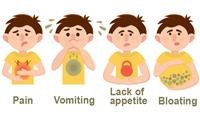

The digestive system is exposed to many disorders and health problems, but what are the most important diseases of the digestive system in children?
Diseases of the gastrointestinal tract in children
All vital processes and activities that occur in the body require energy for completion, and the main source of this energy is the foods that individuals eat.
However, there are many diseases related to the digestive system, directly or indirectly, in adults and children, some of which are of moderate severity and some of which are severe. Let us learn about the most prominent diseases of the digestive system in children in this article:
Diseases of the gastrointestinal tract in children
Among the most important and prominent diseases of the digestive system in children are the following:
1. Eosinophilic Digestive Disorders (EGID)
One of the most common health conditions related to this disorder that occurs in the digestive system is eosinophilic esophagitis, and this type of disorder is usually caused by an increase in white blood cells in the child''s digestive system.
This leads to suffering from the following symptoms
swelling.
inflammation.
Feeling some pain and discomfort.
Sometimes the child has difficulty swallowing.
It is worth knowing that there is usually no cure for this type of disorder, but there are some types of medications that can contribute to improving and alleviating the condition of the affected child, such as: steroids that work on the following:
Reducing the number of white blood cells in the baby''s intestines.
Reducing suffering from symptoms and signs of this disease.
2. Celiac disease
Children with this type of gastrointestinal disease may have serious reactions when eating foods that contain gluten, a protein found in wheat, barley, and rye.
Among the effects of celiac disease are the following
Some damage to the small intestine.
Preventing the body from absorbing nutrients that are important for a child''s health.
The only treatment for celiac disease is a gluten-free diet.
3. Inflammatory bowel disease
IBD is one of the most prominent diseases of the digestive system in children, and IBD occurs most often in older children and adolescents.
It also includes two main types of digestive disorders, which are as follows
Ulcerative colitis: which mainly causes swelling and inflammation in the colon.
Crohn''s disease: a disease that can affect any part of the digestive system.
Among the most important symptoms that a person with these disorders may suffer from are the following:
bloody stools, or watery stools
Some pain in the abdomen.
joint pain
Eye irritation.
kidney stones.
Liver diseases.
It must be noted that inflammatory bowel diseases may slow down a child''s growth, or delay puberty in some cases.
3. Peptic ulcer (PUD) and gastritis
A peptic ulcer is an open sore in the lining of the stomach, or upper part of the small intestine.
As for gastritis, it is an inflammation of the lining of the stomach, and it is worth knowing that both diseases usually cause the same symptoms and signs for the patient.
The most important of these symptoms are stomach pain, nausea, and the most common cause of this type of inflammation is bacterial infection.
4. Stomach Flu
Stomach flu is a disease of the digestive system in children, and it is an infection that affects both the stomach and the upper part of the small intestine. Common symptoms associated with this disease include:
Feeling some stomach pain.
vomiting.
Some convulsions.
It is often caused by retroviruses and noroviruses.