
relationship between them?
The sinuses and parts of the ear meet in the head, but what is the relationship between sinusitis and ear blockage? Follow this article with us to know the answer.
Sinusitis means swelling and inflammation in the sinus area, which are empty spaces that extend from the nose and are distributed behind both sides of the cheekbones and forehead, but what is the relationship between sinusitis and ear blockage? Find out the answer in the following article:
The relationship between sinusitis and ear blockage
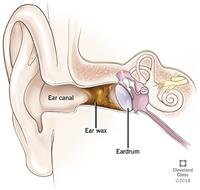
Earache is a common sinus infection symptom in adults, but why does sinusitis cause ear blockage? In fact, the congestion associated with sinusitis is closely associated with ear problems. Here is an explanation of the relationship between sinusitis and ear blockage as follows:
The sinus area is affected by swelling, mucus accumulation, and congestion, as a result of irritation of the area due to the viral or bacterial infection that occurred in it.
Ear blockage occurs, due to the interconnection of both the sinuses and the ear together.
The blockage in the ear causes a blockage in the tube known as the Eustachian tube in the ear.
Ear defect occurs as a result of blockage of this canal This is because it is responsible for connecting both the middle ear and the outer ear together, and also helps to maintain the balance of pressure inside the ear.
Distinguish between sinusitis and otitis media
After we learned about the relationship between sinusitis and ear blockage, you may be wondering how to distinguish whether ear blockage is caused by sinusitis, or that you suffer from inflammation in the ear itself, and the two cases can be differentiated by recognizing some of the symptoms characteristic of each. of which are as follows:
1. Symptoms of otitis media
In the event of an ear infection, it will not be limited to ear blockage, as it is accompanied by other clear symptoms as follows:
Feeling sharp pain in the ear.
Loss or impairment of the sense of hearing.
Fluid coming out of the ear opening..
2. Symptoms of sinusitis
When suffering from sinusitis, this may be accompanied by a feeling of fullness in the ear, but without loss of the sense of hearing. It is also accompanied by a group of symptoms as follows:
Nasal congestion.
A general feeling of pressure in the face and forehead area.
Poor ability to smell.
Thick yellow to greenish discharge from the nose or throat.
Treatment of sinusitis and ear blockage
In the event that the cause of the ear blockage is sinusitis, relieving nasal congestion will treat the ear blockage, and the doctor will prescribe antibiotics only if the cause of the infection is bacterial. In most other cases, treatment is limited to relieving symptoms, and here is the treatment of sinusitis. Nasal and ear blockage in the following:
Relieve pressure and pain by placing a warm, damp washcloth on the face.
Reducing pain by using some over-the-counter medications, such as: some painkillers.
Moisturizing the nose, either by using saline nasal sprays, or by using vaporizers to humidify the surrounding air.
Avoid certain practices, such as: exposure to very high or very low temperatures, smoking, drinking coffee, and excessive salt.
Congestion treatment, by using some types of nasal sprays, but be careful not to use these sprays for more than 3 days, as their increased use leads to increased congestion.
Other factors affect sinuses and ear blockage
After we talked about sinusitis and ear blockage, we will mention to you some other factors associated with sinuses and ear blockage, as we mentioned previously, the sinuses and the ear are connected together, and among these factors are the following:
allergy.
Smoking, or exposure to cigarette smoke.
Infection, such as colds and flu.
Structural abnormalities in the sinuses or ears.