Every time your child moves his foot and walks, jumps or runs, he moves the Achilles tendon. What do you know about the process of lengthening the Achilles tendon for children? And when is it performed?
The Achilles tendon connects the heel bone to the calf muscles, and it is the tendon responsible for movement. The process of lengthening the Achilles tendon for children and the reasons for performing it are presented in the following article:
Achilles tendon lengthening in children
For problems related to the Achilles tendon, the pediatrician follows up on non-surgical treatment with the children first, including: physical therapy, casting and leg braces, and other procedures. If non-surgical treatment is not successful, the doctor will discuss with the parents the option of Achilles tendon lengthening for children.
As the process requires general anesthesia, and during the process of lengthening the Achilles tendon for children, the surgeon makes a cut in the lower part of the calf, then the tendon is divided so that it can be lengthened.
Types of Achilles tendon lengthening surgery for children
Surgery options vary according to the extent of the child''s problem as follows
1. Z-plasty
This is the most common method where z-shaped holes are drilled into the tendon to stretch it before it is re-stitched.
2. Percutaneous surgery
Small incisions are made in the skin that allow the surgeon to lengthen the tendon through small cuts.
3. Gastrocnemius recession
In this procedure, the calf muscle fibers are lengthened and relaxed through a small incision.
It should be noted that in all surgical options, the incisions are closed on the same day and the child is provided with a splint.
Reasons to perform Achilles tendon lengthening in children
The doctor takes the decision to perform the Achilles tendon lengthening operation for children for the following reasons:
Walking on toes
Walking on toes is very common when children learn how to walk for the first time, but it may indicate a problem if it continues for more than two years of the child''s life, and one of these problems is the shortness of the Achilles tendon.
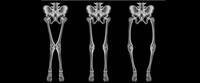
Having a defect or congenital deformity
Examples of congenital anomalies are
1. Clubfoot
In the case of clubfoot, the tendons that connect the calf muscles to the bones of the foot are short and narrow in children, which leads to twisting the foot inward, and most cases are successfully treated by non-surgical methods, but some cases require surgical intervention that may include the process of lengthening the Achilles tendon for children.
2. Vertical talus
Vertical talus is a rare deformity of the foot that is diagnosed at birth and is one of the causes of flat feet in newborns.
The surgery is performed on newborns to include all aspects of the deformity of the foot, including the process of lengthening the Achilles tendon in children.
Cerebral palsy: Polio causes a deformity in the foot that makes it turn towards the sole, that is, towards the lower part of the foot. Achilles tendon lengthening in children is a common procedure to reduce this deformity.
Achilles tendon inflammation: Achilles tendon inflammation is a common condition that occurs when the Achilles tendon becomes inflamed as a result of sudden and strenuous exercise, neglect of warm-up exercises, and failure to wear appropriate sports shoes.
The condition can be treated with rest, analgesics, stretching and elongation exercises, and you may need surgical intervention that includes lengthening the Achilles tendon for children.
What happens after the process of lengthening the Achilles tendon for children?
The recovery time takes from 3-6 months, depending on the condition of the child, and it is important to follow the doctor’s instructions regarding the recovery stage.
Here are general tips to help you anticipate the situation after children''s Achilles tendon lengthening:
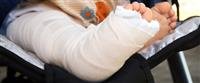
The child will leave in a cast to walk and the doctor will prescribe a pain reliever such as ibuprofen or a stronger one, depending on the situation.
Nausea is one of the common side effects, especially after the cessation of the effect of the anesthetic, and this feeling may continue in the child for 24 hours, so it is important to give the child fluids and foods that are easy to digest, and avoid fatty foods. If the child vomits, it is preferable to avoid feeding him for 30-60 minutes.
During the first 48 hours, make sure your baby rests completely with his leg elevated on pillows and it is helpful to move the toes from time to time to avoid swelling.
Your child may initially need help standing and walking, and within a week your child will be back to most of his usual activities, and he may return to school within two weeks, and the period varies according to the child''s specific condition.