
What are the common diseases in newborns? What are the rare diseases in newborns? You can find the answer in this article.
Here are the most important details about common diseases in newborns in the following article:
Common diseases in newborns
Below is a list of common diseases in newborns that may affect them during the first two weeks after birth:
1. The baby’s belly protrudes
Newborn babies'' stomachs usually protrude after the baby drinks a large dose of milk. The abdomen is swollen and hard, and most of the time this problem is caused by gas, constipation, or more serious intestinal problems.
2. Birth injuries
If the labor is long or difficult, or if the baby is large, babies may be exposed to dislocation of the clavicle during childbirth. However, the baby''s recovery will be rapid within a few weeks.
Muscle weakness, which is a common injury during childbirth, results in pressure or tension on the nerves connected to the muscles. These muscles usually weaken on one side of the face, shoulder, or arm, and return to normal after several weeks.
3. Bluish skin
Babies'' hands and feet are blue or purple in color at birth, and this is considered normal, as their hands and feet appear blue as a result of the cold and return to pink as soon as they feel warm. However, when the skin is blue for a long time, it may be a sign of health problems in the heart or lungs.
4. Problems with bowel movement
After birth, the child''s bowel movement is monitored for 24 hours to ensure the functioning of the bowel. The child must defecate once or twice with black or green stool that is sticky. Children may suffer from bowel movement problems that prevent them from expelling this material even after 48 hours.
Blood may appear in the stool in newborn babies. If this happens during the first days after the baby is born, this means that the infant suffers from a small fissure in the anus.
5. Skin rash
It is usually caused by skin irritation resulting from stool and urine coming into contact with the skin while wearing a diaper, and can get worse during diarrhea.
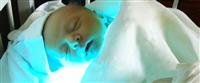
6. Jaundice
The skin and eyes of newborns turn yellow due to the accumulation of bilirubin. The reason is that in the first few days after birth, the liver does not function fully. Which contributes to a significant increase in the level of bilirubin in the blood and the baby’s color turns yellow.
7. Cough
Newborn babies cough as a result of the baby feeding milk quickly, and it stops once the baby gets used to breastfeeding. Sometimes the cough may be related to the strength or speed of the mother''s milk coming in during breastfeeding.
8. Umbilical hernia
The navel pushes out when a newborn baby cries Which contributes to the appearance of a small hole in the muscular part of the abdominal wall that allows the tissues to swell when there is pressure on the abdomen as a result of intense crying. This is not a serious condition, but rather heals in the first 12-18 months after birth.
Less common diseases in newborns
After reviewing the most important details about common diseases in newborns, the following are the less common diseases in newborns:
Neuroblastoma.
Hypoplastic left heart syndrome
Primary ciliary dyskinesia
Severe combined immunodeficiency disease
Duchenne Muscular Dystrophy
When should you see a doctor?
After identifying the common diseases in newborns, the following are the most prominent symptoms that may appear on the newborn and require immediate doctor’s review:
Frequent cough, diarrhea, or vomiting.
Sweating while breastfeeding.
Sleeping more than usual.
Change in color of arms and legs.
Body temperature s below 36 degrees Celsius.