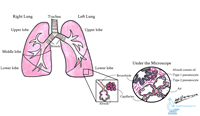
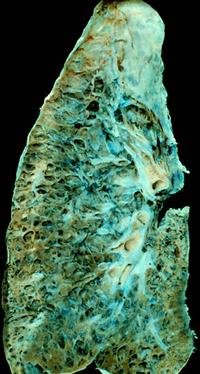
Lymphoid interstitial pneumonia is an uncommon lung disease in which mature lymphocytes (a type of white blood cell) accumulate in the air sacs of the lungs (alveoli).
People usually cough and have difficulty breathing.
Diagnosis requires chest x-ray, computed tomography, pulmonary function tests, and often bronchoscopy, biopsy, or both.
Treatment involves corticosteroids, immunosuppressants, or both.
Lymphoid interstitial pneumonia is a form of idiopathic interstitial pneumonia. It can occur in children, usually those who have human immunodeficiency virus (HIV) infection or other immunodeficiencies. Lymphoid interstitial pneumonia can also occur in adults, often those with autoimmune disorders such as plasma cell disorders, Sjögren syndrome, Hashimoto thyroiditis, rheumatoid arthritis, and systemic lupus erythematosus (lupus). Women and girls are more commonly affected. Average age of affected adults is 54 years.