
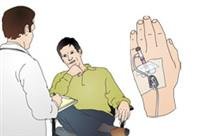
If you are having surgery, your doctor will give you a drug called an anesthetic. Anesthetics reduce or prevent pain. Moderation sedation uses a mild sedative to relax you and pain medicine to relieve pain. You stay awake but may not remember the procedure afterwards.
There are four main types.
Local: numbs one small area of the body. You stay awake and alert.
Regional anesthesia: blocks pain in an area of the body, such an arm or leg. Epidural anesthesia, which is sometimes used during childbirth, is a type of regional anesthesia.
General anesthesia: affects your whole body. You go to sleep and feel nothing. You have no memory of the procedure afterwards.
The type of anesthesia your doctor chooses depends on many factors. These include the procedure you are having and your current health.
INTRODUCTION
You may have been scheduled to have a procedure under moderate sedation.
This program will help explain the benefits and risks of moderate sedation.
PROCEDURE
To prevent you from feeling pain during your procedure, your physician may provide you with moderate sedation.
Moderate sedation is different from general anesthesia. The doctor will order the medications for the nurse to administer to you for sedation. During the time you are under the effects of moderate sedation, your doctor and nurse will watch over you and make sure your heart and lungs are functioning properly.
Initially, an IV will be placed in your hand or arm to deliver the medications. You will then be given medications that will help you relax and reduce discomfort. You may feel sleepy and may not remember parts of the procedure, but you will be easily awakened when touched or spoken to.
Throughout the procedure, your heart rate, heart rhythm, blood pressure and oxygen concentration in your blood will be watched closely using medical instruments called monitors.
It is common for you to receive oxygen when moderate sedation is given to you.
AFTER THE PROCEDURE
After your procedure, you will be monitored and observed as the sedation wears off. This usually takes 30 to 90 minutes.
Before being discharged, the doctor and nurses will make sure that your vital signs are stable, you are able to walk without feeling dizzy, you are able to drink, and do not develop any nausea or vomiting.
Usually, there are no significant after effects of moderate sedation. However, your judgment, reaction time, and short term memory may be impaired for up to the next 24 hours.
Because of these effects, you cannot drive yourself home. You must bring a responsible adult to take you home. Do not operate dangerous machinery or equipment, drive, or make important decisions for at least 24 hours after sedation.
RISKS AND COMPLICATIONS
Because of significant advances in technology and medications, moderate sedation is extremely safe. There are, however, some possible risks and complications. You can do a lot to prevent them.
You should make your doctor aware of any medical problems that you may have such as heart, lung or kidney problems, strokes and liver damage.
Previous blood transfusions, diabetes, high blood pressure, the amount of alcohol you drink, jaundice, depression and other psychiatric disorders should also be shared with your doctor.
You should also tell your doctor about any previous experiences with sedation and anesthesia including how you reacted to them.
Tell the doctor and nurses about any over-the-counter medications and herbal supplements you take. Medications you are taking could interact with the sedation medications.
Tell your doctor and nurses if you have any allergies to medications, foods, and latex. You may develop allergic reactions that are discovered during your procedure, such as allergies to tape, latex and iodine containing solutions.
Rarely, nausea and vomiting could happen after moderate sedation. This is usually treated using anti-nausea medications.
There is a risk that your breathing may slow down. If this happens, an oxygen mask may be put on your face.
Sometimes, a doctor may put a tube in your air pipe or trachea to help you breathe. If this happens, your throat may be sore afterwards. When you are breathing better on your own, the tube is taken out.
There is a risk that your blood pressure may when receiving moderate sedation. If this happens, the doctor and nurse may reposition you or increase the infusion rate of your IV.
There is a small risk of infections, strokes, cardiac arrhythmia, heart attacks and possible death during moderate sedation. These risks are very small and more likely in older people and patients who have medical problems or a previous history of strokes or heart attacks.
Your anesthesia specialist is prepared to treat reactions to medications used in the operating room. In spite of the best effort, in very rare instances these reactions could be fatal. It is therefore very important to inform your anesthesia team of ALL your known allergies.
Be sure to tell your anesthesia specialist if there is any chance you may be pregnant. Special precautions should be taken during the operation.
SUMMARY
Moderate sedation is very safe. However, as you have learned, there are some possible risks and complications.
Most of the complications can be prevented through good communication.
Make sure to inform your doctors and nurses of all your medical conditions, medications, allergies, and previous experience with sedation.