It's one of the darkest fears of pitchers, tennis players, and many other athletes: a rotator cuff tear. If it is severe, a rotator cuff tear can end a player's career. So what is it, exactly?
The rotator cuff is a group of four tendons and muscles that converge around the shoulder joint at the top of the humerus, the upper arm bone above the elbow. Together, they form a ''cuff'' that both holds your arm in place and allows it to move in different directions. While your shoulder is one of your most mobile joints, it's also somewhat weak. Too much stress -- or too many fastballs -- can cause partial tears and swelling in the tendons of the rotator cuff. Abrupt stress may even cause one of the tendons to pull away from the bone or tear in the middle of the tendon. Rotator cuff tears are sometimes incorrectly called ''rotary cuff tears.''
Athletes prone to getting rotator cuff tears include
Baseball players, especially pitchers
Swimmers
Tennis players
Football players
You can get a rotator cuff tear by
Falling on your shoulder
Using an arm to break a fall
Lifting heavy weights
What Are the Symptoms of a Rotator Cuff Tear?
The symptoms of a rotator cuff tear include
Pain in the shoulder and arm, which varies depending on how serious the tear is
Weakness and tenderness in the shoulder
Difficulty moving the shoulder, especially when trying to lift your arm above your head
Snapping or crackling sounds when moving the shoulder
Inability to sleep on the shoulder
Most rotator cuff tears develop gradually. But they also can happen suddenly -- you might feel a pop, intense pain, and weakness in the arm.
To diagnose a rotator cuff tear, your doctor will give you a thorough physical exam. He or she will want you to move your arm in different directions to see what causes pain. In addition, your doctor might want to order the following tests:
X-ray of the shoulder with some special views
MRI (Magnetic Resonance Imaging)
Arthrogram, a special type of X-ray or MRI done after a dye is injected into joint; this will allow your doctor to see more detail.
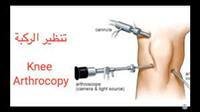
Arthroscopy, a minimally invasive surgical procedure in which a tiny camera is ed into the shoulder joint to get a look at the rotator cuff Arthroscopy is usually not done unless it is likely that you will need a surgical repair based on the other non-surgical tests.
These tests will allow your doctor to rule out other conditions and confirm that you have a rotator cuff tear. He or she may refer you to an orthopedic surgeon for treatment.