When you think you need emergency contraception, you need answers fast. The good news is you have a lot of reliable options that can help if you act quickly. Learn more about your choices and how they work.
Emergency Contraception Explained
It can help if you just had sex and something went wrong -- you forgot to use protection, you used it incorrectly, or the condom broke, for instance. It's also an important option for women who were forced to have sex.
By using emergency contraception within 3 days of sex (the sooner, the better), you can dramatically lower your chance of getting pregnant. It may also work up to 5 days after sex, though it won't be as effective.
How It Works
Emergency contraception pills use hormones or medications that block pregnancy. Most use the same hormones that are in regular birth control pills.
The emergency-use pills mainly work by stopping the release of an egg. The pills also may stop sperm from fertilizing the egg. They also may prevent a fertilized egg from implanting in the uterus. If you're already pregnant, most of these pills will have no effect.
Emergency contraception works well. But you should take it quickly -- preferably within 24 hours of sex. Yes, it's often called the "morning after" pill. But really, the sooner you take it, the more effective it will be. Studies show that if you take emergency contraception within 72 hours of sex, you have only a 1% to 2% chance of getting pregnant.
Types of Emergency Contraception
There are several kinds of pills, or an IUD.
Most of these pills use levonorgestrel, a form of the hormone progesterone. They include
Plan B One-Step
Generic levonorgestrel, like My Way and Next Choice One Dose
You should use these drugs within 72 hours of having sex. They may still work up to 5 days later, but they're less effective with time. There are some differences among them. Plan B One-Step, My Way, and Next Choice One Dose are one pill. Some other generics are two pills that you take at the same time.
Until recently, you had to be 17 or older to get Plan B One-Step without a prescription. But the FDA removed the age restriction, so now people of any age should be able to buy Plan B One-Step without a prescription.
If you're 17 or older, you can get generic levonorgestrel -- like My Way or Next Choice -- without a prescription. If you're under 17, you need a prescription.
Also, research shows that Plan B One-Step starts to lose its effectiveness in women heavier than 165 pounds. It's not recommend for anyone over this weight -- instead, a copper-T IUD is the suggested option.
Besides levonorgestrel, other options include
Ella. This form of emergency contraception doesn't use hormones. Instead, it's a drug called ulipristal acetate that blocks the effects of your own hormones. It's effective up to 5 days after sex. You need a prescription to get it. If you think you may already be pregnant, check with a doctor before using Ella. If you are, you should not take this drug.
Combination pills. These are regular birth control pills with progesterone and estrogen. If you take them at a higher dose within 3 to 5 days of sex, they act as emergency contraception. But they may not work as well as other types. Side effects, like nausea, may also be worse. Do not take regular birth control this way unless you talk to your doctor first.
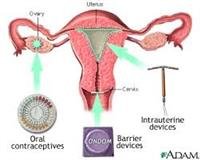
Copper-T IUD. This is a different approach. A doctor will place a small plastic and copper IUD -- intrauterine device -- into your uterus. The copper seems to stop the sperm from fertilizing the egg, preventing pregnancy.
The advantage of the IUD is women can use it as long-term birth control -- it works for up to 10 years -- but it also works as emergency contraception if you get it within 5 days of sex. It may work better than pills, but getting it in time can be tricky.
Your doctor needs to put in the IUD. She'll also have to remove it before you can have children. This approach may be best for women who were already looking for long-term birth control.