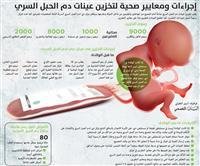
stem cell transplantation
The importance of umbilical cord blood in light of the medical development globally lies in saving the lives of some patients, through the cultivation of stem cells found in the umbilical cord blood, and thanks to this development it is possible to treat about 80 different types of diseases of the immune system and blood, so enhancing awareness in the demand for storage Blood has significant positive benefits and rewards for the future family and society.
Umbilical cord blood, which in the past was one of the waste that is disposed of immediately after birth, scientists discovered in the seventies of the last century that it is an important source for treating blood diseases that may appear later in the life of the child or may be a source of healing for a brother or sister with blood diseases, Hence, most developed countries resorted to establishing private banks for cord blood.
In 2006, His Highness Sheikh Mohammed bin Rashid Al Maktoum, Vice President and Prime Minister and Ruler of Dubai, may God preserve him, established the Dubai Cord Blood Center at a cost of 18 million dirhams, due to the importance of collecting and storing umbilical cord blood, and he has so far managed to treat 19 cases Their samples were sent abroad, where they successfully transplanted stem cells from cord blood, and the cases complained of thalassemia, sickle cell anemia and leukemia.
Dr. Ahmed bin Kalban, Executive Director of the Specialized Health Centers Sector at the Dubai Health Authority, stressed that the Dubai Umbilical Cord Blood Center is the first of its kind in the region, and it consists of a team that collects, processes and stores cord blood for use in treating more than one type of blood disease The various forms of medicine that were unable to stand before it, in turn, provided treatment for many patients by transplanting stem cells from cord blood.
storage
Dr. Bin Kalban explained that the collection and storage of umbilical cord blood for newborns is increasing, due to the importance of the cells in the umbilical cord in the treatment of cancerous and other blood diseases, in addition to some immune diseases, and also the number of umbilical cord blood banks that allow families to store the umbilical cord of their children has increased globally For future use as needed.
In the wake of the recognition of the importance of these stem cells, dozens of "umbilical cord blood banks" were established around the world, as the goal behind the establishment of these banks is to save this blood for many years to come, and to use it when needed.
Since its establishment, the Dubai Umbilical Cord Blood and Research Center at the Dubai Health Authority has been able to store more than 7000 stem cell samples extracted from the cord blood of mothers of different nationalities from inside and outside the country.
Extraction of oxygen and food
In turn, Dr. Hatem Al-Abbas Mustafa, an immunology and tissue matching specialist, the acting director of the Dubai Umbilical Cord Blood Center, explained that during pregnancy the placenta extracts oxygen and food from the mother’s blood and then delivers it to the fetus through the umbilical cord and when the baby is born, the doctor cuts the umbilical cord, leaving an amount of blood In the blood vessels in the placenta and the umbilical cord, this blood is known as the blood of the placenta or cord blood. The importance of umbilical cord blood is that it contains stem cells similar to the stem cells in the bone marrow.
After childbirth, the fate of the placenta, the umbilical cord and the valuable blood in which the waste is present is usually the same, but with the advancement of science, doctors around the world managed to save this blood for use in saving the lives of some patients by conducting stem cell transplants in the cord blood, where today Use of umbilical cord cells (taken from umbilical cord blood at birth) as a standard medical procedure for stem cell transplants and for the treatment of about 80 different types of immune and blood diseases.
Umbilical Cord Blood Banks: General Storage
And Dr. Al-Abbas indicated that the umbilical cord blood units are collected, processed and stored for the transplant process for others who do not have an identical donor from relatives, as the cord blood units donated by the parents are stored for use by any patient in need.
This type of bank shall be subject to supervision by the national regulatory authorities, and it must implement the local and international requirements necessary to ensure the safety and effectiveness of these units, and the cost of storage will be free as the state takes upon itself the storage costs.
Private storage
He added: In specialized banks, cord blood units are collected, processed and stored for family use when needed. The use of cord blood units stored is limited to the donor himself or a member of his family, and this type of bank is subject to national control in some countries, and some of them apply the necessary local requirements To ensure the safety and effectiveness of the units stored in it.
Private and public storage
Dr. Al-Abbas also indicated that private and public storage in which the umbilical cord collections are collected, processed and stored, and that they combine the previous two systems, which provides the opportunity for parents to choose between donating it for public use or self-use, and often these banks are private or governmental institutions subject to national control, and on them The local and international requirements necessary to ensure the safety and effectiveness of these units are applied. The Dubai Umbilical Cord Blood Center is a hybrid bank, providing both options for parents.
Conditions of storage at Dubai Bank for cord blood
On storage conditions, Fatima Al Hashemi, Head of the Education and Development Unit at the Center, stated that the specialist must first be consulted to determine the eligibility of the mother to donate, and to ensure that the maternity hospital complies with the specifications and standards for collecting umbilical cord blood, as global supervisory authorities set controls to do such measures to ensure the safety Mother, fetus, and patient receiving stem cells.
In general, umbilical cord blood is collected in cases of pregnancy and normal childbirth, provided that the fetus is in good health, with the exception of carrying twins and preterm births, or if one of the parents has cancer, or the mother carries a risk of transmitting infectious diseases through the blood (such as Making a modern tattoo or its presence in endemic areas) or the mother was using animal-based insulin needles, and any infectious component present in the mother’s blood, such as hepatitis and acquired immunodeficiency, is examined, in addition to studying the family’s medical history through a special questionnaire to ensure the donor’s health And the patient.
Standards
She stated that there are special standards and conditions for storing stem cells extracted from umbilical cord blood, the most important of which is not blood clotting, in addition to the necessity that the umbilical cord blood unit be anonymous and free from the information of the donating mother, as well as the importance of the amount of blood extracted not being less than the required amount, Also, cells are not stored if they are small in number and vitality.
Awareness
Raising awareness and education about the positive benefits and great returns that accrue to the whole family in the future contributes to increasing the demand for cord blood storage, so the Dubai Cord Blood Center periodically conducts educational and awareness sessions targeting all medical personnel, especially those with a direct relationship with the mother, where They are trained and d about all techniques of umbilical cord blood drawing and its methods of extracting it.
The center also targets a wide cross-section of citizens and residents through workshops held by the center''s polarization unit, which is always in gynecology and obstetrics clinics in public and private hospitals, to answer all inquiries that may occur to the mother who intends to donate cord blood.
Hybrid banks allow private and public storage of umbilical cord blood the opportunity for parents to choose between donating it to the public or self-use
The Dubai Umbilical Cord Blood Center was established in 2006 at a cost of 18 million dirhams, as it is important in treating various diseases
Dubai cord blood center is the first of its kind in the region and it consists of a team that collects, processes and stores
To date, the center has managed to treat 19 cases whose samples were sent abroad, as they were successfully carried out stem cell transfusions from cord blood.
The center was able to store 7000 stem cell samples extracted from umbilical cord blood for mothers of different nationalities from inside and outside the country